Gong Cha vs Sharetea Calories: Which Bubble Tea Is Healthier?
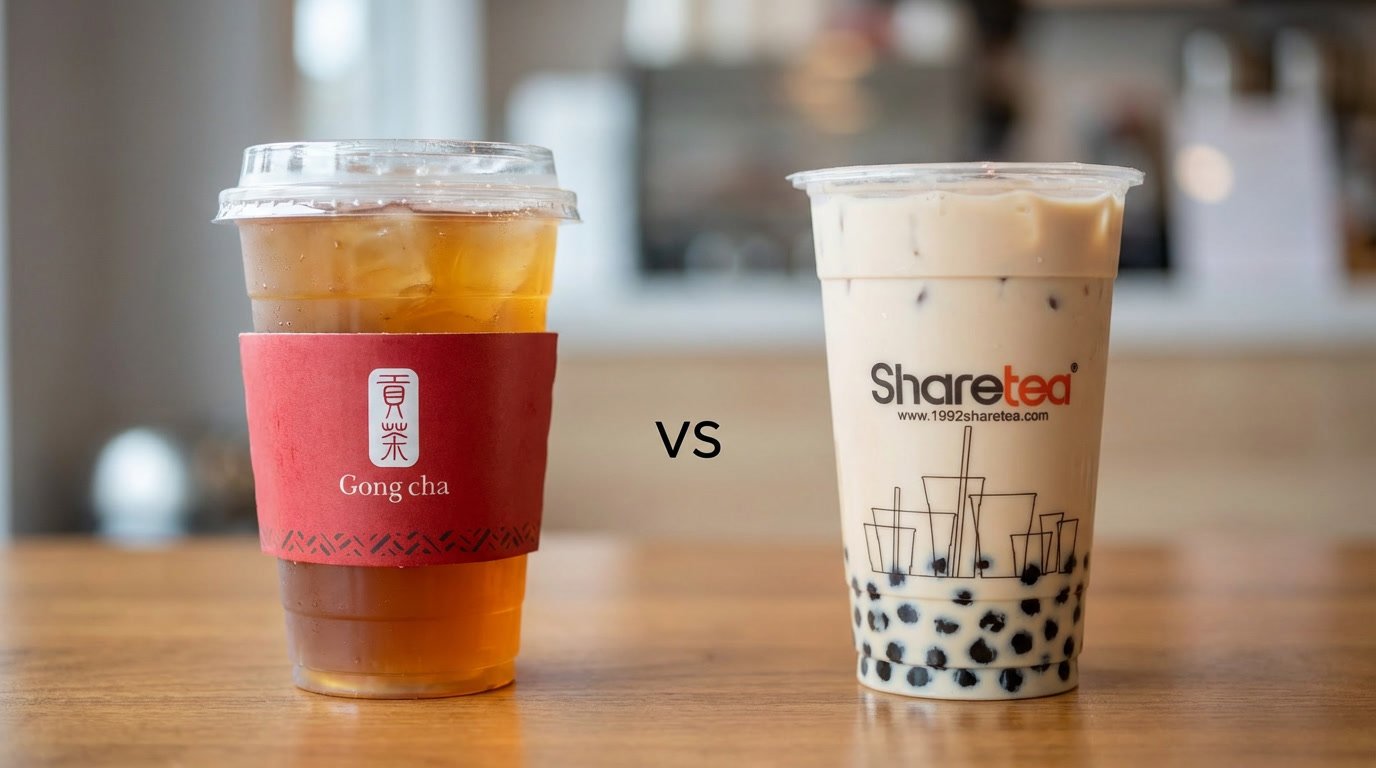
If you’re trying to decide between Gong Cha and Sharetea and you’re even slightly calorie-conscious, you’re not alone. Standing at a bubble tea counter can feel overwhelming. There are menus everywhere, sugar percentages to decode, milk choices you didn’t plan to think about, and toppings that can completely change the drink.
It’s very normal to look at all of that and ask yourself which option ends up being lighter.
This guide compares Gong Cha vs Sharetea calories in a practical way. You’ll see which orders tend to be lighter, where calories add up quickly, and which low-sugar swaps actually help without making your drink feel disappointing.
The part that trips most people up is that bubble tea doesn’t come with one fixed calorie number. Sugar level, milk choice, and toppings all affect the final drink. That’s why the “healthier” option usually has less to do with the brand name and more to do with how you order.
When I’m ordering bubble tea, I’m not aiming for perfect. I’m just trying to make a choice that still feels like a treat and doesn’t leave me feeling heavy or uncomfortable later.
Bubble tea doesn’t have to be all or nothing. Some days you want pearls. Other days you want something lighter. Knowing the differences between Gong Cha and Sharetea simply gives you more control over your order.
Gong Cha vs Sharetea calories: which one has the fewest calories?
In most everyday orders, Gong Cha and Sharetea can end up in a similar calorie range. The brand that feels lower usually depends on how easy it is to customise your drink and how indulgent the default menu items are.
Gong Cha often feels easier to keep lighter because reduced sugar levels are built into the ordering process. Ordering 0 to 30% sugar feels normal there, and that alone can lower calories significantly.
Sharetea can also be a lighter option if you choose simpler drinks and skip heavier toppings. Where people tend to run into trouble is with some of Sharetea’s popular milk tea styles and add-ins, which can raise calories quickly if ordered as standard.
Overall, the lower-calorie option is usually the one you can adjust more easily. As a general rule, the lightest order at either chain is a brewed tea base, low sugar, no topping or one light jelly, and a smaller size.
Why the number of calories in bubble tea changes so much
Most of the calories in bubble tea come from sugar, milk, and toppings. Tea itself contributes very little, which is why two drinks with the same name can end up very different depending on how they’re made.
Sweeteners like syrup, fructose, honey, brown sugar, and flavoured powders are concentrated. Even when you choose “half sugar,” the total can still be higher than expected if the base recipe is sweet.
Milk sets the starting point for calories. Whole milk and creamers tend to add more than people realise. Lower-fat dairy or some plant milks can reduce calories, though this depends on the brand and how the drink is prepared.
Toppings are often where calories pile on. Tapioca pearls are chewy and satisfying, but they are essentially starch cooked in sugar. Custard and cream foam can also add a surprising amount.
If you want to see how these choices add up, you can use my Bubble Tea Calories Calculator to get a quick estimate based on sugar level, milk choice, and toppings.
One thing to keep in mind is that changing bubble tea sugar levels and toppings usually makes a bigger difference than switching brands.
Check bubble tea calories in seconds with BobaCal.
Gong Cha vs Sharetea: calories comparison ✨
Choose the lighter order fast. Sugar level and toppings usually matter more than the brand.
Gong Cha
lighter-order friendly ✅Tip: Pick the drink you actually want, then make it lighter with one change: drop sugar to 30–50% or choose one topping, not three. ✨
What to expect from Gong Cha calories
For a more detailed, drink-by-drink breakdown, you can check my full Gong Cha Calories Guide.
One of the biggest advantages of Gong Cha is how much control you have when ordering. You can usually adjust sugar and ice, and in some cases choose the milk or tea base, which makes it easier to order something lighter without sacrificing flavour.
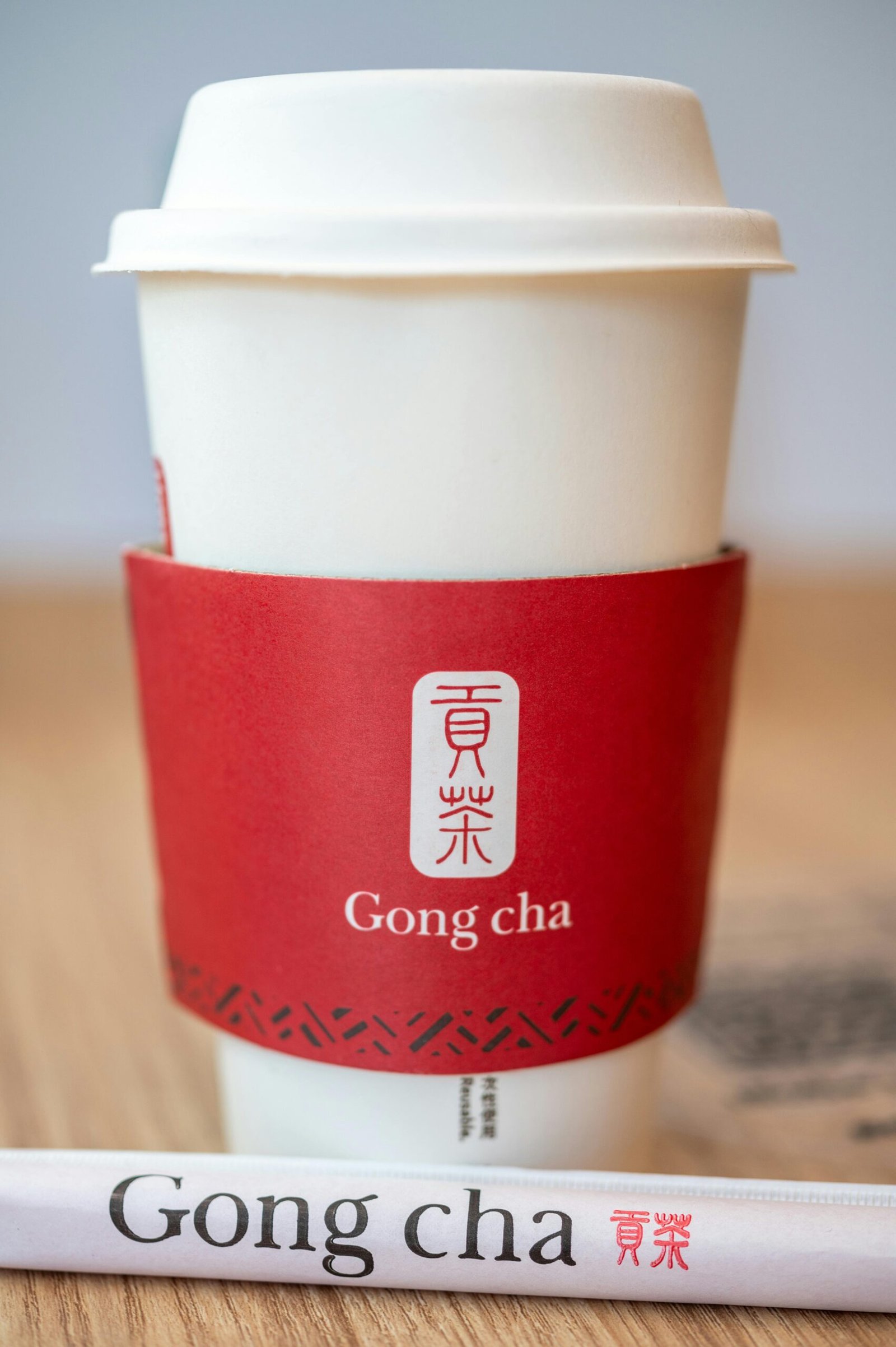
Gong Cha’s official menu says that you can choose how much sugar and toppings you want in most drinks. This means that the number of calories in a drink can change a lot depending on how you order it.
Gong Cha drinks tend to fall into a few general patterns. Brewed teas and lighter fruit teas are usually lowest when sugar is reduced and toppings are skipped. These are a good choice if you want something refreshing that still tastes like bubble tea.
Milk teas sit in the middle. A milk tea at 30 percent sugar with no topping can feel reasonable, but adding pearls or foam pushes calories up quickly.
Specialty drinks, milk foam series, and dessert-style drinks are usually the highest because they combine several calorie sources at once.
What works in Gong Cha’s favour is how normal it feels to order lower sugar. Keeping sugar at 0 to 30 percent and choosing simple toppings often keeps the drink satisfying without turning it into a dessert.
What to expect from Sharetea calories
If you want brand-specific numbers, I’ve also mapped out popular drinks in my Sharetea Calories Guide.
Sharetea also allows customisation, and many locations let you adjust sugar and ice. Where people get caught is that Sharetea has a lot of creamy comfort-style drinks, and the menu makes toppings feel like part of the experience.
Fruit teas can be relatively light when sugar is kept low. They’re a good option if you want flavour without a heavy milk base.
Classic milk teas vary more, depending on how much milk, sugar, and toppings are added. Pearls, custard, or foam can raise calories quickly.
Specialty milk drinks and brown sugar-style drinks are usually higher, simply because they’re designed to taste rich.
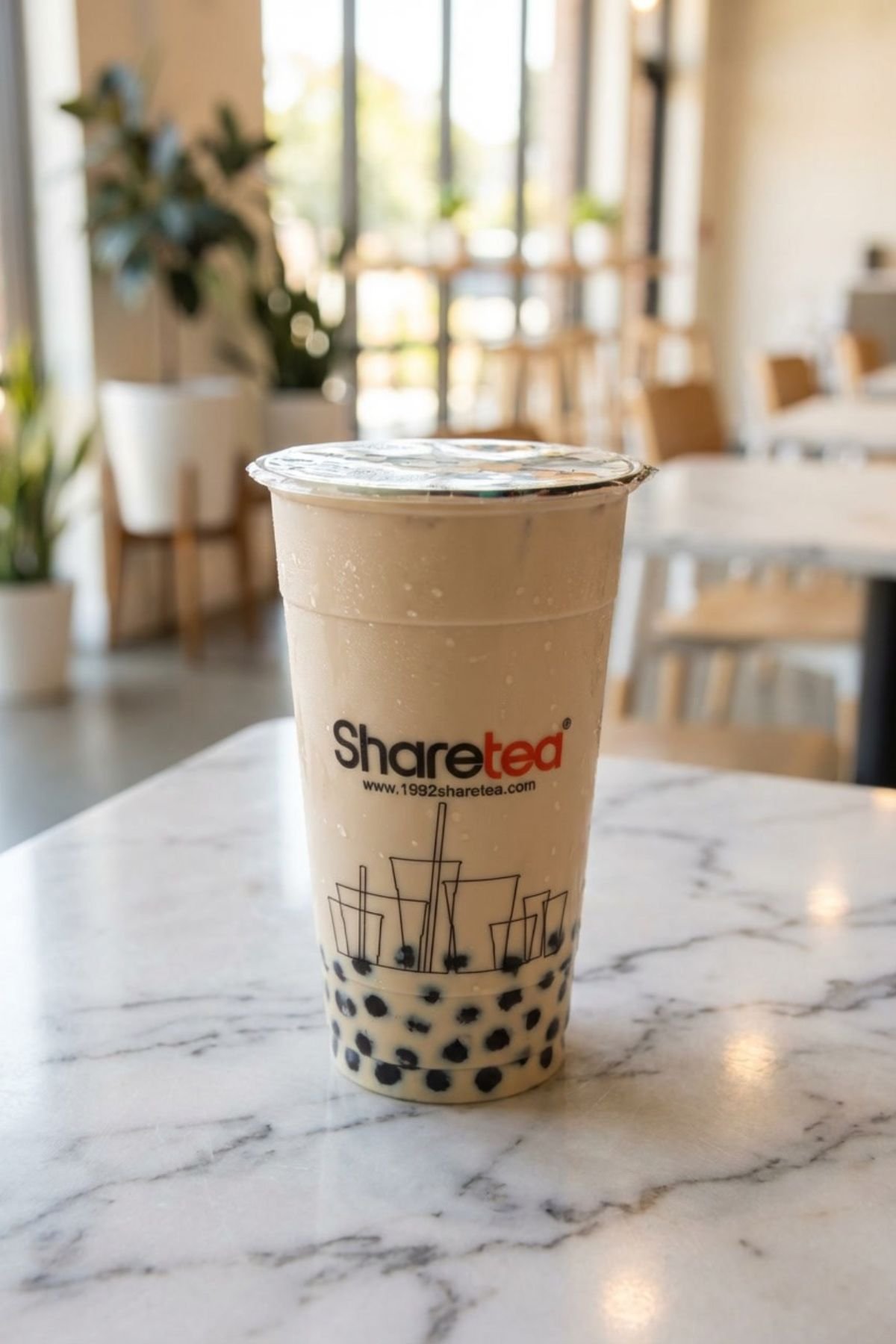
Sharetea’s official menu says that the amount of sugar, milk, and toppings in each drink all change how many calories it has.
Sugar levels: the biggest factor in getting fewer calories
If your goal is fewer calories, sugar level has the biggest impact. It’s also usually the easiest change to make.
At many shops, 100% sugar is the default. Once you get used to lighter orders, that level often tastes overly sweet.
If you’re transitioning, 50% sugar is a comfortable middle ground.
Around 30% sugar is where many drinks still taste like bubble tea, just lighter.
Zero percent sugar works well for naturally fragrant teas like jasmine green tea, oolong, or Earl Grey, or for drinks where the topping provides sweetness.
If you’re unsure where to start, try 30% for milk tea and 0 to 30% for fruit tea, then adjust next time.
My Bubble Tea Sugar Calculator can help you see what 30% or 50% sugar actually translates to in terms of calories.
Some drinks taste sweeter than expected because the base is already sweet. In those cases, 30% can taste much stronger than you’d expect.
How much do milk choices really matter?
Milk matters, but it usually comes after sugar and toppings in terms of overall impact. Still, if you order milk tea often, milk choice can add up over time.
Whole milk is creamier and typically higher in calories.
Lower-fat dairy can reduce calories, though some drinks may taste thinner.
Oat milk can be creamy, but depending on the brand, it can have similar or even higher calories than dairy.
Almond milk is usually lighter, but it can taste watery unless the tea base is strong.
Milk tea styles made with creamer are often higher and harder to control because they’re designed to be rich in taste.
If dairy works for you and you want fewer calories, lower-fat dairy is often the easiest option. If you prefer plant-based, almond milk is usually the lightest, while oat milk is the creamiest.
Just remember that if sugar stays high and pearls and foam stay in the cup, changing milk won’t fix the calorie count.
Toppings: where calories add up fastest
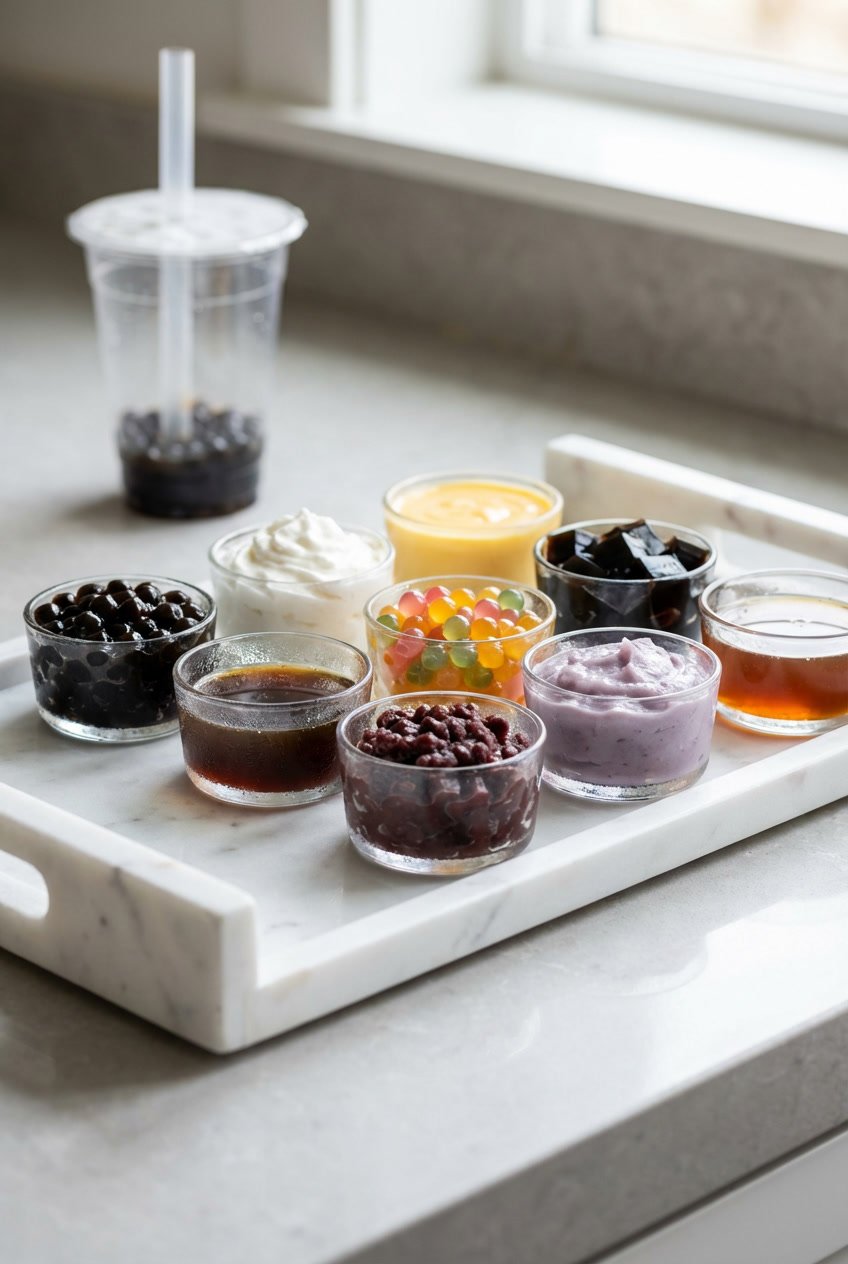
Bubble tea toppings calories add up quickly, and toppings are the point where bubble tea often shifts from drink to dessert.
Lighter options tend to include grass jelly, herbal jelly, and some fruit jellies. These add texture without as many calories as pearls.
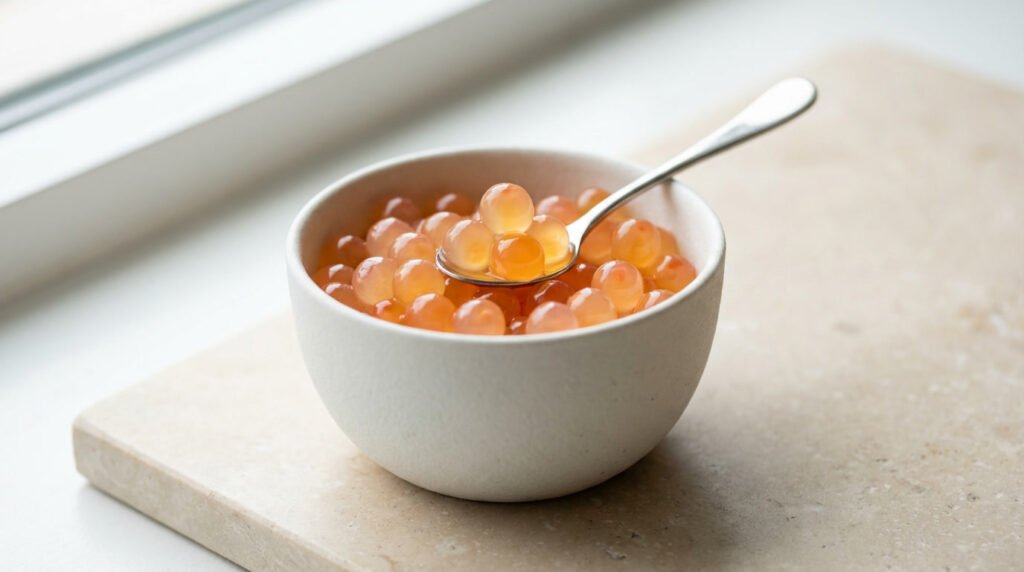
In the middle are popping boba and sweeter jellies, which can vary more than people expect.
Heavier options include tapioca pearls, custard, cream foam, cheese foam, red bean, sweetened taro, and anything labelled brown sugar or crème.
A helpful approach is to keep one indulgent extra and make everything else lighter. If you want pearls, lower the sugar and skip foam. If you want foam, skip pearls and reduce sugar.
Full sugar combined with pearls and foam is the most common accidental high-calorie order.
Low-sugar swaps that actually work
These swaps make the biggest difference without making your drink feel like a compromise.
Set milk teas to 30% sugar by default. Most still taste good at that level.
Keep fruit teas at 0 to 30% sugar. If 0 percent tastes flat, try 30% next time.
Stick to one topping. Don’t add custard if you want pearls, and skip pearls if you want custard.
Swap pearls for grass jelly or herbal jelly occasionally. You still get texture, just lighter.
If you’re ordering bubble tea for the vibe, choose a smaller size.
If percentages are confusing, asking for “light sweet” usually gets you closer to your goal than ordering the default.
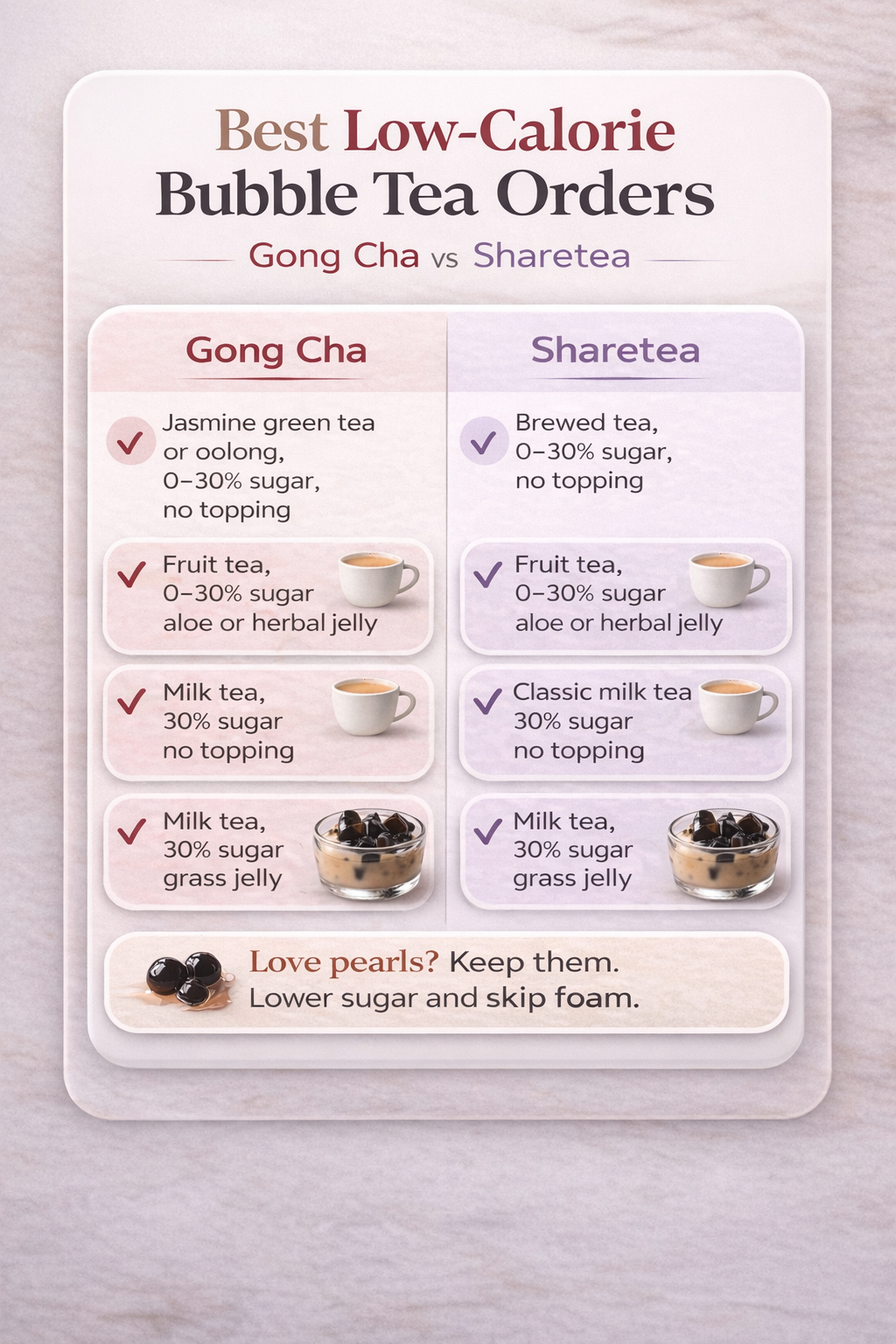
Best low-calorie orders at Gong Cha
- Jasmine green tea or oolong tea with 0 to 30% sugar, no topping
- Fruit tea with 0 to 30% sugar and aloe or herbal jelly
- Milk tea at 30% sugar with no topping
- Milk tea at 30% sugar with grass jelly
If you love pearls, keep them. Just lower the sugar and skip the foam.
Best low-calorie orders at Sharetea
- Brewed tea with 0 to 30% sugar, no topping
- Fruit tea with 0 to 30% sugar and aloe or herbal jelly
- Classic milk tea at 30% sugar with no topping
- Milk tea at 30% sugar with grass jelly
If you love their creamier drinks, lowering sugar and skipping custard or pearls helps balance things out.
Which one is healthier overall?
When it comes to Gong Cha vs Sharetea calories, the biggest difference usually comes down to sugar level and toppings, not the brand name itself. Healthier means fewer calories and less sugar most of the time; either chain can work. The difference comes down to how you order.
Gong Cha often feels easier for lighter ordering because reduced sugar is built into the experience. Sharetea works just as well if you’re mindful about toppings and default drinks.
The healthiest bubble tea order is usually tea-forward, lower in sugar, and not overloaded with extras, regardless of the chain.
The best choice is the one you’ll actually enjoy and repeat.