Grass Jelly vs. Boba: The Honest Truth About Calories & Chew
Let’s be honest for a moment. We all claim we go to the bubble tea shop for the tea, but we are really there for the toppings. The problem is that the satisfying “QQ” chew of a tapioca pearl comes with a hefty calorie price tag. As much as I love them, sometimes my jeans (and my sugar intake) beg for a break.
That is where the grass jelly vs. boba debate really begins. Is the herbal jelly actually a healthier swap or just a sad, watery alternative? Spoiler alert: It is actually my favourite cheat code for ordering a “fully loaded” drink without the guilt. If you are new to the toppings game, read my Ultimate Bubble Tea Guide to get your bearings first.
1. The Calorie Reality Check
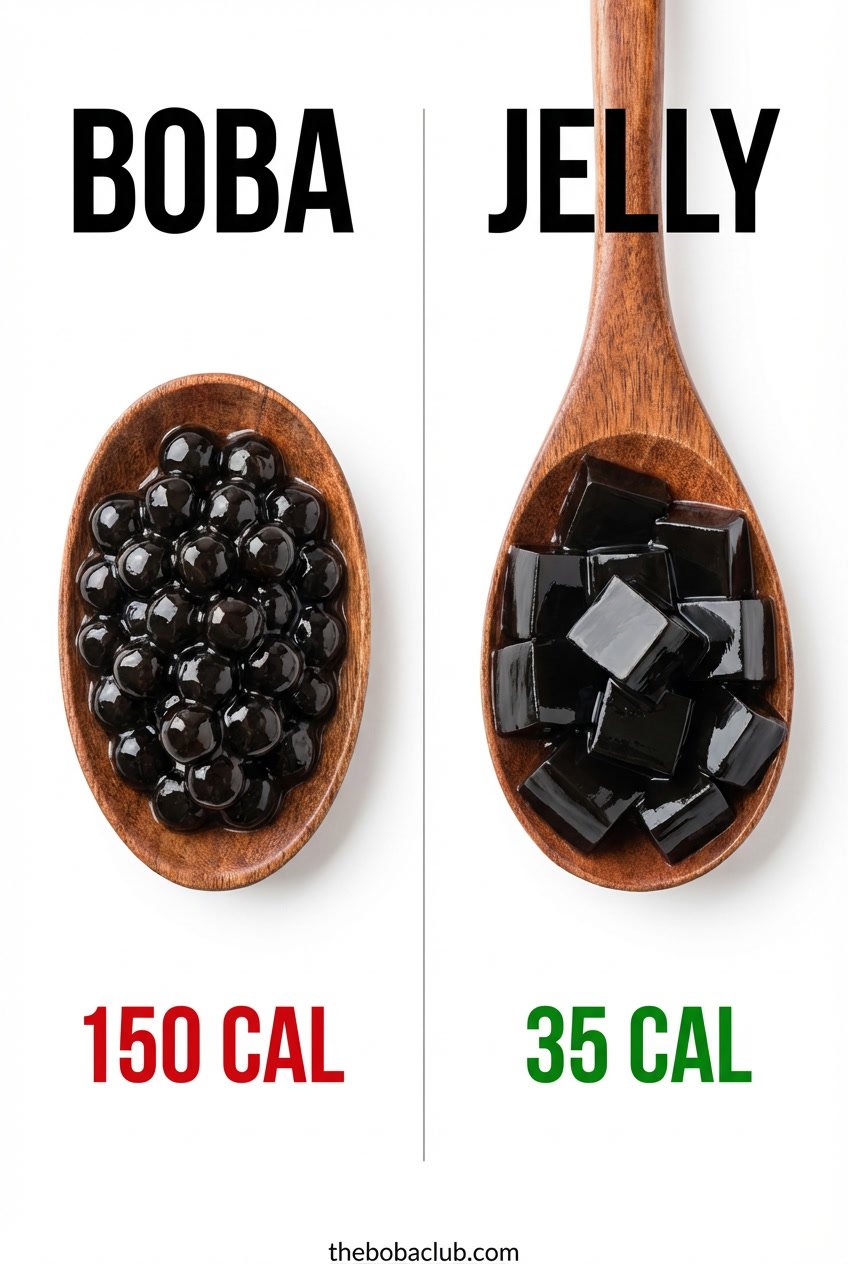
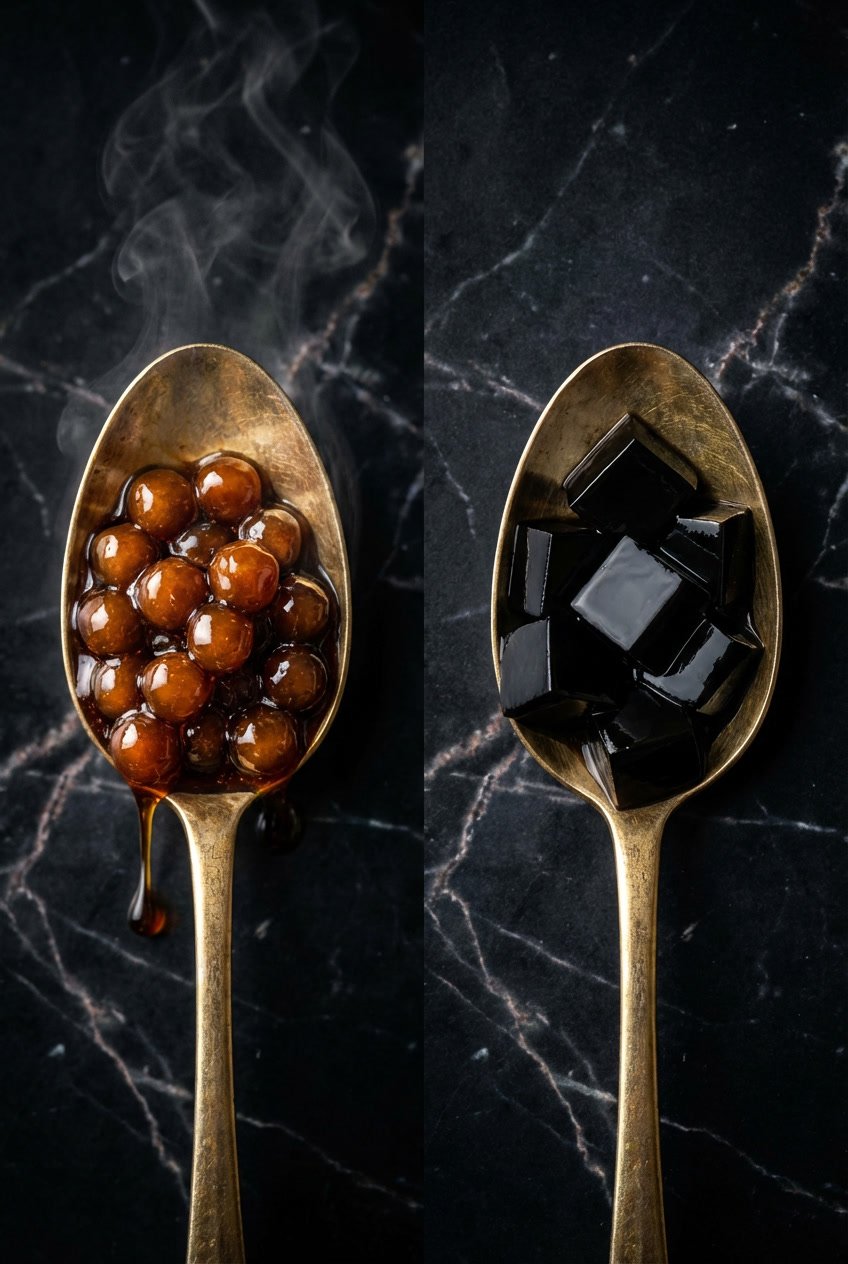
If we look at the numbers purely in black and white, the winner of grass jelly vs. boba is obvious. Tapioca pearls are made from cassava starch and are almost always soaked in a brown sugar syrup to keep them chewy. That means they are dense, carb-heavy, and sugary. Grass jelly, on the other hand, is mostly water and herbal extract.
- Tapioca Pearls: A standard scoop can easily hit 100–150 calories.
- Grass Jelly: That same volume is often just 30–50 calories.
When comparing grass jelly vs. boba, swapping pearls for jelly basically saves you 100 calories instantly. That’s the difference between a “treat” and a “daily habit.” If you want to see exactly how this changes your specific drink, run your order through my BobaCal Calculator to get the hard numbers.
The Calorie Cost of Chewing
Calories per standard scoop (approx. 1/4 cup)
2. Texture Wars: Bounce vs. Glide
Calories aren’t everything, though. If a drink isn’t satisfying, what is the point? The texture is the main battleground in grass jelly vs. boba.
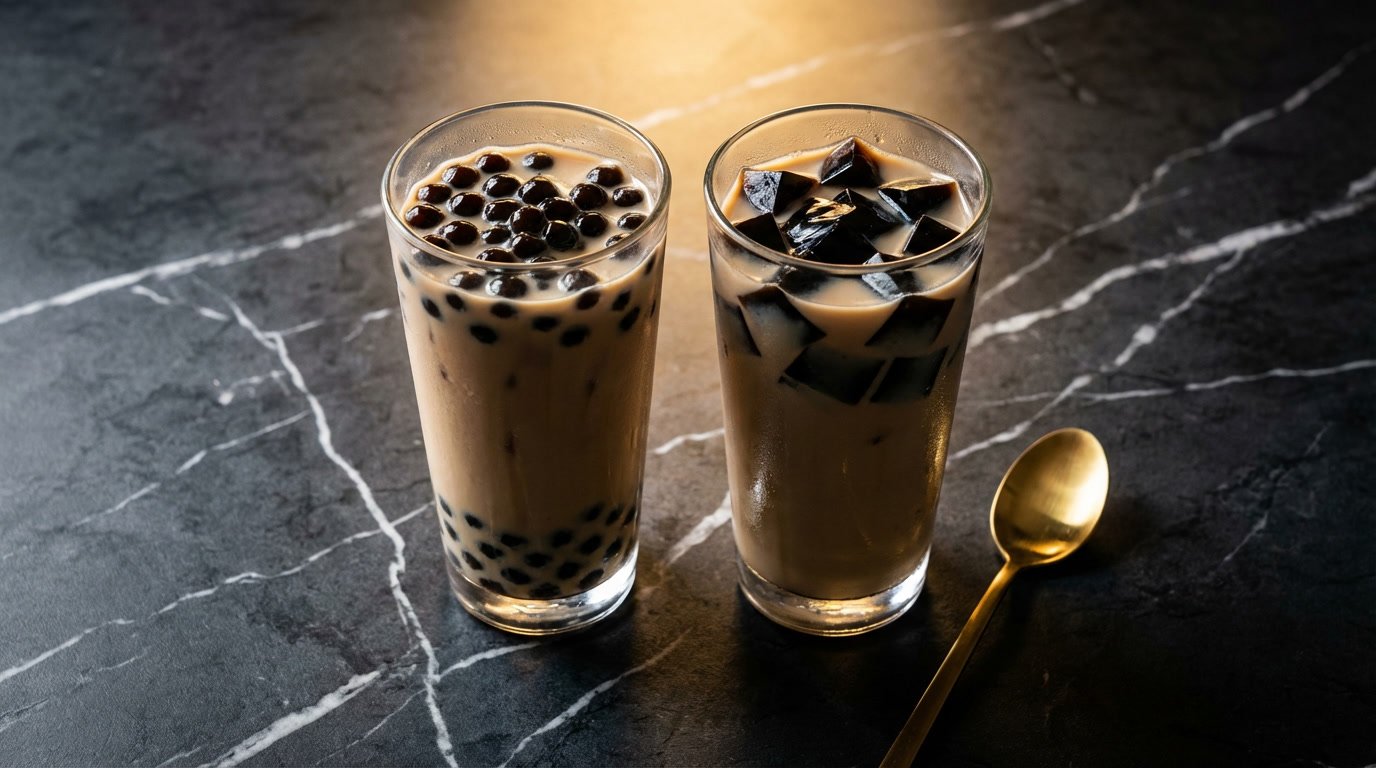
The Jelly Glide: Grass jelly is silky, cooling, and slightly herbal. Honestly, it’s effortless. It doesn’t fight back like boba does; it just effortlessly glides up the straw. I find it incredibly refreshing, especially in fruit teas where boba can sometimes feel like a heavy meal in a cup.
The Boba Bounce (The “QQ” Factor): Pearls give you that resistance. In Taiwan, they call this texture “QQ” – it translates to “bouncy” or “chewy,” like al dente pasta. It resists your bite just enough before giving way. If you need that specific “QQ” rebound to feel satisfied, grass jelly might feel a bit “empty” to you.
Quick Definition: What on Earth is “QQ”? If you’ve been reading my recipes and wondering why I keep typing “QQ” like I’ve fallen asleep on my keyboard, let me explain. It isn’t a typo! In the world of bubble tea, QQ is everything. It is the Asian equivalent of al dente pasta. It is that satisfying, springy “rebound” you get when you bite into a perfectly cooked tapioca pearl.
The Texture Spectrum
Pudding
Pearls
(Don’t Eat!)
3. Smart Swaps (So You Don’t Hate Your Drink)
You don’t have to go cold turkey on boba. I refuse to live a life without texture. Here is how I manage the grass jelly vs. boba balance without being miserable:
- The “Half-Half” Rule: Most shops will let you split the topping. Ask for “half pearls, half jelly.” You get the chew you crave, but you cut the calorie density significantly.
- Pairing Matters: Grass jelly is superior in milk teas and matcha because the herbal note cuts through the creaminess. Pearls are the undisputed king of brown sugar drinks because they hold the syrup better.
- Watch the Sugar: Often, it’s not the topping that kills your diet; it’s the syrup. I always check my Bubble Tea Toppings guide to remind myself which add-ons are sugar bombs (looking at you, Pudding) and which are safe.
4. The Verdict
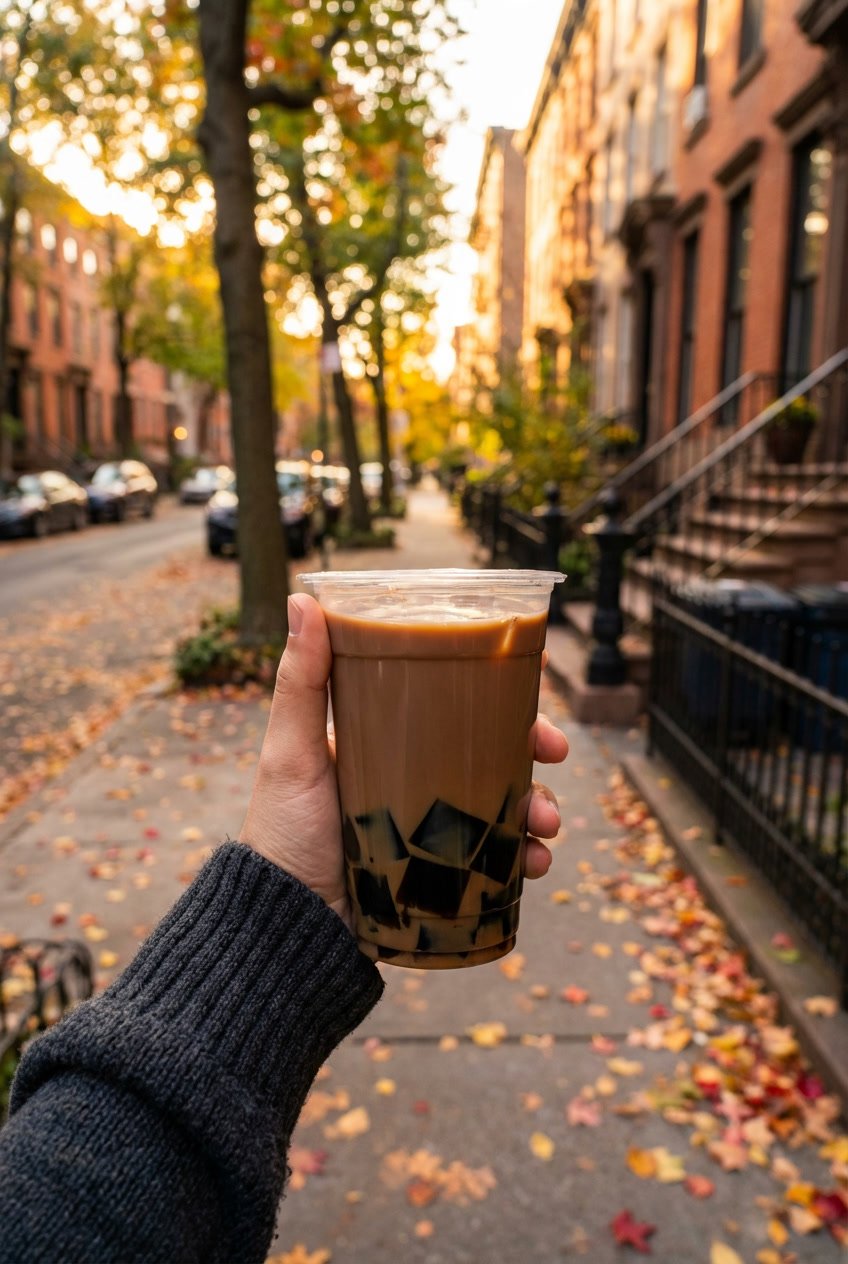
If you want volume without the weight, grass jelly is the clear winner of grass jelly vs. boba. It fills the cup physically without filling you out physically. But if you are having a bad day and emotionally need that chew? Get the pearls. Just adjust your sugar level down to 30% to balance it out. Life is too short for sad tea.
5. Your Grass Jelly vs. Boba Questions Answered
Does grass jelly taste like grass?
No, thankfully. It has a mild, slightly herbal taste that is very similar to chamomile or mint, often with a hint of honey. It is refreshing, not grassy.
Is grass jelly keto-friendly?
It can be! Pure grass jelly is very low carb. However, in the grass jelly vs. boba comparison, remember that shops often soak the jelly in syrup too, so ask for “light syrup” if possible.
Why is my grass jelly bitter?
Real herbal jelly has a slight medicinal bitterness (like dark chocolate). This is actually a sign of quality, and it pairs beautifully with sweet milk tea.
Which is better for digestion?
Grass jelly is traditionally used in Chinese medicine to “cool” the body and aid digestion. Tapioca is pure starch and can be heavy on the stomach if you eat too much.
My Favourite Sip
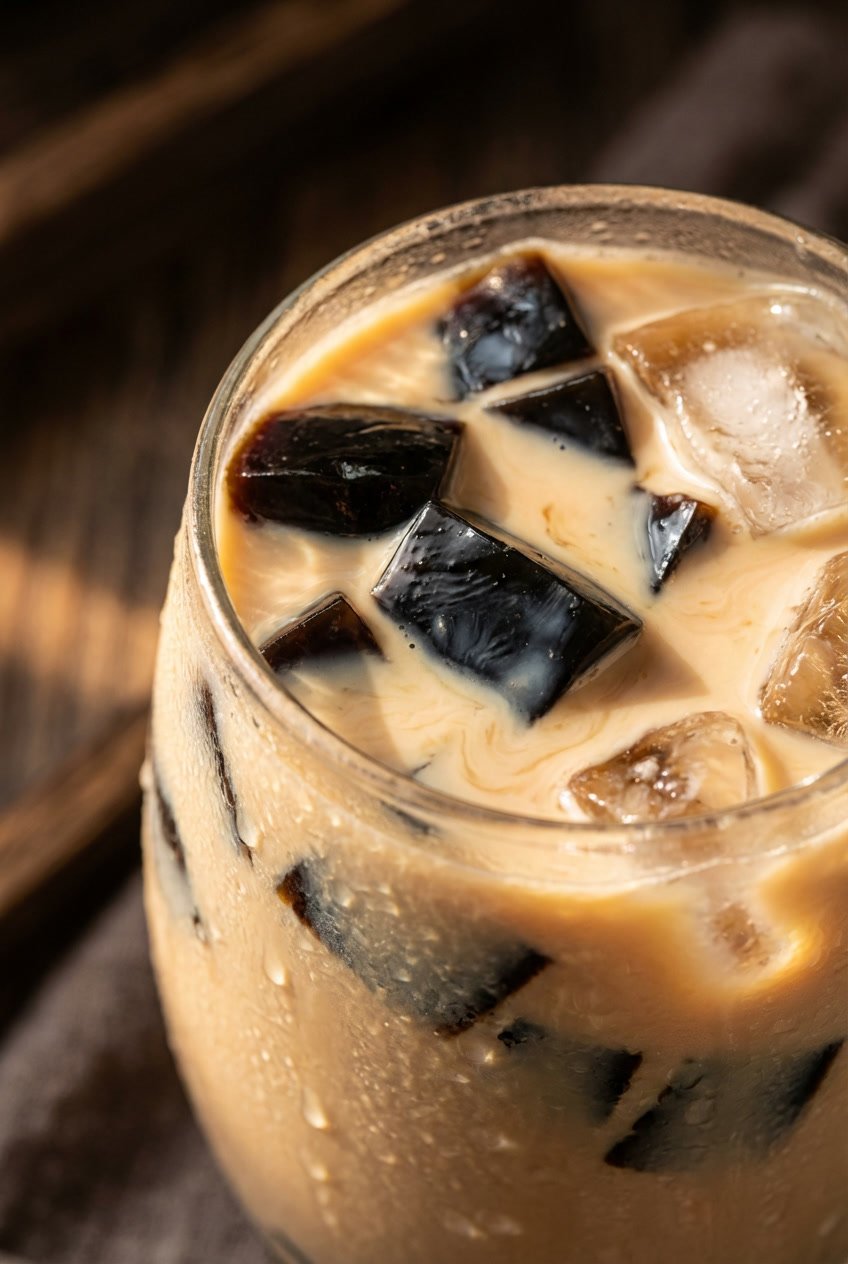
Personally, I am a grass jelly convert. My go-to order is a proper Earl Grey Boba with 30% sugar and a massive scoop of grass jelly. The floral bergamot cuts right through the herbal jelly for a sophisticated finish that feels indulgent but light. If you are still unsure about the grass jelly vs. boba choice, play around with the combinations on the BobaCal Calculator until you find a mix that fits your goals. Let me know in the comments: are you Team Chewy or Team Silky?