The Ultimate Matcha Bubble Tea Recipe: A Healthy-ish Homemade Guide
If you want to know what’s currently “a vibe” in the beverage world, forget TikTok. You just need to live with teenagers.
In my NYC apartment, the current obsession is matcha. My 13-year-old has basically turned our kitchen into a miniature, slightly chaotic matcha science lab. She’s constantly whisking up vibrant green concoctions for her older, 17-year-old sister, who receives them with the kind of critical nod usually reserved for high-end sommeliers.
I’ll admit, as a mum, I’m secretly thrilled. Compared to the neon-colored, sugar-bomb energy drinks they could be obsessed with, a powdered green tea leaf rich in antioxidants feels like a massive win.
But here’s the thing: that glowing green “health halo” around matcha can be deceiving. A typical boba shop matcha latte is often loaded with just as much sugar and nasty non-dairy creamer as any other milk tea.
So, I decided to intervene in the kitchen lab. We’re taking all that teen enthusiasm and applying a little “sip smarter” logic.
This guide is everything we’ve learned about making a cafe-quality matcha bubble tea recipe at home. It tastes incredible, gets the seal of approval from the toughest critics I know (my daughters), and actually delivers on those health benefits without the massive sugar crash.
The Truth Behind the “Health Halo”
Why is everyone, including my teenagers, suddenly obsessed with powdered green tea?
Unlike regular green tea, where you steep the leaves and throw them away, with matcha, you are drinking the entire leaf, ground into a fine powder. That means you are getting a massive, concentrated dose of nutrients – specifically antioxidants. If you want the actual benefits of matcha without the sugar bomb, you have to take control and use a quality homemade matcha bubble tea recipe.
My personal favourite benefit is something called L-theanine. It’s an amino acid that creates a calm, focused alertness. It’s the opposite of the jittery, anxious spike and crash you get from too much coffee. It’s basically high-quality fuel for a busy NYC day (or an intense homework session).
The Boba Shop Reality Check
But here is the massive caveat. That vibrant green colour often blinds people to reality.
In many standard boba shops, a “Matcha Milk Tea” isn’t just tea and fresh milk. That healthy powder is often pre-mixed with lots of sugar, or it’s whisked into a drink loaded with non-dairy creamer powders and high-fructose syrups to make it sweet and creamy enough for a mass audience.
You think you’re ordering a health drink, but you’re essentially getting a green-tea-flavoured milkshake.
(If you want the deep dive on whether boba can fit into a balanced diet, check out my post on Is Bubble Tea Healthy? And to understand just how much sweetener is hiding in those shop drinks, read my definitive guide to bubble tea sugar levels.
So if you want the actual benefits of matcha without the sugar bomb, you have to take control and make it yourself.
The Sourcing Secret: Why “Better” Isn’t Always Best for Boba
If you’ve ever looked at matcha prices online, you know the sticker shock is real. Why is one tin $50 and another $15?
This post contains Amazon affiliate links. As an Amazon Associate, I earn from qualifying purchases at no extra cost to you.
It comes down to grading. And my biggest piece of advice here is: do not use expensive ceremonial-grade matcha for bubble tea.
Think of ceremonial grade like a fine, aged wine. It’s delicate, subtly grassy, and naturally sweet. It is grown specifically to be whisked with plain hot water and enjoyed on its own. If you mix it with rich milk, sugar, and chewy pearls, all those gorgeous, subtle nuances will completely disappear. You are essentially wasting money.
For a latte or bubble tea, you want what’s often labelled as “Latte Grade” or “Premium Culinary Grade.”
These grades have a bolder, slightly stronger flavour profile that can actually stand up to the rich oat milk and sweetener. They cut through the creaminess so you still get that distinct matcha taste. Plus, they are significantly more affordable, which matters when my teenagers are whipping up this matcha bubble tea recipe every day after school.
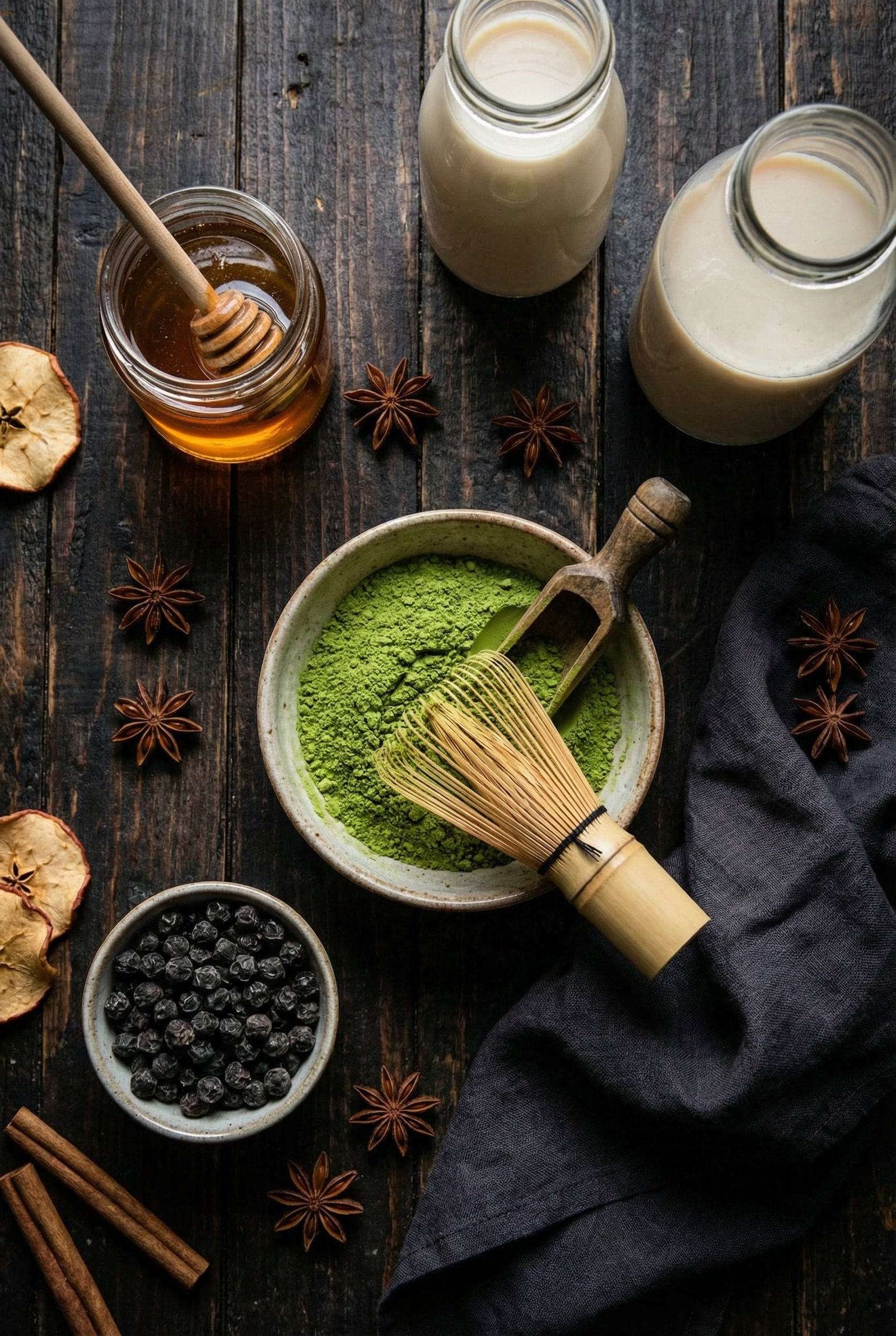
The Savvy Shopper’s Rule: Look for a vibrant, electric green powder produced in Japan. If the powder looks dull, yellowish, or brownish-green, leave it on the shelf – it will taste bitter and stale.
The Technique: The Secret to Clump-Free Matcha
This is the part where most attempts at a homemade matcha bubble tea recipe go wrong, resulting in a drink with bitter green lumps floating in it. Not chic.
Matcha is an incredibly fine powder that doesn’t dissolve like sugar; it has to be suspended in the liquid. If you just dump it into a cup of cold milk and stir with a spoon, it will never work.
The Tools
You have two options here:
- The Traditionalist: A bamboo whisk (chasen). It looks beautiful, it creates the best micro-foam, and using it feels like a lovely little ritual.
- The Realist: A handheld electric milk frother. It’s fast, it’s efficient, and it blasts through clumps in seconds. This is what we use on busy mornings.
If you’re just starting with matcha, or even gift this cute matcha-making set, this little tool kit makes it much easier to get that café-style froth at home
The Secret Step: The Paste
Regardless of your tool, the secret is to never add a lot of liquid at once.
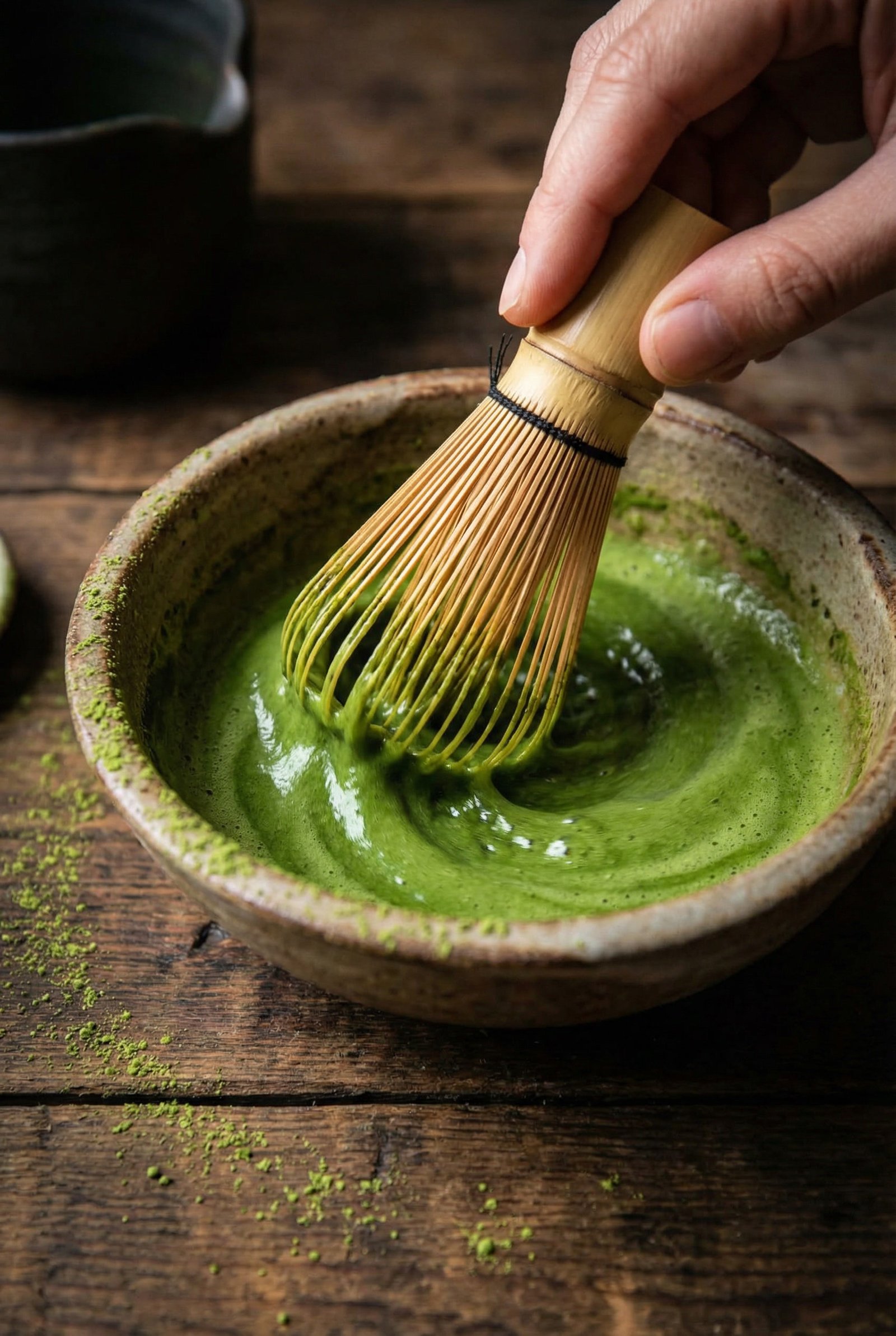
Always sift your matcha powder first into your bowl or cup to break up initial lumps. Then, add just a tiny splash of warm (not boiling!) water. Whisk this vigorously to create a smooth, vibrant green paste. Then you add the rest of your liquid. This ensures a perfectly smooth drink every time.
What You Need to Make It
I’ve kept our favourite matcha bubble tea recipe pretty simple, honestly. The luxury factor comes from just using really high-quality ingredients instead of a complicated process
The Matcha Essentials
For the Latte
- ✓ 1-1.5 tsp Latte/Culinary Grade Matcha Powder
- ✓ 2 tbsp Warm Water (around 175°F/80°C)
- ✓ ¾ cup Milk of choice (Oat or Whole milk work best)
- ✓ 1-2 tbsp Sweetener (Simple syrup, honey, or maple syrup)
- ✓ Ice (for iced version)
For the Boba
- ✓ ¼ cup Tapioca Pearls (quick-cook is easiest)
- ✓ 1 tbsp Brown Sugar or Honey (for coating pearls)
Your Toolkit
- ✓ Bamboo Whisk or Electric Frother
- ✓ Small Bowl (for whisking)
- ✓ Small Sifter (optional but recommended)
- ✓ Tall Glass & Wide Straw
How to Make It (Step-by-Step)
I’ve designed this matcha bubble tea recipe to be simple but luxurious, focusing on getting that perfect, clump-free texture. The steps below are for a popular iced latte, but you can easily skip the ice and use steamed milk for a cozy hot version.
1. Prepare the Pearls
Cook your tapioca pearls according to the package directions. Drain them and immediately toss them in a small bowl with a tablespoon of brown sugar or honey. This keeps them chewy and adds a little sweetness.
2. Create the Matcha Base
Sift your matcha powder into a small bowl to remove lumps. Add the 2 tablespoons of warm water. Using your bamboo whisk in a “W” motion, or your electric frother, whisk vigorously until you have a smooth, vibrant green paste with a thin layer of foam on top.
3. Sweeten the Deal
Stir your sweetener of choice directly into the warm matcha paste so it dissolves easily.
4. Assemble Your Drink
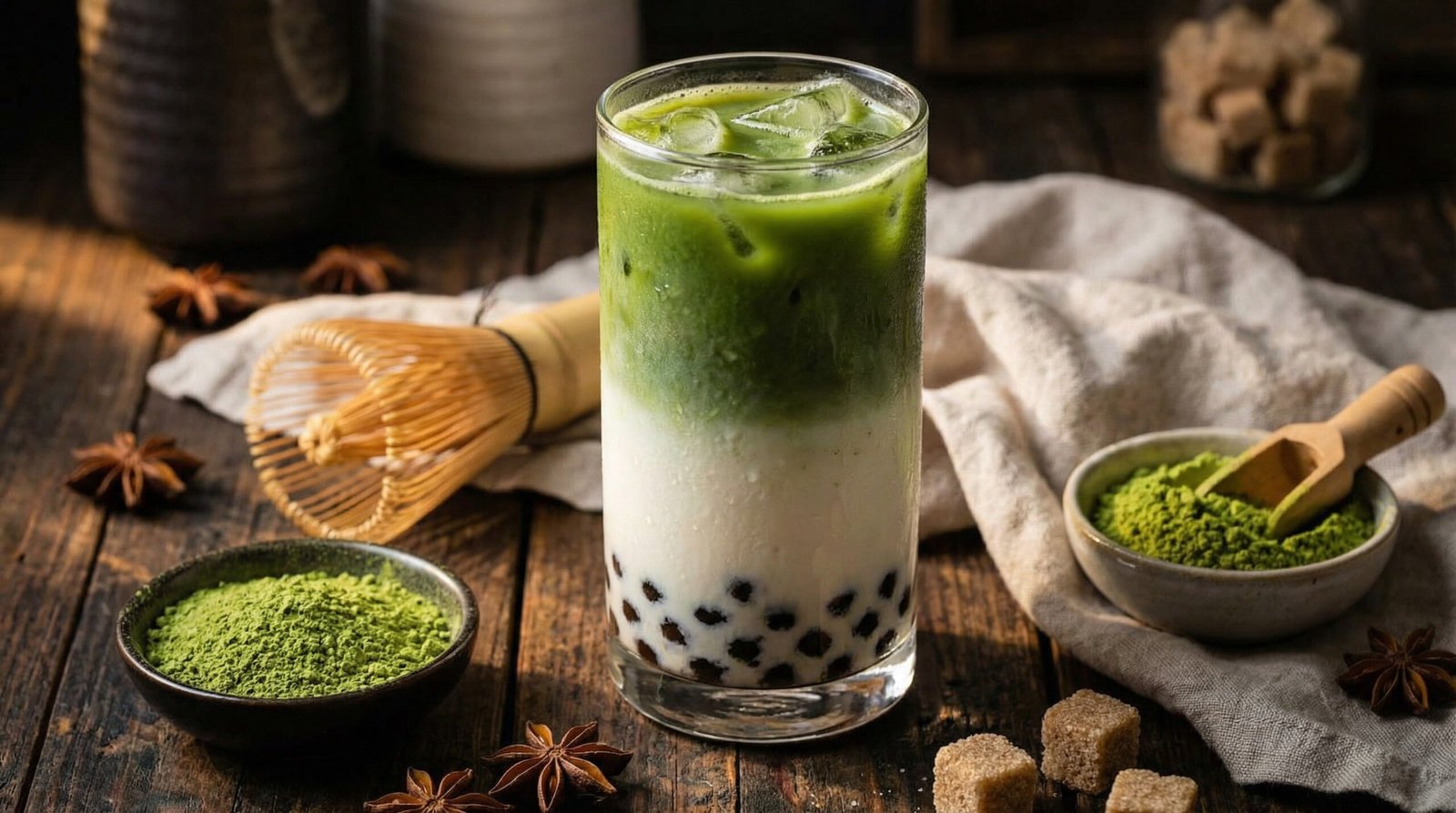
Add the sweetened tapioca pearls to the bottom of your tall glass. Fill the glass with ice. Pour your milk of choice over the ice. Finally, slowly pour the vibrant green matcha mixture over the top of the milk.
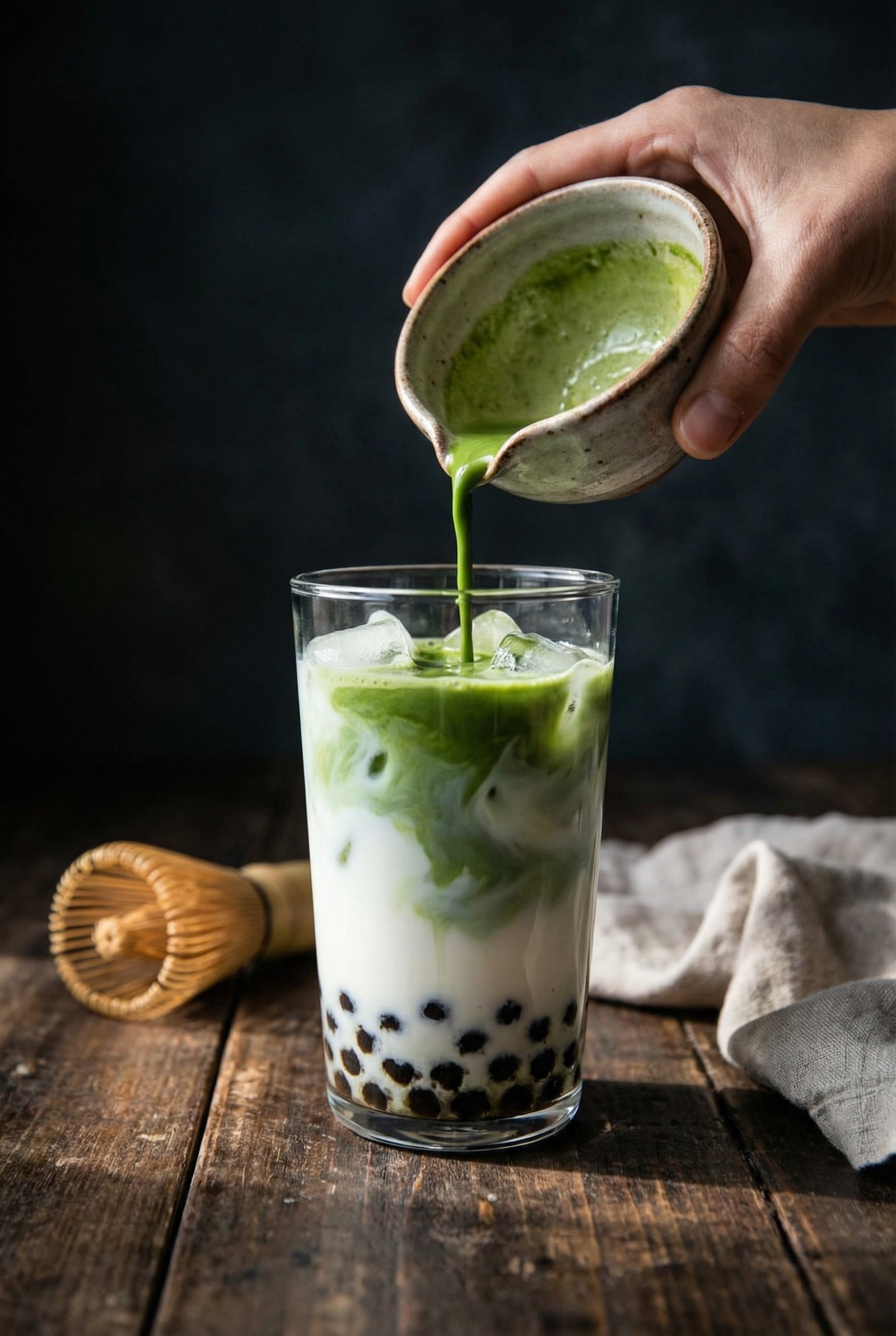
Before sipping, give it a good stir with your wide straw to mix those beautiful layers together.
Curious About the Calories in Your Matcha Creation?
Using honey instead of syrup? Whole milk instead of oat? Stop guessing the nutrition facts.
Calculate My Drink NowThe Printable Recipe

The Ultimate Homemade Matcha Bubble Tea
Ingredients
- For the Matcha Latte:
- 1 ½ tsp Latte Grade or Premium Culinary Matcha Powder
- 2 tbsp warm water (around 175°F/80°C, not boiling)
- ¾ cup Milk of choice (Oat milk is recommended for creaminess)
- 1 - 2 tbsp liquid sweetener (simple syrup, honey, or agave to taste)
- 1 cup Ice cubes
For the Boba: Group
- ¼ cup quick-cook tapioca pearls
- 1 tbsp brown sugar or honey (for coating cooked pearls)
Instructions
- Prepare the Pearls: Cook the tapioca pearls according to the package directions for a chewy texture. Drain well and immediately toss them in a small bowl with 1 tbsp brown sugar or honey. This prevents sticking and adds flavor.
- Whisk the Matcha Base: Sift the matcha powder into a small bowl or wide mug to remove lumps. Add the 2 tbsp of warm water. Using a bamboo whisk in a "W" motion or a handheld electric frother, whisk vigorously for about 15-30 seconds until the mixture is a smooth, vibrant green paste with a thin layer of froth on top.
- Sweeten: Stir your desired amount of liquid sweetener directly into the warm matcha paste until dissolved.
- Assemble the Drink: Add the sweetened tapioca pearls to the bottom of a tall glass. Fill the glass generously with ice. Pour your milk of choice over the ice. Finally, slowly pour the sweet green matcha shot over the top of the milk to create a layered effect.
- Serve: Insert a wide boba straw and stir well before sipping to mix the layers and enjoy!
Notes
- Water Temperature Matters: Do not use boiling water, as it will burn the matcha and make it taste bitter. Aim for steaming but not bubbling (around 175°F or 80°C).
- Choosing Matcha: Don't waste money on Ceremonial grade for this. A high-quality "Latte Grade" or "Premium Culinary Grade" has a bolder flavor that stands up better to milk and sugar.
- Milk Options: Oat milk is our top choice for a creamy, dairy-free base that complements the earthy matcha, but whole dairy milk works beautifully too.
- Nutrition Facts: Want to know exactly how much sugar or calories are in your specific version? Use the BobaCal Nutrition Calculator linked in the post for a precise breakdown based on your milk and sweetener choices.
Nutrition Information:
Yield: 1 Serving Size: 1Amount Per Serving: Calories: 399Total Fat: 11gSaturated Fat: 7gUnsaturated Fat: 4gCholesterol: 44mgSodium: 285mgCarbohydrates: 52gFiber: 4gSugar: 37gProtein: 22g
Nutrition information is an estimate only. Values will vary based on brands, add-ins, and portion sizes.
Your Matcha Questions, Answered
Is matcha bubble tea actually healthy?
Yes and no. Matcha powder itself is packed with antioxidants. But boba shop versions are often loaded with sugar and non-dairy creamer, canceling out the benefits. Making it at home with real milk and less sugar is the healthiest way.
Why is my matcha lumpy?
You likely added the powder straight to a large amount of cold liquid. Matcha needs to be whisked into a smooth paste with a tiny bit of warm water first, before adding the rest of your milk.
Can I use regular green tea bags instead of matcha?
No, that will make a green tea latte, not a matcha latte. Matcha is the whole tea leaf ground into a powder, which gives it a much stronger, distinct flavour and vibrant colour that regular steeped tea can’t match.
My Final Sip
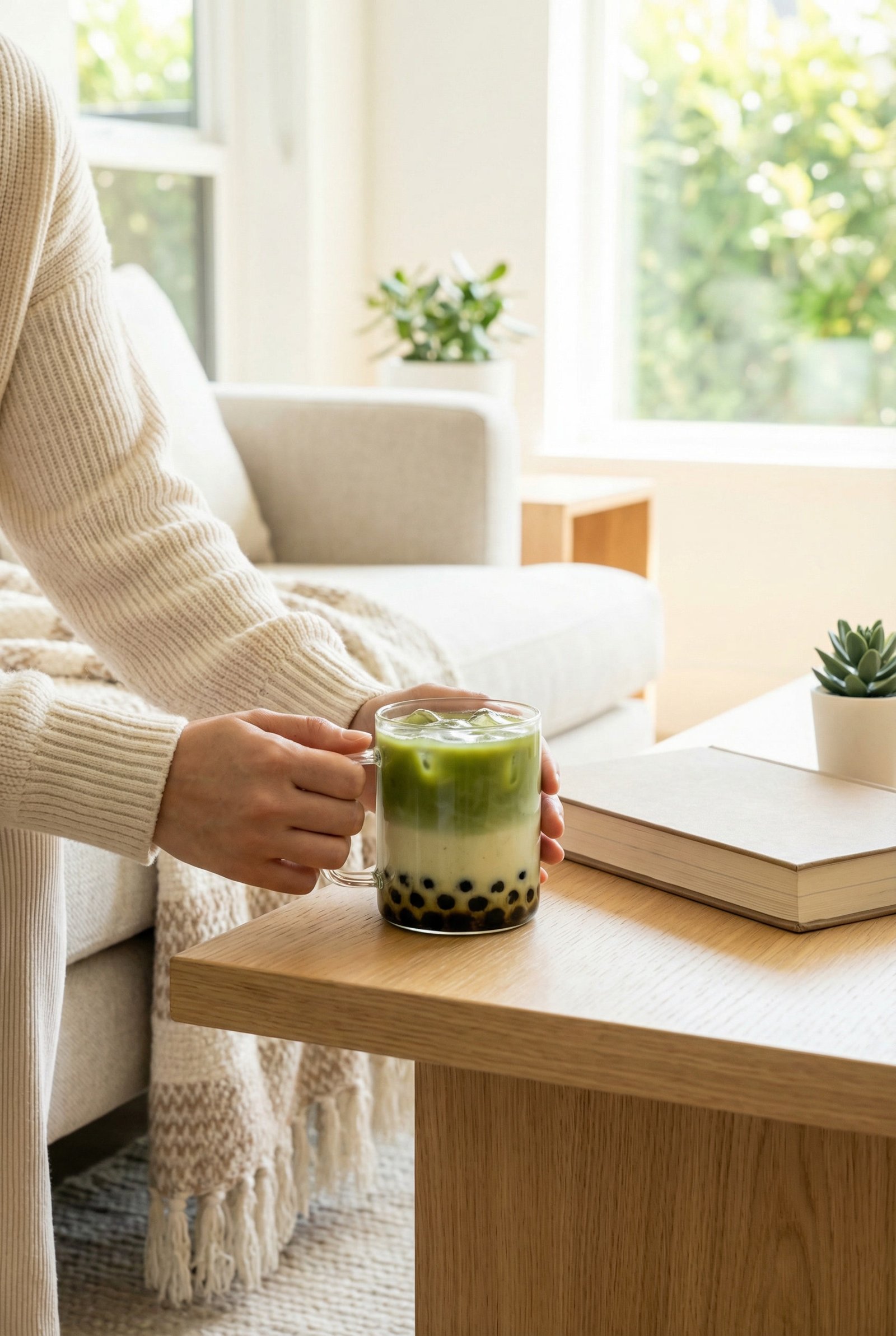
Matcha bubble tea is a fantastic, sophisticated drink. It has that earthy, complex flavour that feels a bit more grown-up than a standard fruit tea.
When you use this homemade matcha bubble tea recipe with good quality powder, real milk, and a controlled amount of sweetener, it absolutely can be a “smarter sip” that gives you calm energy instead of a sugar crash.
It’s a little bit of Zen in a glass – even if your kitchen, like mine, is currently being run by teenagers.