Is Bubble Tea Healthy? A Real Look at Bubble Tea Nutrition
Bubble tea is not exactly health food. Let’s clear that up first.
If you landed here after finishing a boba and wondering whether you just drank your way out of a reasonably balanced week, I get it. I’ve had that thought too.
Living in New York, I’m surrounded by wellness culture at all times. Green juices, protein bowls, people acting like joy is a character flaw. And still, I fully believe there is room in life for a good milk tea with proper chewy boba.
So, is bubble tea healthy? Not really, at least not in the way most people mean it. But that does not make it off-limits either.
The better question is what is actually in your cup, how much sugar and fat you are dealing with, and which choices make bubble tea feel more like an occasional treat versus a full dessert in disguise.
That is where understanding bubble tea nutrition helps. Once you know what changes the numbers, it gets much easier to order what you want without the weird guilt spiral afterward.
Why Bubble Tea Is Worth Talking About
Bubble tea is one of those drinks that can mean almost anything. That is part of the appeal. You can start with a tea base, change the sweetness, pick your milk, then add toppings depending on whether you want something light, creamy, chewy, or fully in dessert territory.
That flexibility is exactly why the nutrition side gets confusing. One order might be fairly reasonable, while another can land closer to a soda or milkshake without looking all that different in the cup.
A large milk tea with tapioca pearls and full sugar can get heavy quickly. A smaller drink with less sugar and lighter toppings can feel much more manageable, closer to a flavored latte than a full-on treat.
So the real question is not whether bubble tea is “good” or “bad.” It is where your drink falls on that range, and what changes actually make a difference.
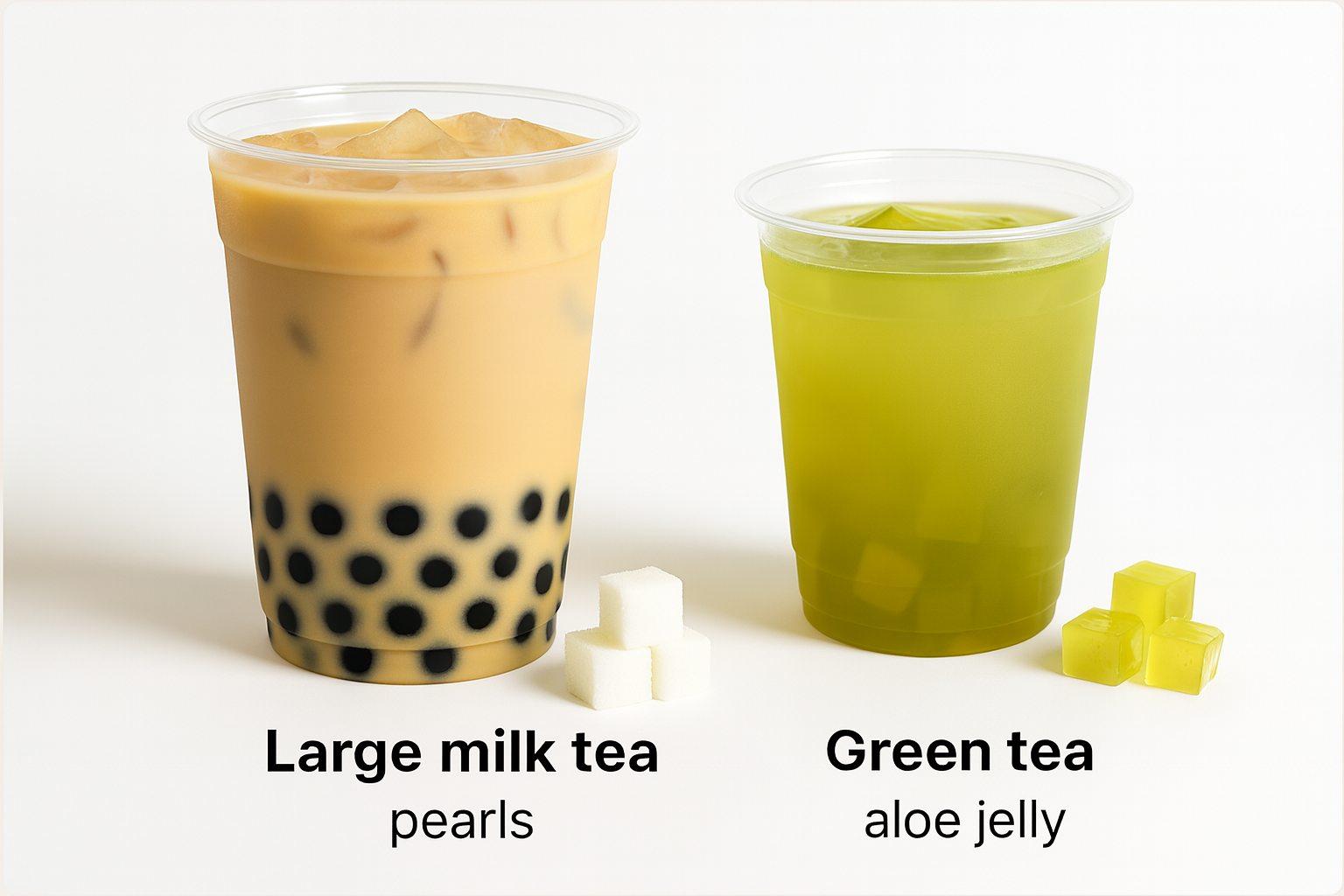
High-Calorie Bubble Tea vs Low-Calorie Bubble Tea
Same café, different choices. See how size, sugar, and toppings change your drink.
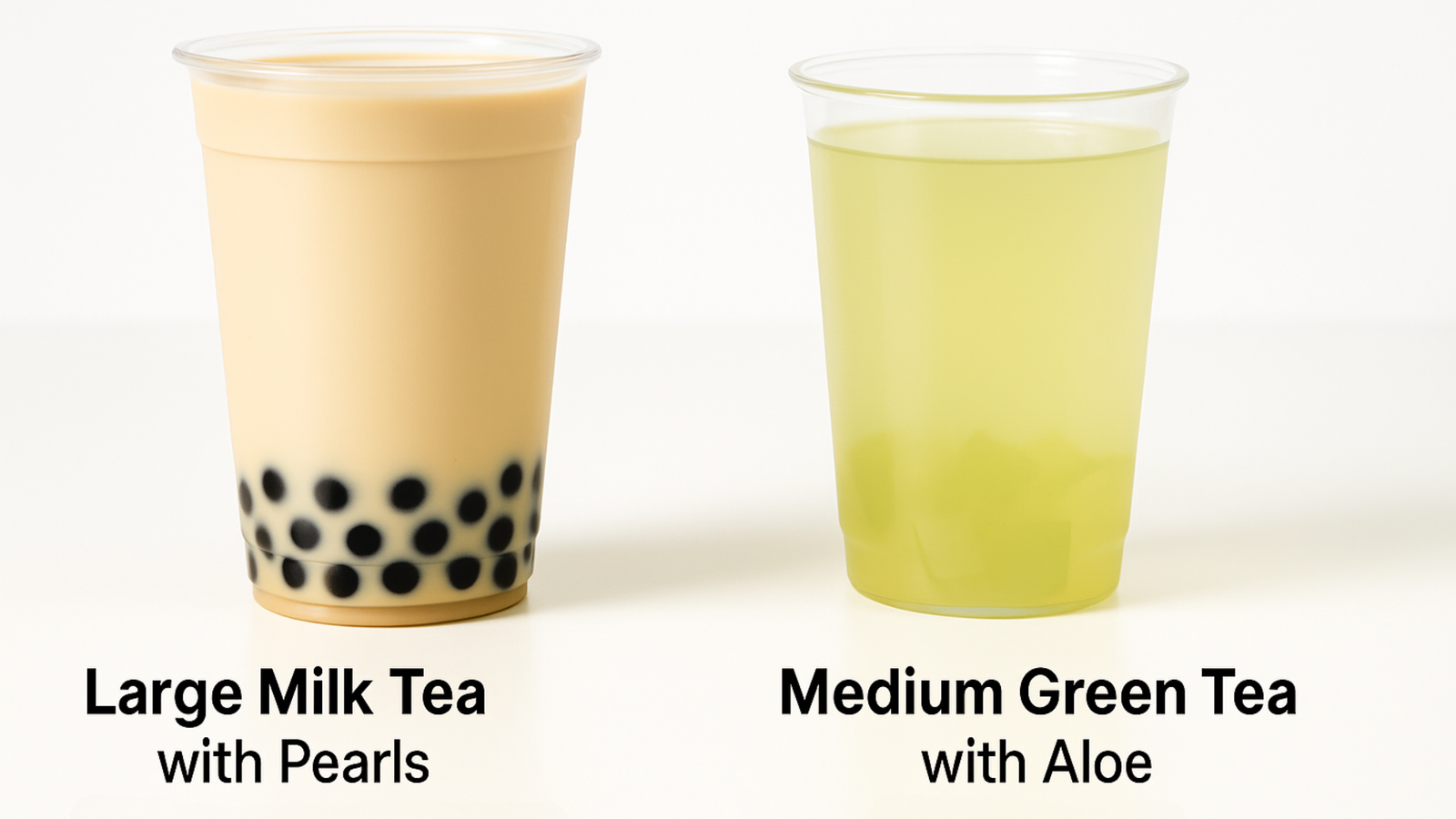
| Large milk tea (full sugar) + pearls | Medium green tea (30% sugar) + aloe |
|---|---|
| Calories: 400–500+ | Calories: ∼180 |
| Sugar: up to ∼15 tsp | Sugar: less than half |
| Toppings: tapioca pearls higher-cal topping | Toppings: aloe jelly lighter option |
The Major Components
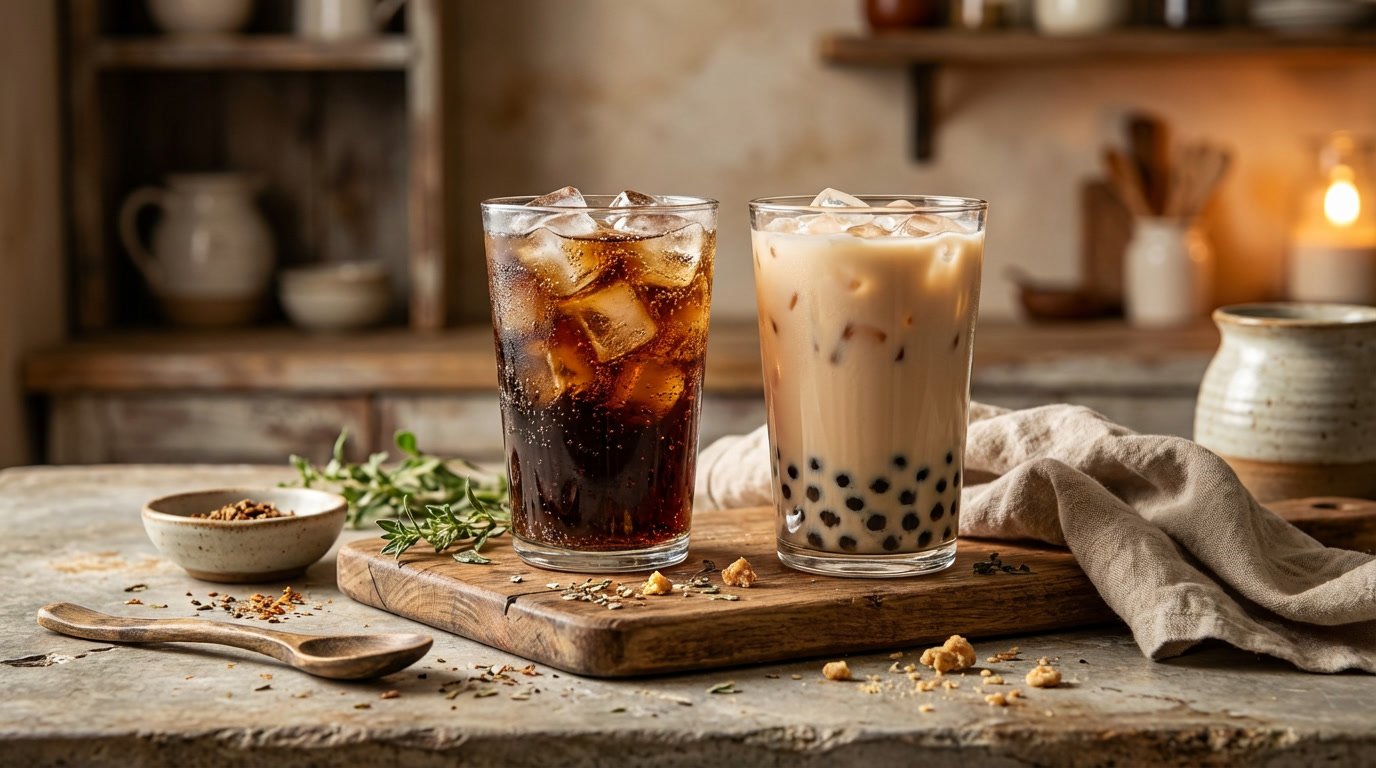
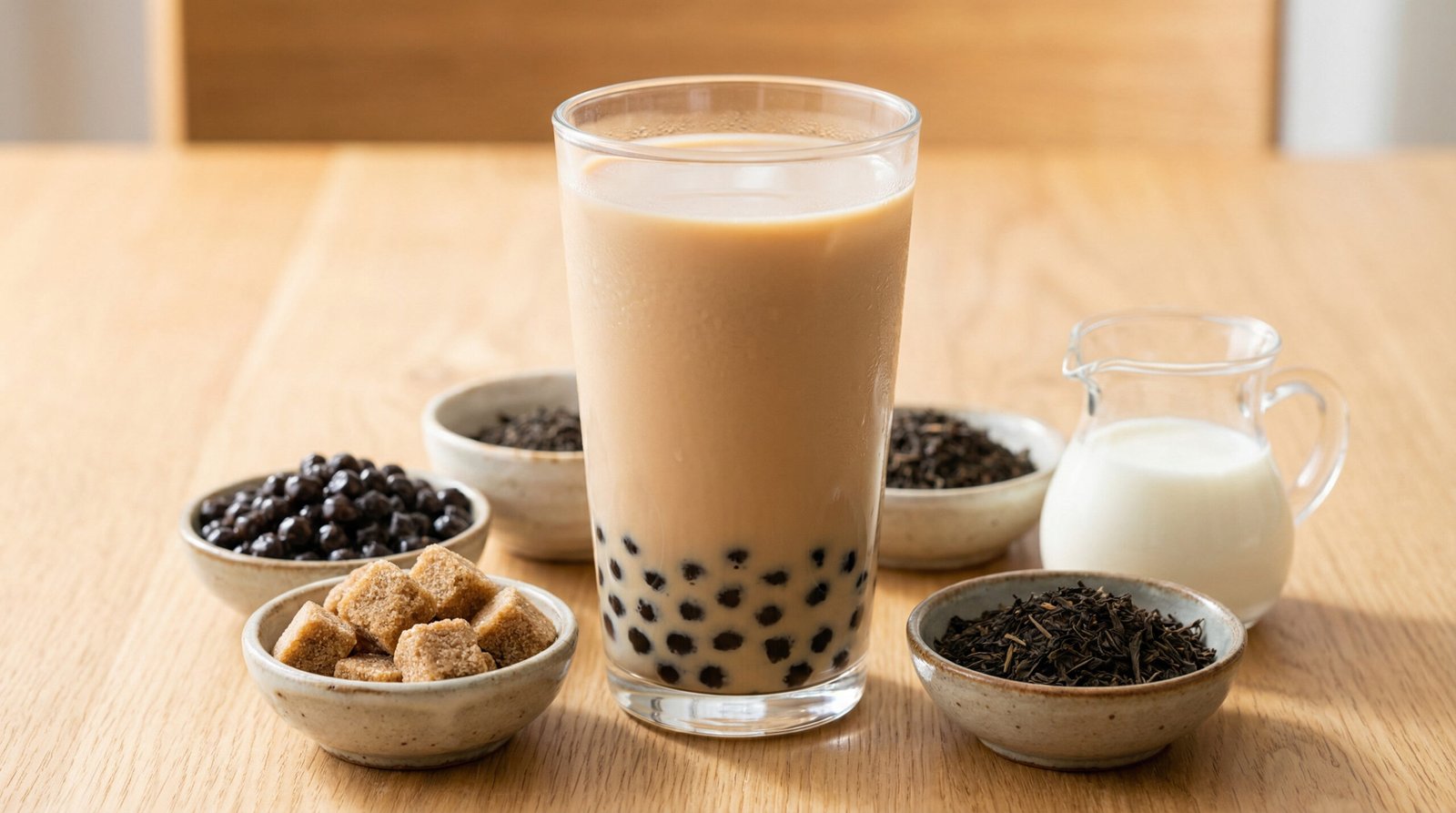
Bubble tea looks simple enough, but the nutrition really comes down to four main parts: the tea, the milk or creamer, the sugar, and the toppings. Each one changes the drink in a different way, which is why two cups can look similar and still land very differently.
The Tea
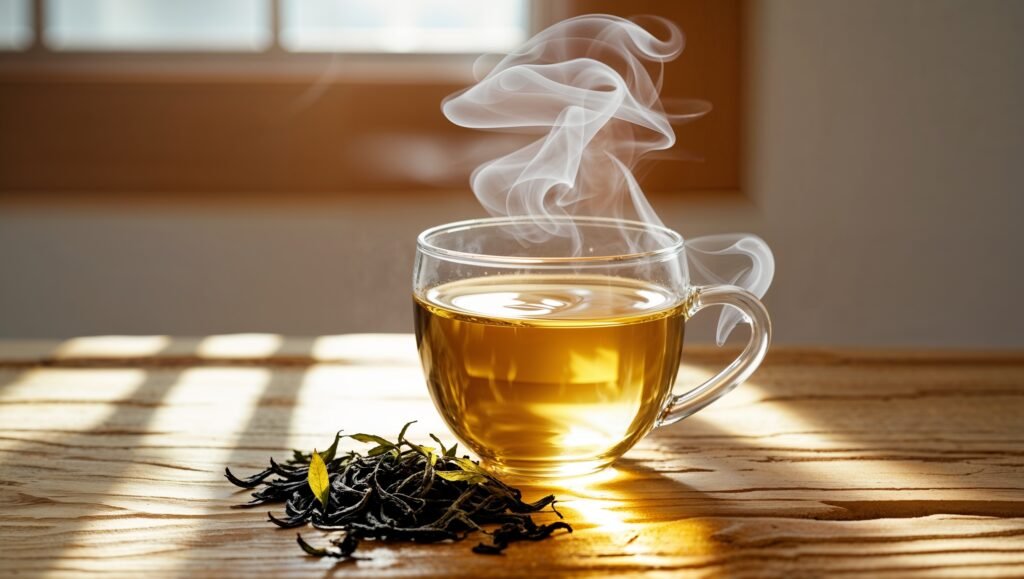
This is usually the easiest part. Most bubble tea starts with black tea, green tea, or oolong, and plain brewed tea is naturally very low in calories. It is also the part of the drink with the most going for it nutritionally, since tea contains antioxidants and other compounds people generally feel good about. On its own, this is usually the lightest and simplest part of the cup.
The Milk or Creamer
This is where bubble tea can start to shift from tea-based drink into something much richer.
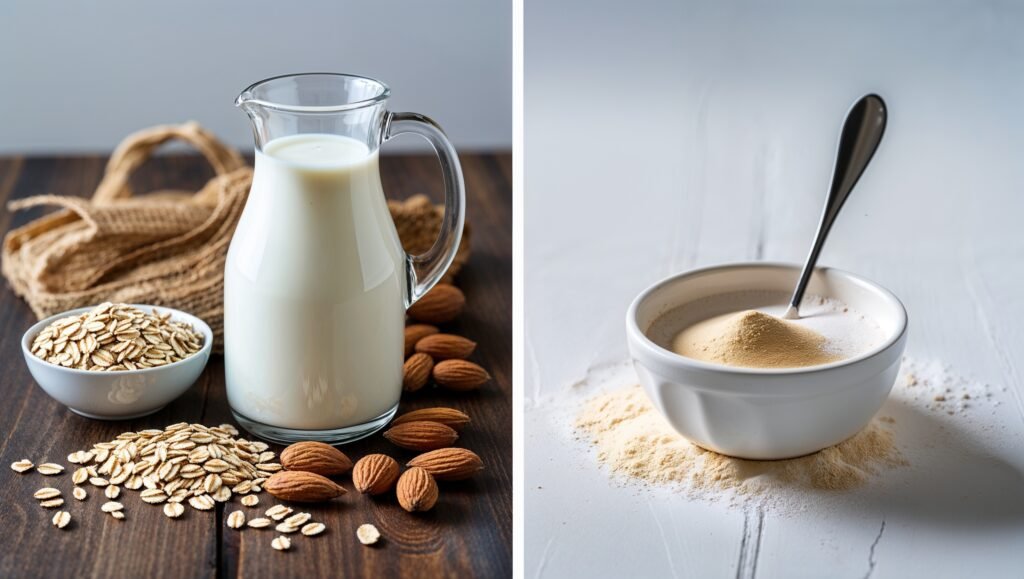
Fresh milk, whether that is dairy, oat, almond, or soy, usually gives you a cleaner ingredient list along with some protein, fat, and a better overall texture. Powdered creamers are a different story. They often come with added sugars, oils, and a heavier feel that can push the drink closer to dessert without making it especially satisfying.
This is also the point where a milk tea can start drifting toward milkshake territory. Not always, but much faster than most people expect.
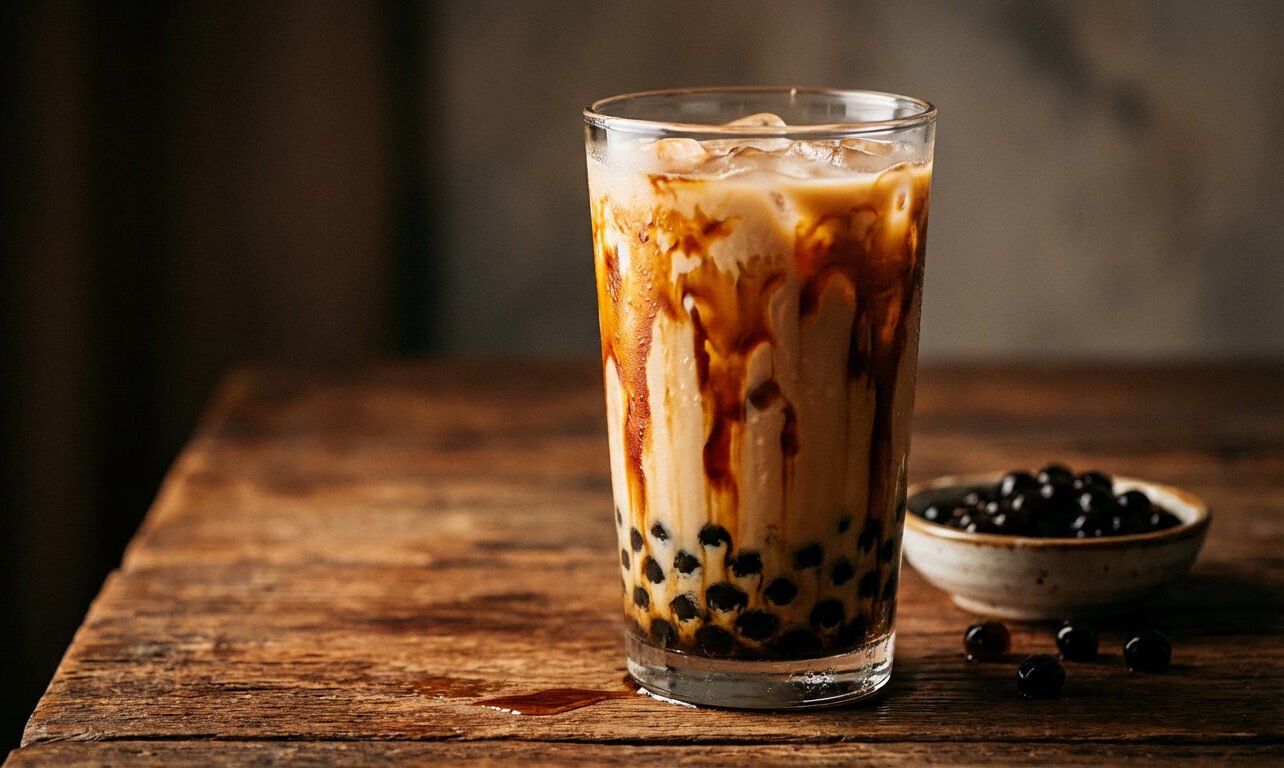
The Sugar Syrup
This is usually where bubble tea starts getting much sweeter than people expect.
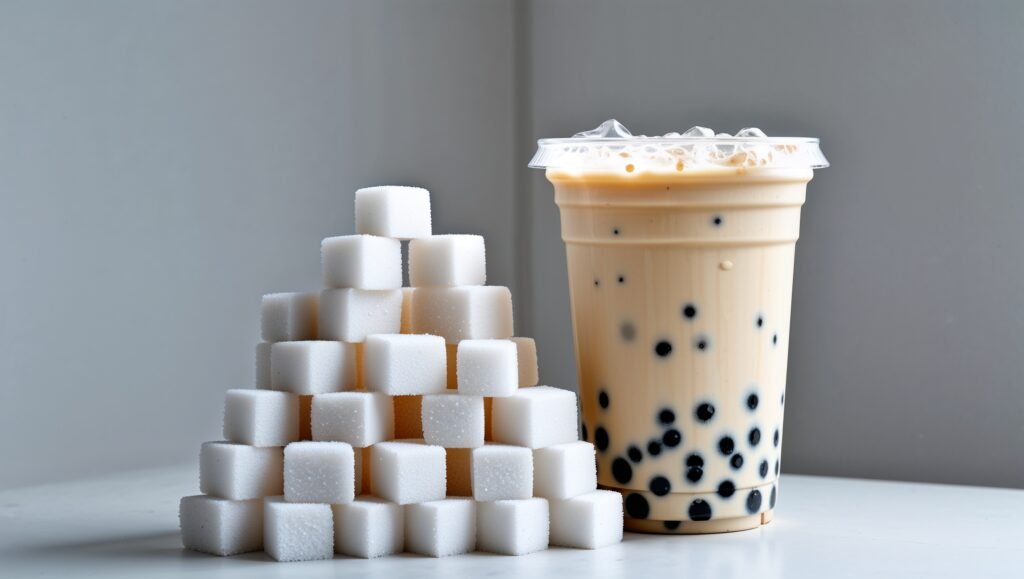
A traditional bubble tea may be sweetened with sugar syrup, honey, or flavored sugar powders, and a large drink at full sugar can easily go over 50 grams of sugar. That is more than the daily limit for added sugar that most health guidance recommends.
The good part is that most bubble tea shops let you adjust the sweetness level. You will usually see options like 100%, 75%, 50%, 30%, or 0%, which makes sugar one of the easiest parts of the drink to control.
Choosing the right kind of sugar is often the key to making bubble tea healthier. You can use the Sugar Swap Calculator to compare swaps and pick the one that works best for you.
The Toppings
Toppings are where bubble tea gets more fun, and where the calories can start creeping up without much warning.
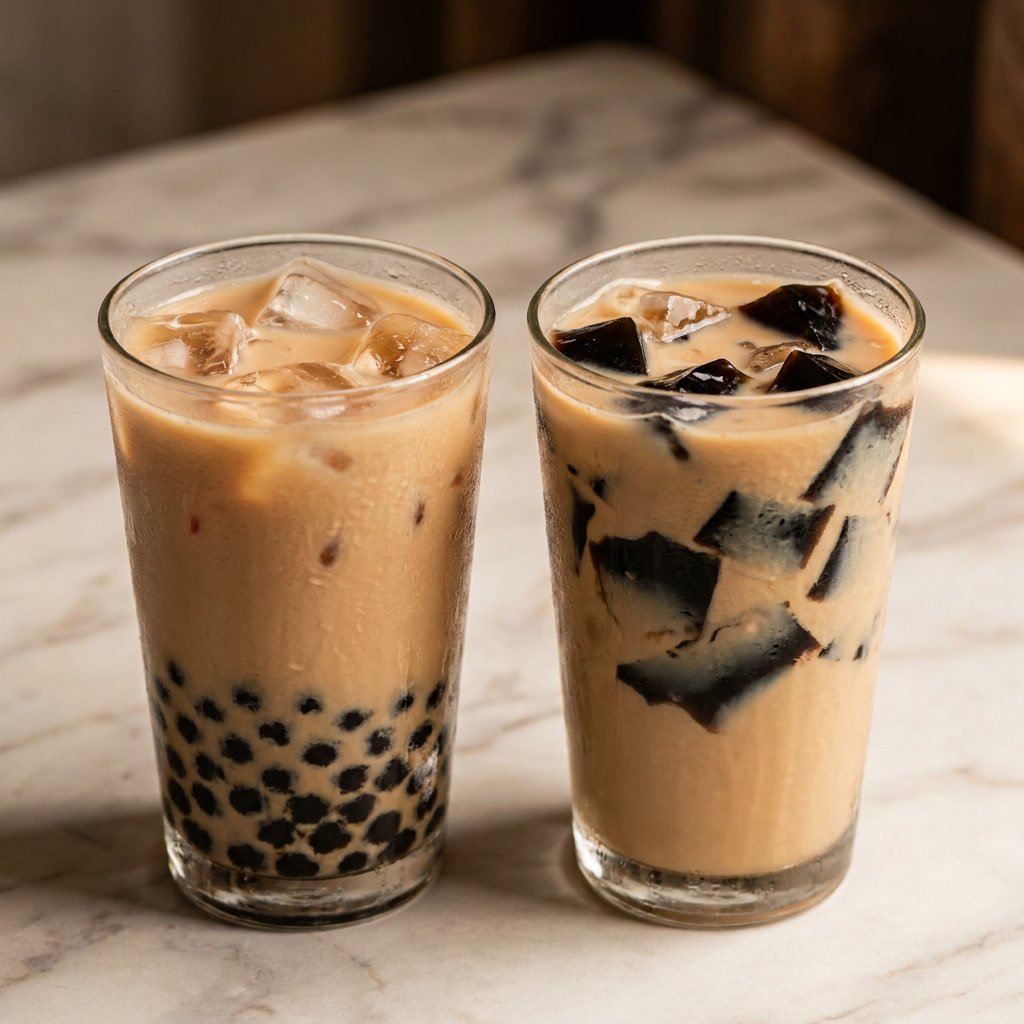
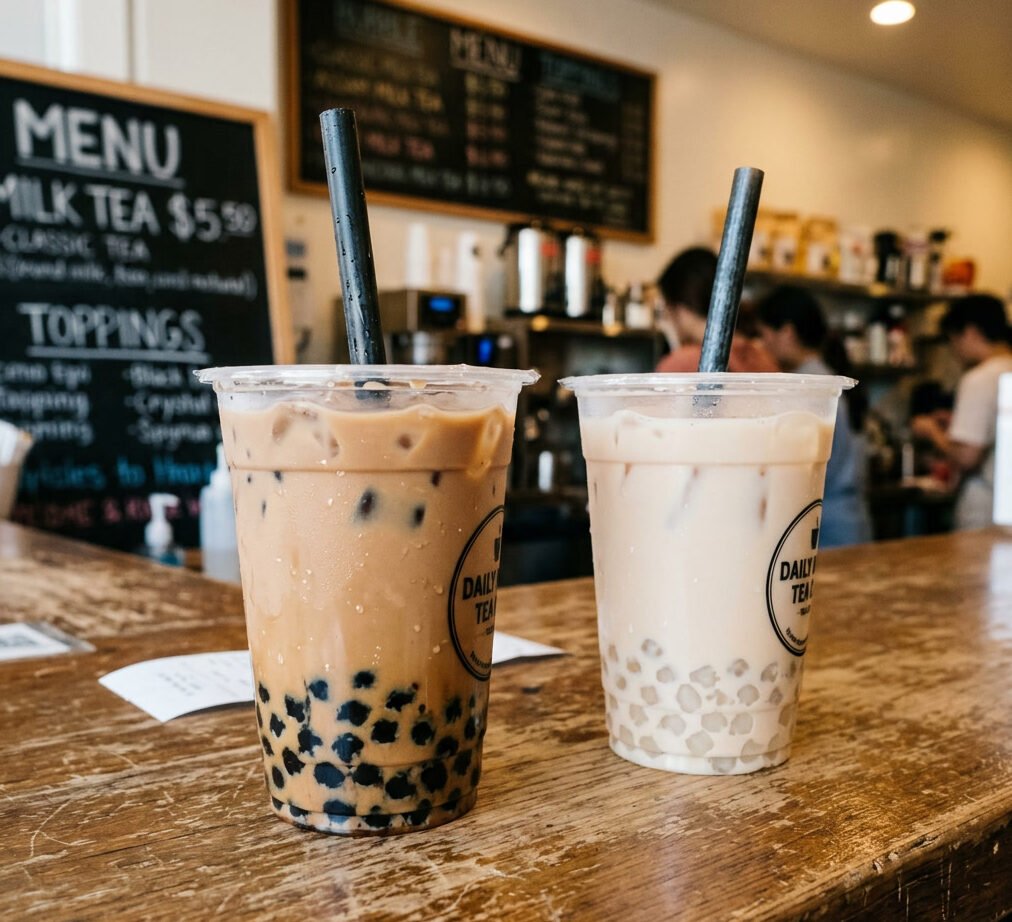
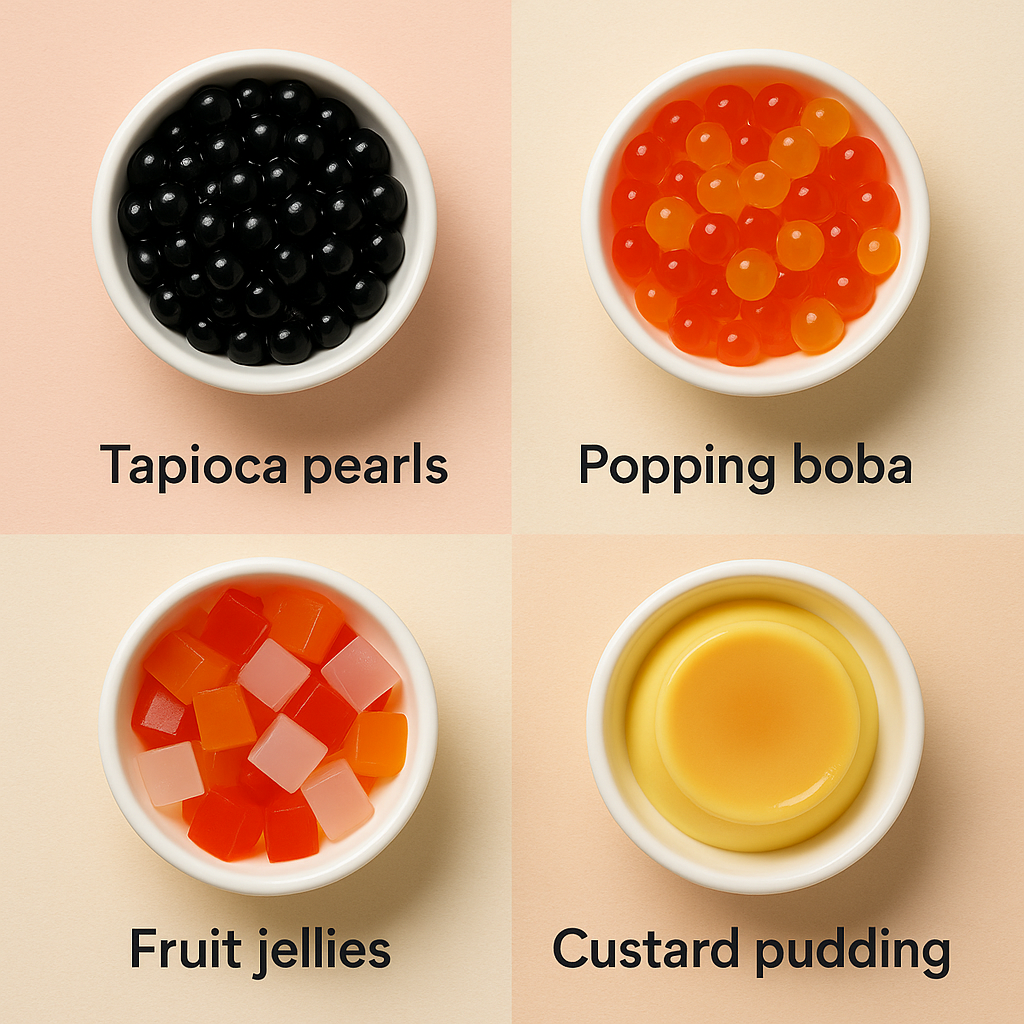
Classic tapioca pearls are usually the heaviest option. A normal serving can add around 150 calories, mostly from starch and sugar. Popping boba is often lighter calorie-wise, but it is still usually quite sugary, so it is not exactly a free pass. Jellies and puddings vary, though many land a bit lighter than traditional pearls depending on the type and portion.
And yes, skipping toppings does cut calories. It also cuts some of the fun, which is why most people would rather choose smarter toppings than no toppings at all.
“What’s Healthy” is Relative To Your Order
![An infographic flowchart titled "Is bubble tea healthy?". It answers that "It depends on your order" and branches into two paths. A green path shows that smaller, lower-sugar drinks with lighter toppings "can fit into a balanced lifestyle," while a red path shows that large, full-sugar drinks with rich toppings should be "treat[ed] like a dessert](https://thebobaclub.com/wp-content/uploads/2025/08/is-bubble-tea-healthy-flowchart-infographic.jpg)
One of the biggest mistakes people make with bubble tea is treating it like it has to be either healthy or unhealthy, full stop. It does not work like that. It depends on the size, the sugar level, and the toppings.
A large milk tea with full sugar and tapioca pearls can easily go over 400 to 500 calories, with enough sugar to make the whole thing feel more like dessert than a drink. A medium green tea with 30% sugar and aloe jelly can land much lighter, closer to 180 calories and far less sugar overall.
The ingredients are not wildly different. The choices are.
That is why two people can walk into the same bubble tea shop and leave with drinks that are nutritionally nowhere near each other. One ends up with a full sugar bomb. The other gets something lighter that still feels like a treat.
What Experts Say About Health
Because taste only tells you so much, I also looked at what dietitians and major health organizations say about sugar, portion size, and how drinks like this fit into a balanced diet.
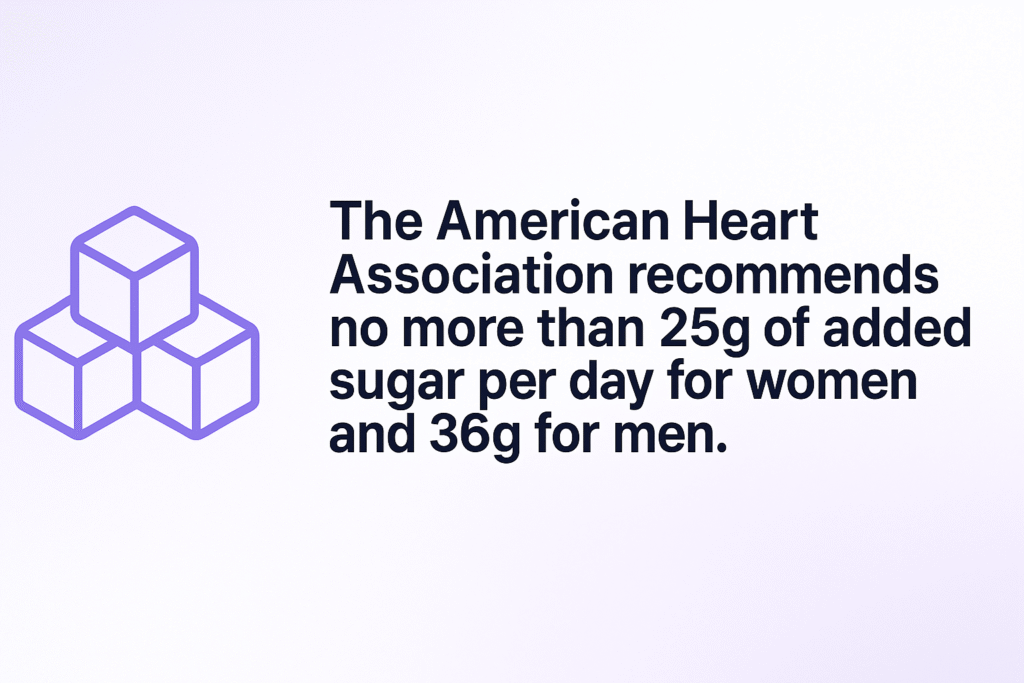
The American Heart Association recommends no more than 25g of added sugar per day for women and not more than 36g for men. Many bubble teas contain far more than this in a single cup.
Dietitians generally suggest treating bubble tea like dessert, enjoy it but in moderation, while considering the portion and sugar content.
The tea itself, especially green tea or oolong, may have some benefits on its own. But once you add heavy creamers, syrups, and extra toppings, the overall drink starts looking very different nutritionally.
So, in the end, bubble tea is not uniquely terrible. It is just not a health drink either. It sits in the same general territory as soda, cake, or ice cream: something you can enjoy, just with a bit of awareness.
Smarter Swaps for Bubble Tea Lovers
If you want to keep bubble tea in the rotation without turning every order into a sugar overload, a few small changes usually do enough.
Size down: A medium instead of a large is one of the easiest ways to cut calories and sugar without feeling like you are giving the drink up.
Lower the sugar: Asking for 30% to 50% sweetness can make a big difference, and for most people, it still tastes like proper boba.
Choose real milk: Dairy, oat, soy, or almond milk are usually better options than powdered creamer, which can make the drink feel heavier fast.
Rethink the toppings: Grass jelly, aloe, or lighter add-ins can keep the drink interesting without piling on as much sugar and starch as a full serving of pearls.
Watch how often you order it: Bubble tea makes more sense as an occasional treat than an everyday habit, especially if your usual order is on the richer side.
The best part is that bubble tea is flexible. You do not have to stop drinking it. You just have to order it a bit more strategically.
And really, that is the answer to the whole “is bubble tea healthy?” question. It depends less on bubble tea itself and more on how you build the cup.
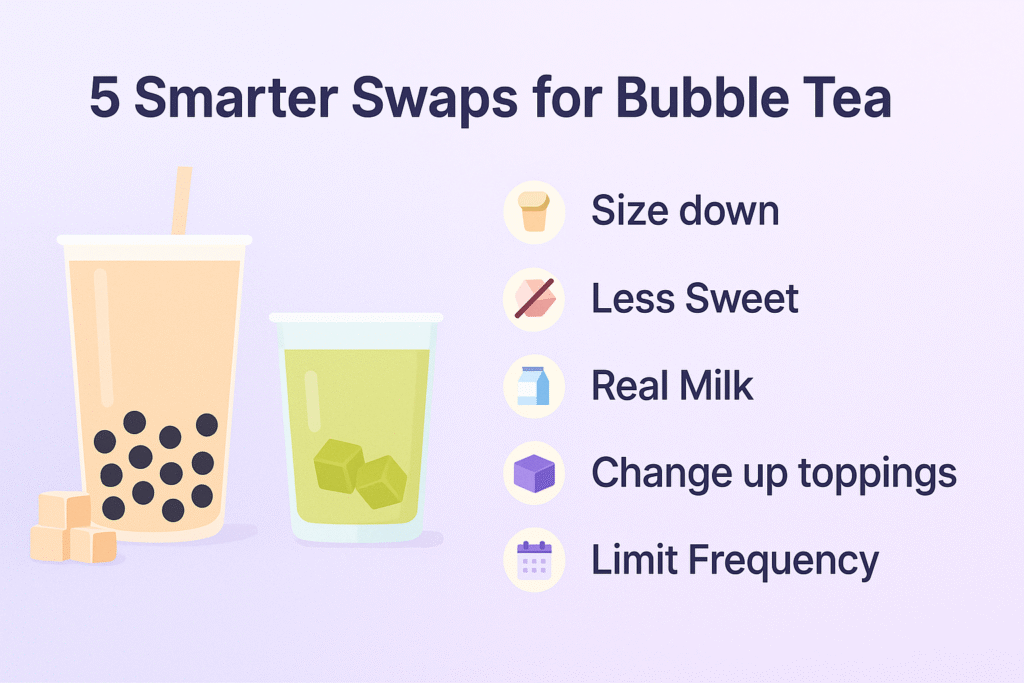
These easy swaps let you enjoy bubble tea with a little less sugar and a lot less overthinking every time someone asks, “Is bubble tea healthy?”
Frequently Asked Questions
Is bubble tea healthy?
Let’s be real: bubble tea is usually more of a treat than a health food. But what you order makes a huge difference. A small fruit tea with lower sugar is nothing like a large milk tea with full sugar and extra toppings. The richer ones are closer to dessert, so think of them the same way: great once in a while, not something most people want every day.
How many calories are in bubble tea?
It depends on the drink, which is why generic calorie charts only get you so far. A simple tea can be fairly light, while a large milk tea with full sugar and toppings can climb fast. Instead of guessing, use my BobaCal Nutrition Calculator to get a more accurate number for your exact order.
What is the healthiest order for bubble tea?
Keep it simple. My favorite lighter order is a jasmine green tea or oolong milk tea made with fresh dairy or oat milk instead of powdered creamer, about 30% sugar, and either no toppings or something lighter like grass jelly or aloe.
Is bubble tea bad for losing weight?
Not necessarily. Bubble tea can fit into a weight loss plan, but some orders get heavy fast, especially the big milk teas with full sugar and extra toppings. The easiest fix is to size down, cut the sugar, and skip the add-ons you do not really care about. You do not need to give up boba, just order it a little smarter.
The Takeaway
So, is bubble tea healthy? Not exactly, and not exactly unhealthy either. It depends on what’s in your cup. Bubble tea can be light and fairly simple, or it can lean more like dessert. That range is part of the reason people love it.
The real difference is knowing what you’re ordering. Once you understand the calories, sugar, and toppings, it gets much easier to choose the kind of drink that works for your day.
That’s how I think about it now. I’m not chasing the “perfect” bubble tea. Some days I keep it lighter with less sugar and fewer toppings. Other days I want the full boba treat and enjoy it without the guilt spiral. The best part is knowing I’m choosing it on purpose.
That’s also why I built The Boba Club Nutrition Calculator. Instead of guessing, you can plug in your order, check calories, sugar, and macros, and make easy swaps when you want to lighten things up.
👉 Try it now at BobaClub.com and sip smarter every time.