The Ultimate Bubble Tea Calories Guide
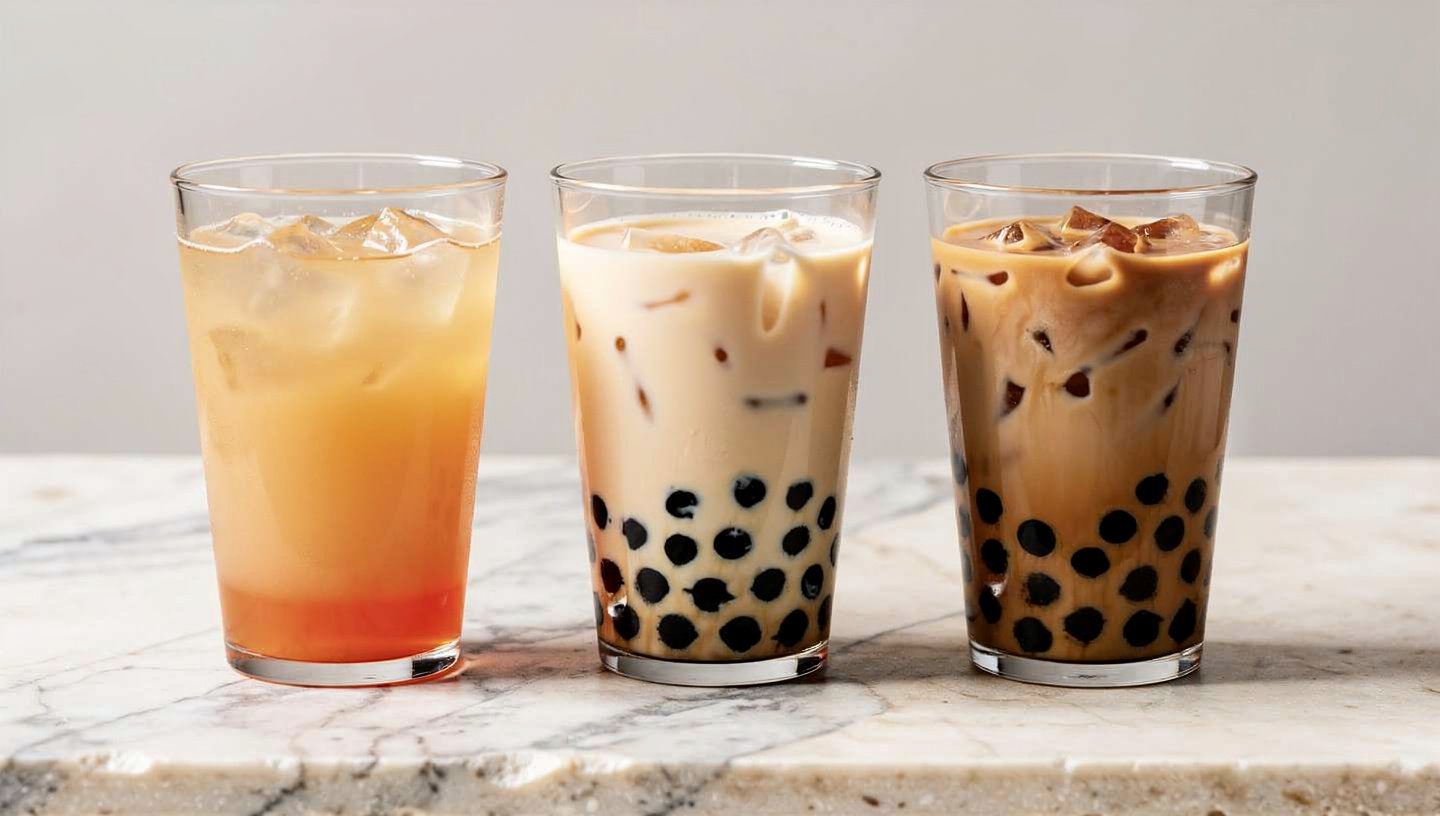
Bubble tea – or “boba” – is sweet, fun, and a million flavors. But if you are calorie-conscious, macro-tracking, or just curious about what is in your cup, understanding bubble tea calories can be confusing.
As a Brit, I grew up with tea being a simple, low-calorie affair. Now that I live in New York and queue for these incredible, complex drinks, I realized the guessing had to stop. That’s why I created the Bubble Tea nutrition calculator, so you can see the exact breakdown for your favorite drinks.
This is the ultimate guide. We’re going to cover the hard numbers, bust the myths (is fruit tea actually lighter?), and give you the confidence to order anything you want, guilt-free.
1. The Big Picture: Where Your Bubble Tea Calories Come From
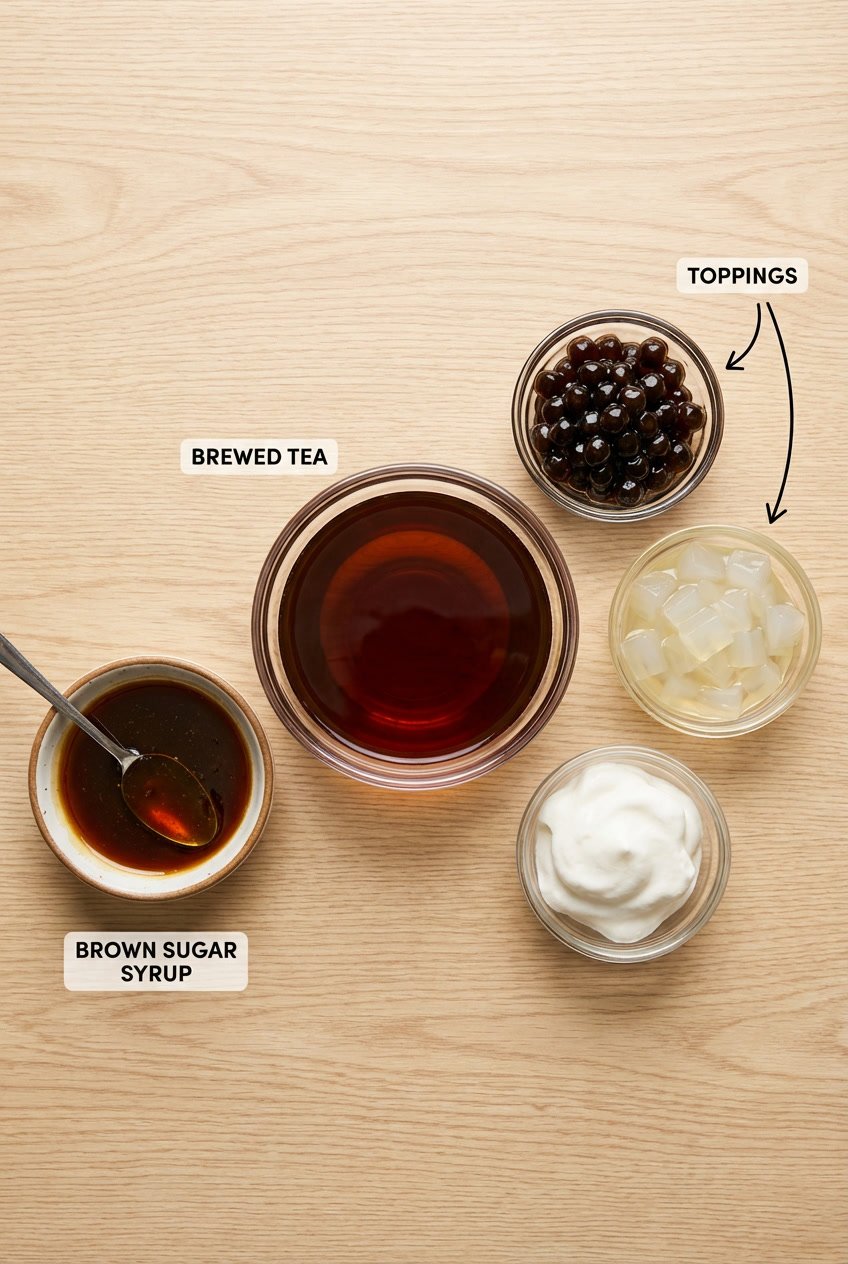
When you break down any cup of bubble tea, the calories come from three rather clear components. Once you see this, you will genuinely gain full control over your macros.
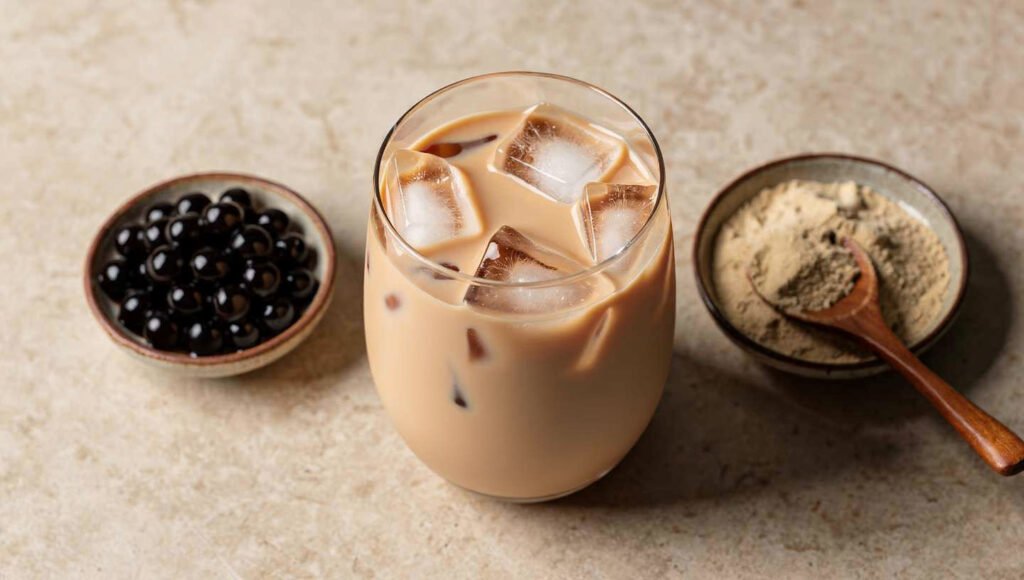
- Brewed Tea/Milk: Plain brewed tea is barely anything, calorie-wise. But when it’s mixed with milk, milk powder, or creamer – that’s when things get a bit more substantial in your overall bubble tea calorie count.
- Sweeteners & Syrups: This is usually the largest contributor to bubble tea calories. These often add significant “empty” calories – delicious, but empty.
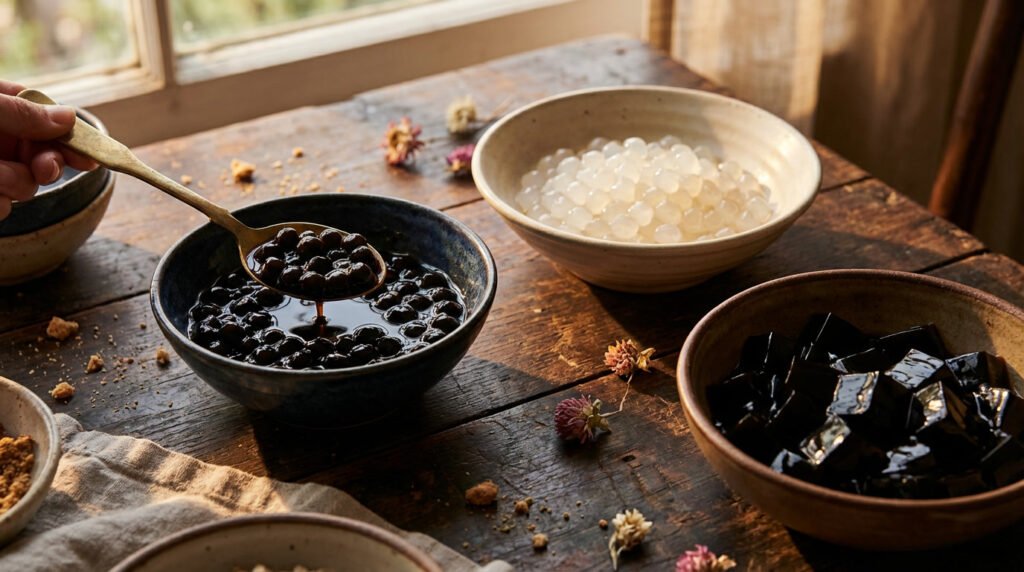
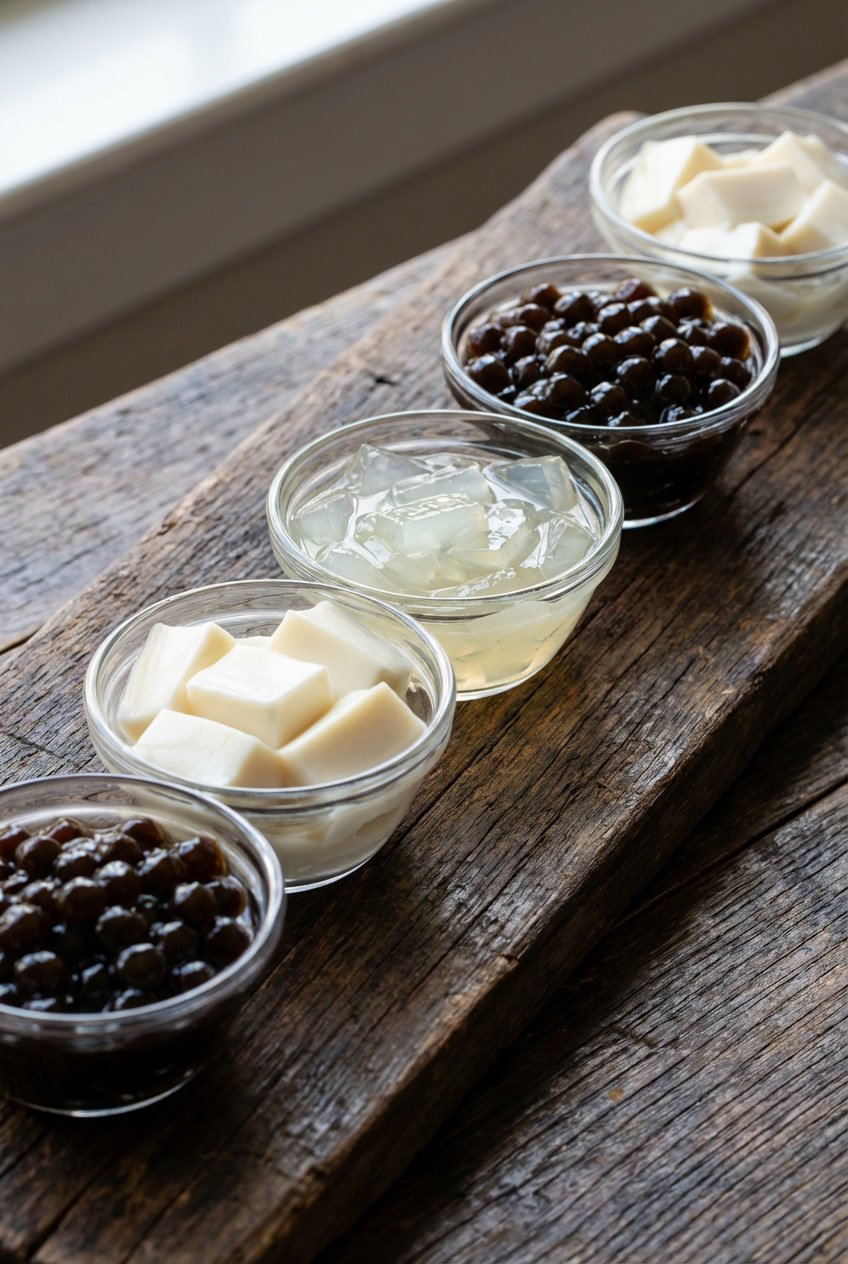
- Toppings: Those wonderful little additions, like the classic tapioca pearls, various puddings, grass jelly, or whatever other add-ins you choose, can easily tack on an extra 100-200+ calories.
2. The Chain Showdown: Average Calorie Ranges (The Big 6)
This is the part that proves not all milk teas are created equal. These figures give you a realistic baseline for your bubble tea calories at six of the biggest chains.
Use these numbers as a reminder that ordering a lower-sugar version is always the better way to go. (You can see the full strategy for navigating the most calorie-dense menu in my guide, Tiger Sugar Calories Guide.)
Average Calories: The Big 6 (Large, 100% Sugar)
3. The Easiest Fix: Calories by Sugar Level
This is the fastest, easiest change you can make, and it costs you nothing. Dropping sugar is the single most impactful way to cut back on calories in your bubble tea. As the U.S. Food & Drug Administration’s guidance on added sugars points out, these sweeteners add calories without providing any real nutrition.
That’s why choosing a lower sugar level can make such a noticeable difference in your drink. Many people find 50% is the perfect starting point to reset their palate. (For a deep dive into how these percentages translate across every major chain, check out my full guide on Bubble Tea Sugar Levels.)
Making small changes, like changing the sugar or the syrups, can have a big effect. My Sugar Swap Calculator shows you how different swaps change sugar levels in real time.

Calories Saved by Sugar Level (Typical Large Milk Tea)
4. The Hidden Cost: Toppings Ranked Lightest to Heaviest
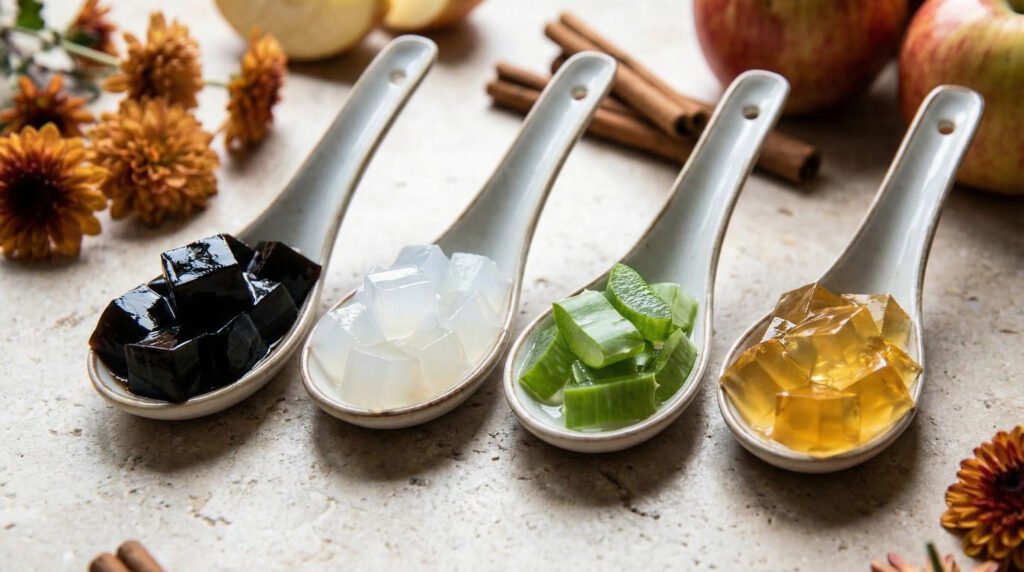
If sugar is the biggest contributor to your bubble tea calories, toppings are definitely the hidden cost. Classic tapioca pearls, for example, are mostly starch and sweetener. Healthline’s breakdown of boba nutrition points out that they’re high in carbs but low in actual nutrients. If you’re looking for lighter choices, options like aloe or herbal jelly can still add fun texture without piling on as many calories. You can see the full breakdown and make smarter choices with my guide on Boba Toppings Calories.
Toppings Cost: Lightest vs. Heaviest
5. Bubble Tea Nutrition Myths (Busted)
There is a fair bit of genuine confusion surrounding what actually goes into bubble tea. Since you’re clearly being smart about tracking your calories, let’s take a moment to dispel some of the most common myths I hear so you can make a truly informed decision:
Myth 3: Non-dairy creamer is inherently better for you. The Truth: Sadly, no. Most contain hydrogenated oils and can hide a surprising number of calories. Fresh dairy milk or genuinely plant-based options like oat, almond, or soy are typically the lighter and often healthier choices.
Myth 1: Tapioca pearls contain gelatin. The Truth: Not at all. They’re actually made from tapioca starch, which comes from the cassava root, and are therefore entirely plant-based.
Myth 2: Fruit tea is always lighter. The Truth: Ah, if only! Many fruit teas sneak in a lot of added syrup, which can make them just as sugary (and calorie-dense) as a rich milk tea.
6. How to Build a Smarter Order (Macro Tips)
You do not need to change everything at once. Small changes make a big difference! Here is the ultimate cheat sheet for building a smarter order and managing your macros:
- Size Swap: Choose a smaller cup size. Getting a medium instead of a large immediately cuts 100 to 200 calories.
- Sweetness Scale: Try going down one level. This is the easiest win! Most places let you choose 100%, 75%, 50%, 25%, or 0% sugar.
- Tea Heavy: The more brewed tea you select and the less cream or milk you have, the better it is for calorie intake. This is especially true when comparing to heavy menu items like the cream cap drinks you find at places like CoCo Fresh.
- Topping Trick: Instead of heavy tapioca pearls, ask for aloe, grass jelly, or chia seeds.
- Milk Base: Choose fresh milk or plant-based milk (like oat, almond, or soy), as these are usually lighter than non-dairy creamer.
My own usual order is a Regular size classic milk tea, 50 percent sugar, Oat milk, and one scoop of boba. For a full context on how these ranges look, check out How Many Calories Are in Bubble Tea?
7. Why Your BobaCal Calculator is the Only True Answer
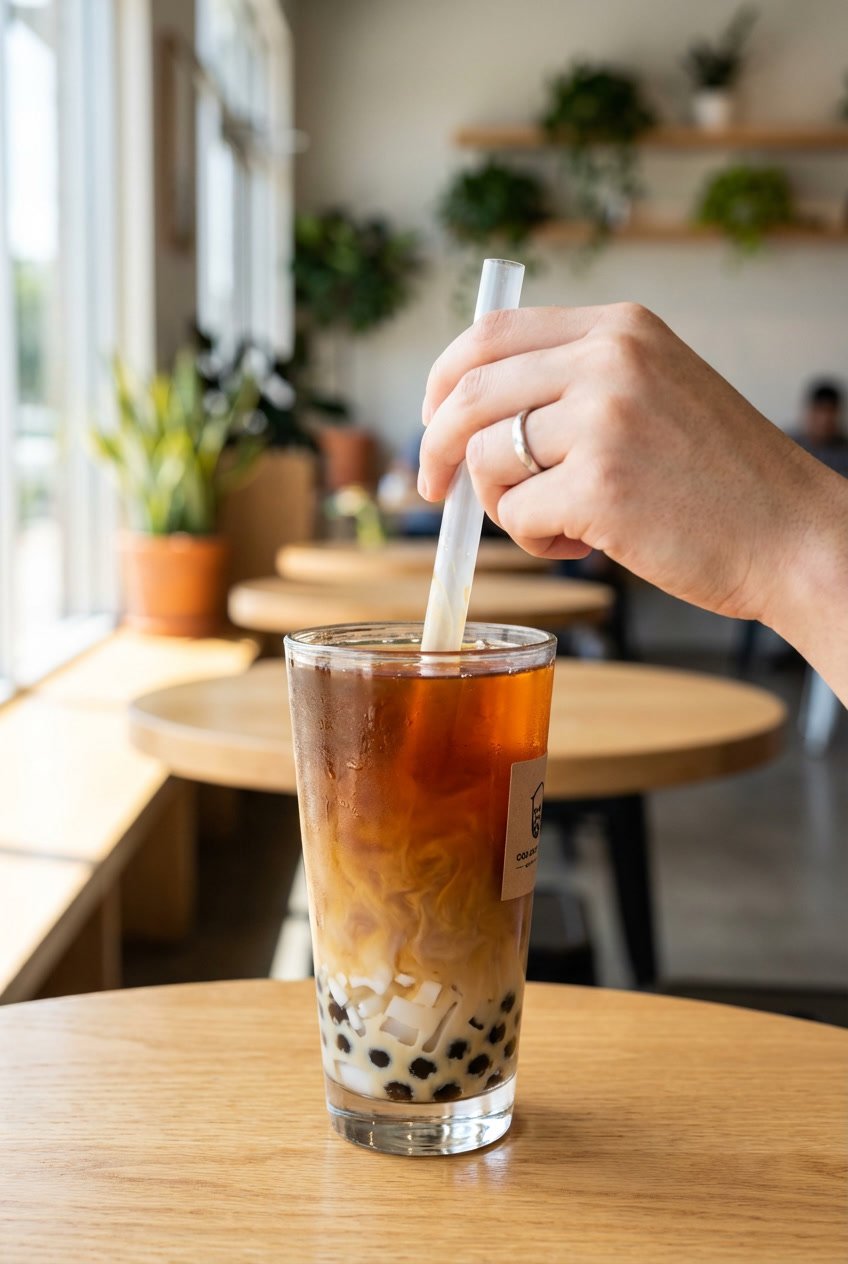
If you’ve read through all five of our chain guides, you know that every boba shop is slightly different. The calories listed here and in any online guide, for that matter are always, always estimates. One shop might use a far heavier creamer, and another could pack significantly more syrup into their standard 30% serving. You simply cannot rely on averages if you’re genuinely serious about tracking your macros.
That’s precisely why your BobaCal Nutrition Calculator stands as the definitive solution. You can plug in your exact size, milk choice, and topping selection to get a precise, personalized macro count every single time. It completely takes the guesswork out of ordering.
8. Ultimate Guide Q&A
Is bubble tea healthy?
Bubble tea can be consumed in moderation, just like many other food and drink items. The healthiness is associated with the sugar content, the type of milk or creamer used, and any additional toppings. Using less sugar and lighter toppings makes it a healthier option.
How many calories are in bubble tea?
A standard milk tea with tapioca pearls typically contains 250-400 bubble tea calories in a 16oz serving. The calorie amount can go either lower or higher depending on the sugar level, the toppings, and the size.
What’s the lowest calorie order for bubble tea?
The lowest option is an order in a smaller size, with a 0-30% sugar level, using a tea-heavy base, and going for lighter toppings like aloe or grass jelly. From my experience, you can easily go below 150 calories.
Are tapioca pearls high in sugar?
Tapioca pearls are primarily made of carbohydrates from starch. They don’t encompass a lot of sugar by themselves, but they do contain calories and, often, are sitting in a sweet syrup.
What’s the healthiest milk option in bubble tea?
Fresh cow’s milk or plant-based options like oat, almond, or soy are typically lighter than non-dairy creamers, as creamers could contain hydrogenated oil.
9. The Final Slurp: Enjoy Your Drink, Guilt-Free
Bubble tea absolutely doesn’t have to be an all-or-nothing scenario. With just a couple of smart switches and a bit of information on the actual nutrition facts, you can still feel brilliant about every single sip you take.
What you really need to keep in mind is what is in your cup, and remember that managing your bubble tea calories is all about fitting the drink into your lifestyle. So whether you’re a devoted fan of Sharetea’s light, fruity sips or Tiger Sugar’s indulgent, heavier desserts, you now have all the tools to sip smarter and relish it all, completely guilt-free.