Bubble Tea Caffeine: How Much Is It In Boba?
Bubble tea caffeine can be sneaky. Two drinks can look nearly identical, then hit completely differently. One feels light and gentle. The other feels like you accidentally had coffee too late and are now reorganizing your sock drawer at midnight.
Loving boba and loving sleep is a very real conflict.
This guide gives you the simple version. I’ll show you what affects bubble tea caffeine, which orders tend to be higher and which are usually lower, and what to say at the counter so you can still get a drink you like without the buzzing regret later.
Quick note on trust: I use the FDA and Mayo Clinic for the caffeine basics, then translate that into boba terms, because bubble tea menus rarely spell any of this out clearly.
1. Bubble Tea Caffeine, Explained Simply
Bubble tea caffeine is mostly about the base.
Most bubble tea is made with brewed tea, and brewed tea contains caffeine. Milk does not add caffeine. Tapioca pearls do not add caffeine. The real question is what is underneath the syrup, milk, and toppings.
A quick way to read it:
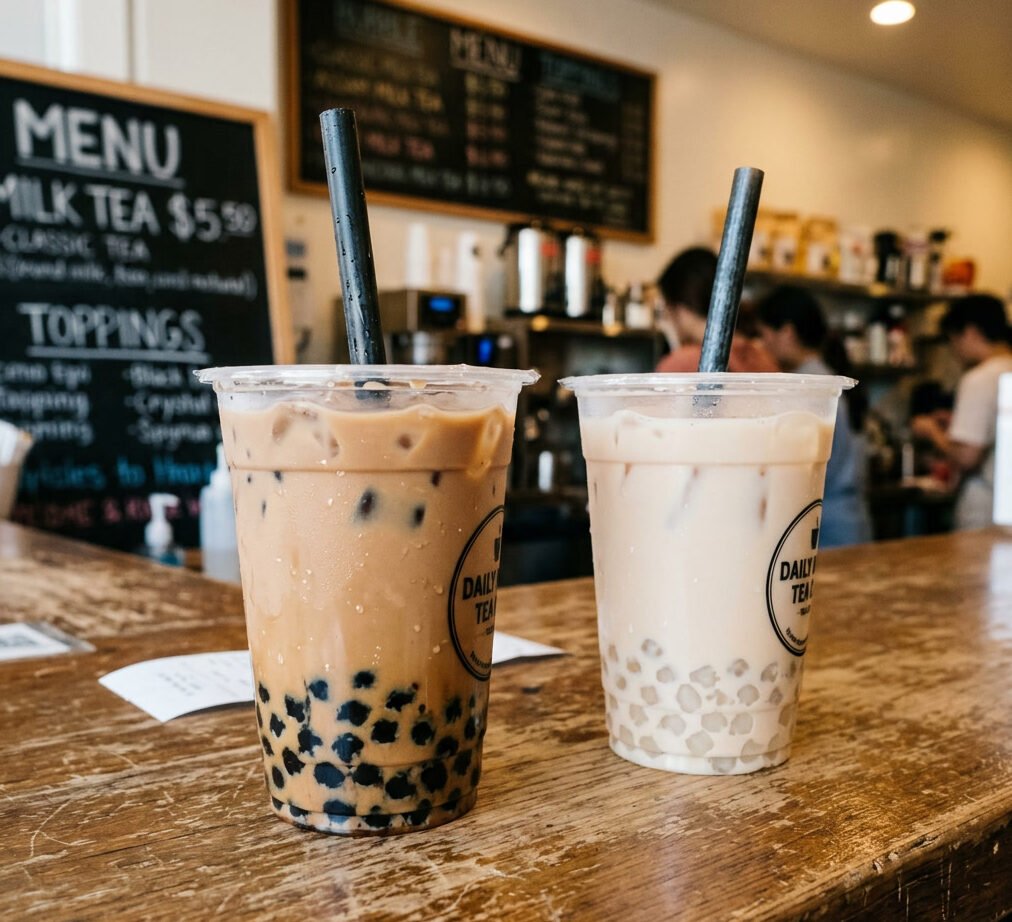
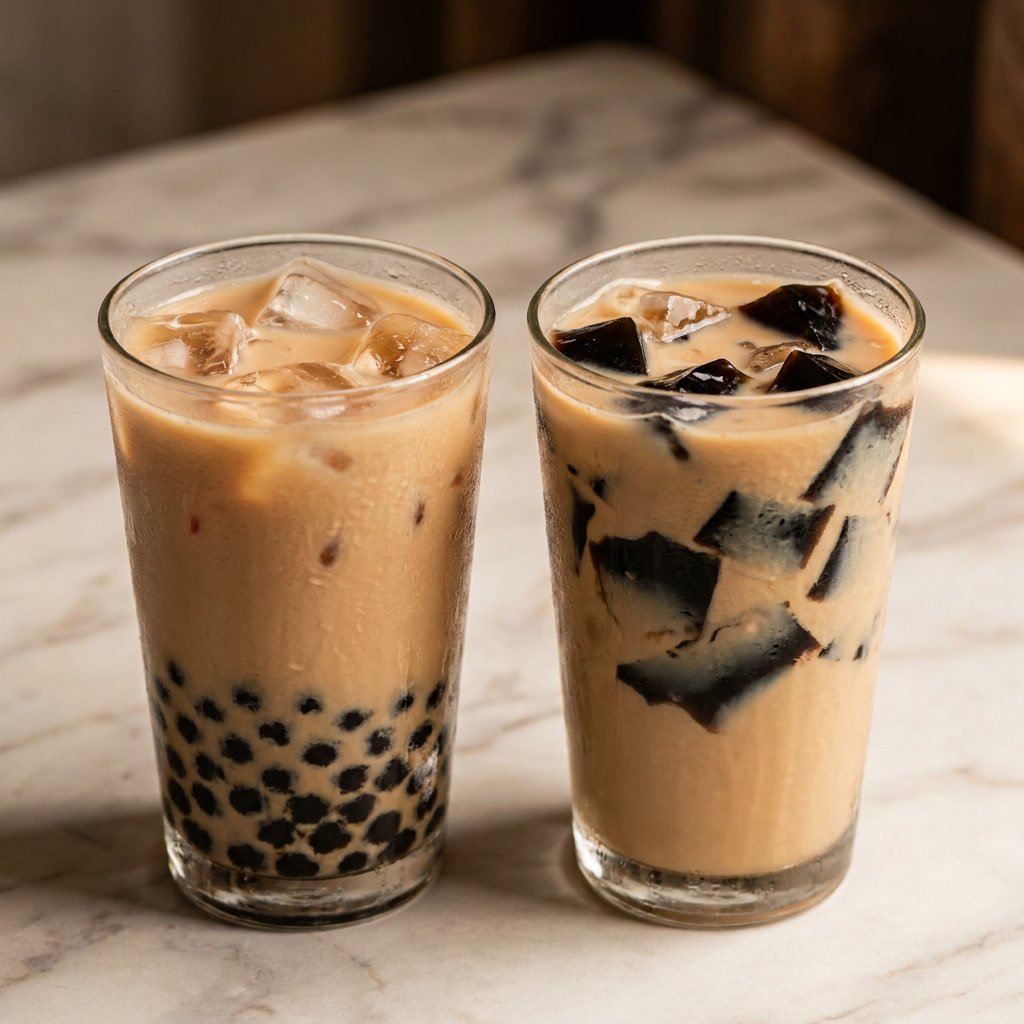
Milk tea usually has caffeine because it is made with black tea, green tea, or oolong.
Fruit tea can still have caffeine if it is made with brewed tea rather than juice.
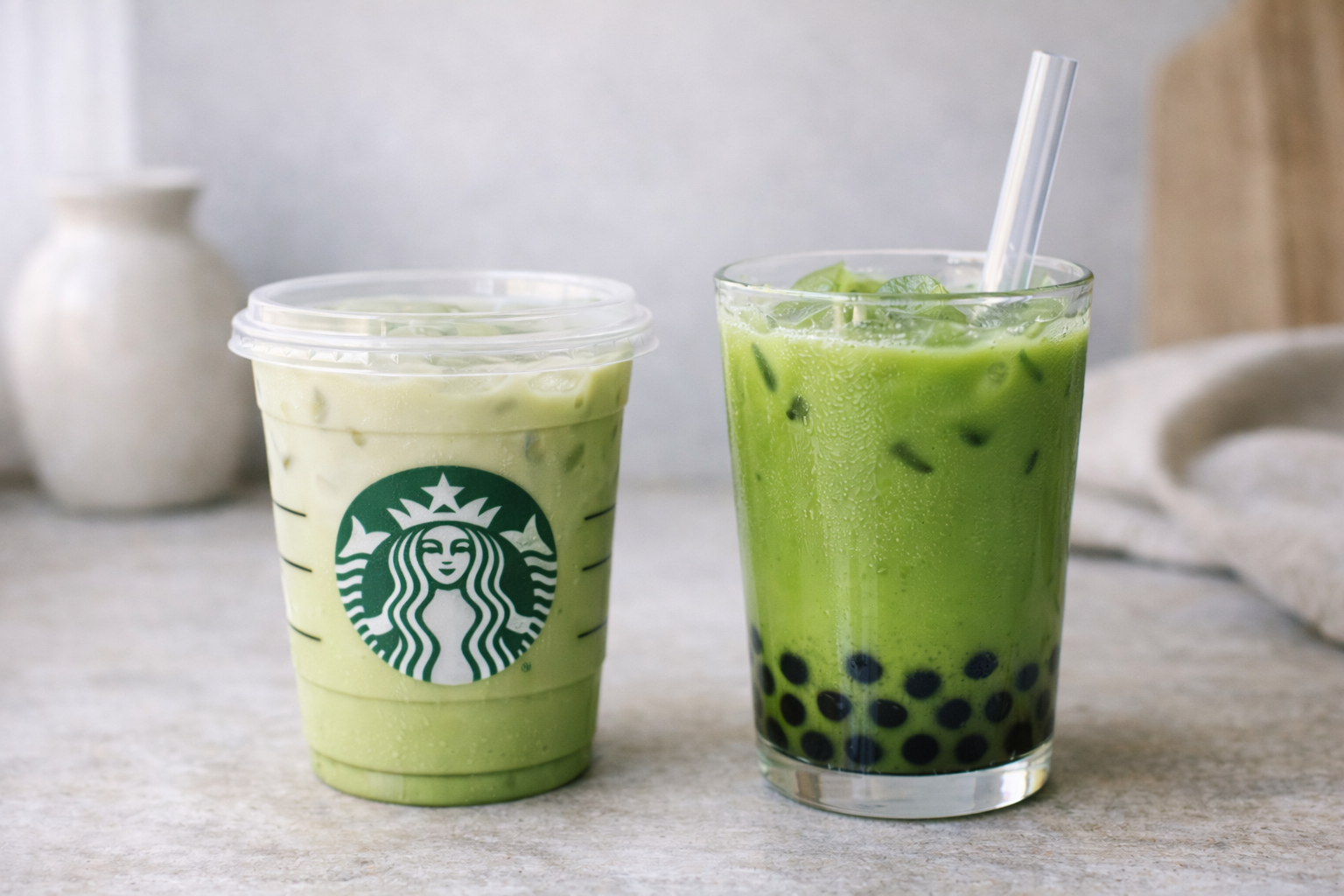
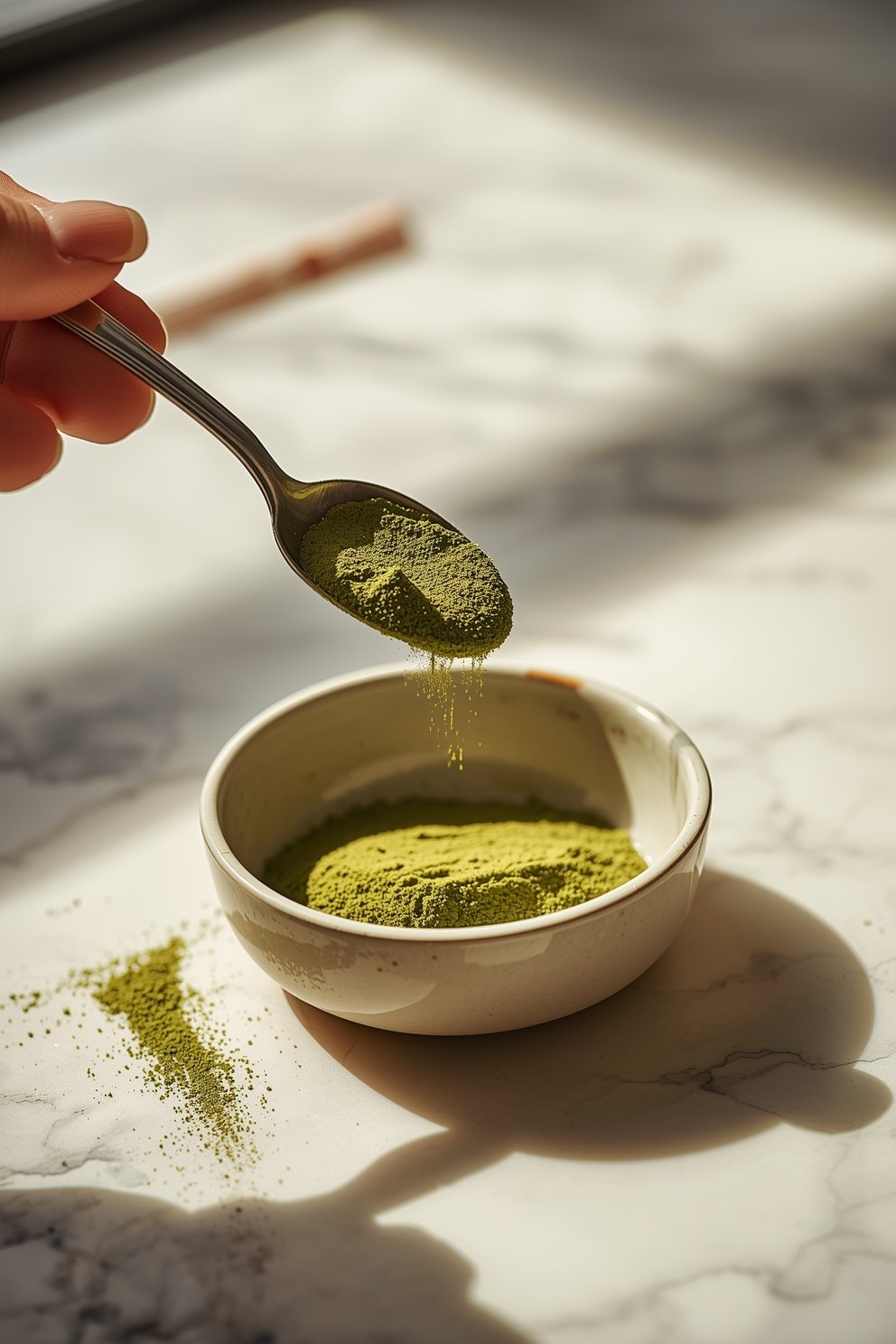
Matcha is powdered green tea, so it can feel stronger, especially when the shop is heavy-handed with the scoop.
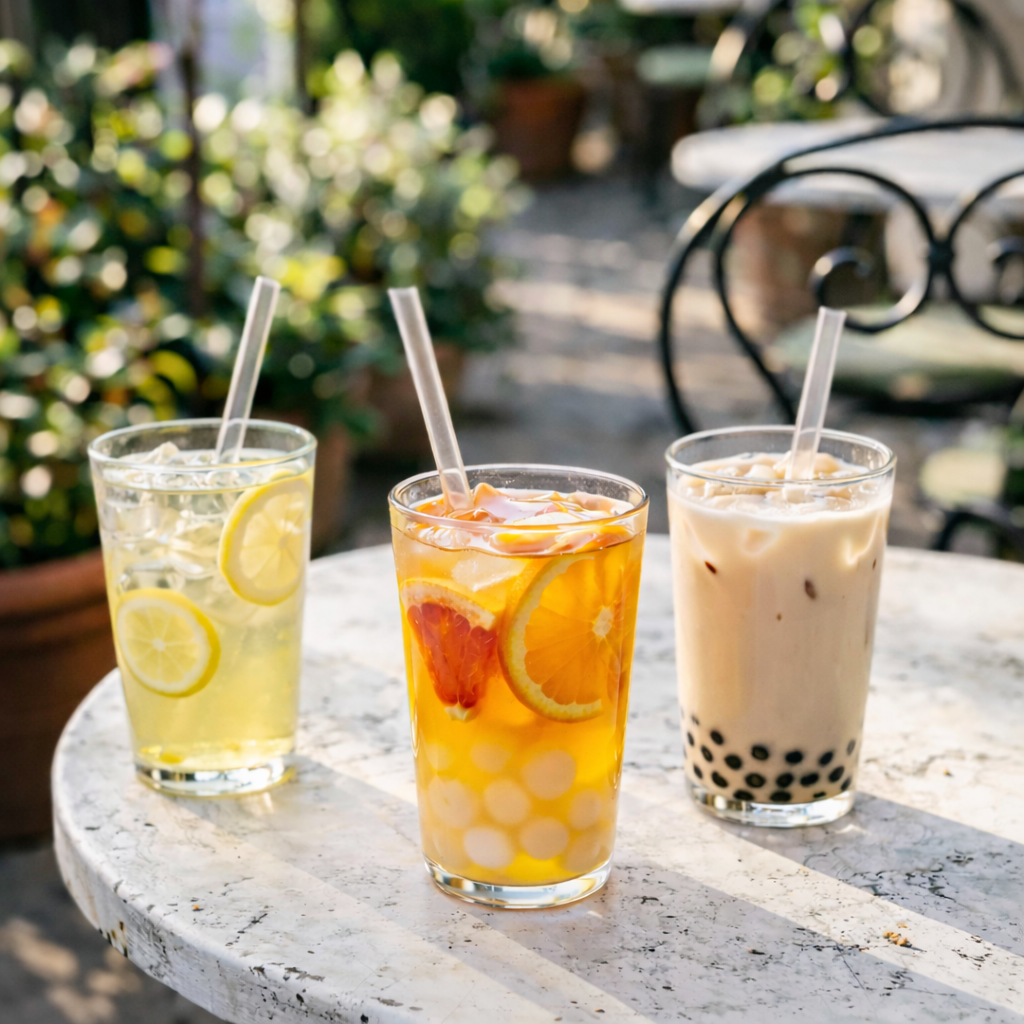
Fruit drinks like juice, lemonade, and slushes may be caffeine-free, but menu wording is not always clear, so it is still worth asking once.
Read What is Bubble Tea? (Boba) if you’re new to boba and want an easy introduction. It helps you understand the choices without making it feel like homework.
And if you want the nutrition side of it later, Is Bubble Tea Healthy? pairs really well with this caffeine guide, because sugar + caffeine is where a lot of people feel weird (jittery, hungry, or crashy).
The Quick Caffeine Reality Check
Before we get into bubble tea, it helps to have a few caffeine reference points in mind.
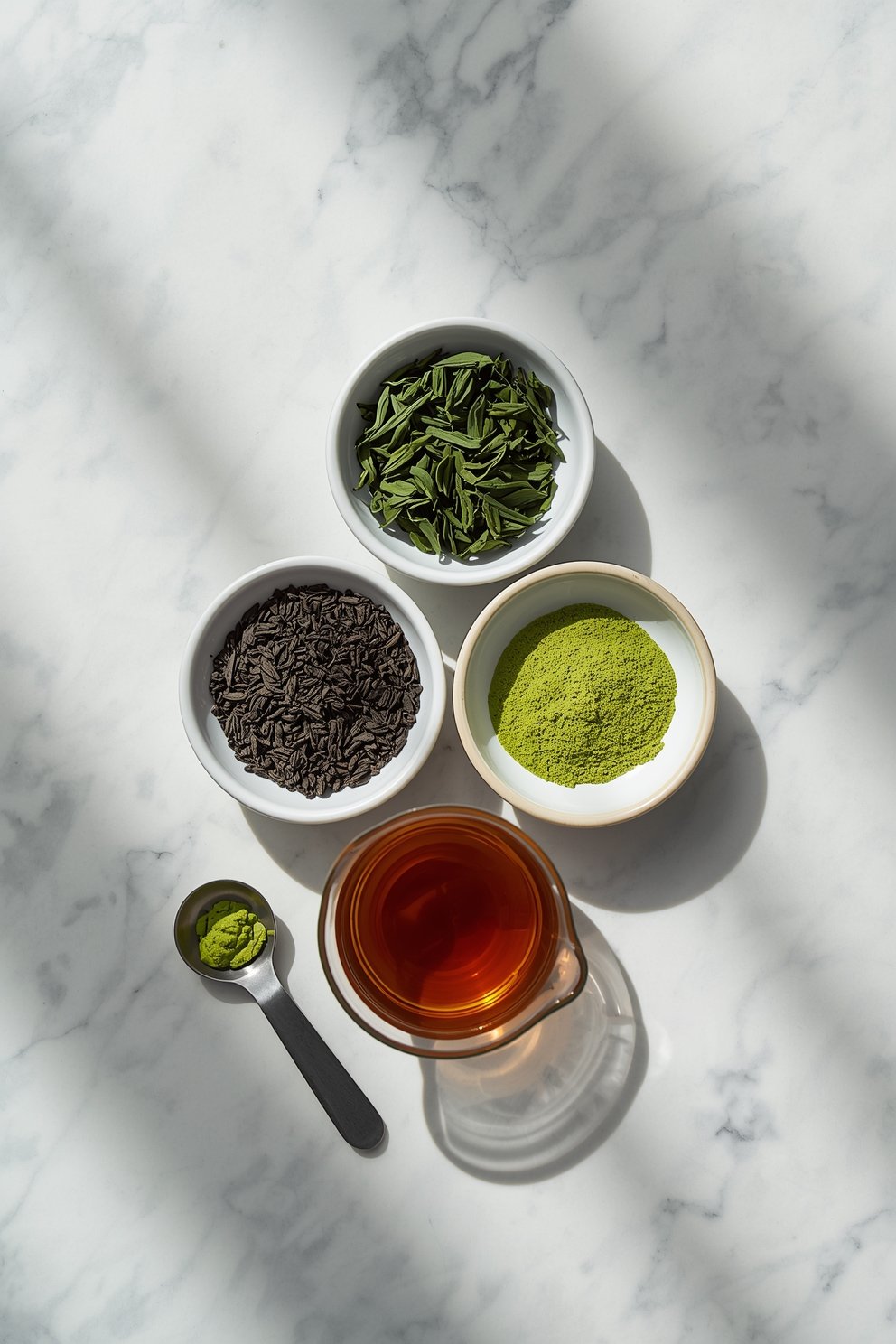
For an 8-ounce serving, Mayo Clinic lists:
- Brewed coffee: 96 mg
- Brewed black tea: 48 mg
- Brewed green tea: 29 mg
The catch is that bubble tea is not served in 8-ounce cups. Most boba drinks are closer to 16, 20, or 24 ounces, which means a tea-based order can end up giving you much more caffeine than you think.
So yes, one person can drink matcha at night and sleep just fine, while someone else ends up fully awake and regretting everything. That is not dramatic. That is just caffeine tolerance.
Also worth knowing: the FDA cites 400 mg of caffeine a day for most adults as an amount not generally associated with negative effects, but it also says sensitivity varies widely. U.S. Food and Drug Administration
So if your friend can drink a big matcha at night and sleep like a baby, and you can’t, nobody is broken. You’re just different.
3. Which bubble tea orders usually have the most caffeine
If you are caffeine-sensitive, these are usually the ones to watch first.
Matcha drinks can be the biggest wildcard. The caffeine depends heavily on how much matcha powder the shop uses, so two drinks that sound similar on the menu can land very differently in real life. A 12-ounce matcha drink made with 2 to 4 grams of powder has been estimated at roughly 38 to 178 mg of caffeine, which is a huge range.
That is exactly why matcha can feel either nicely focused or like a terrible decision you made too late in the day.
Strong black tea milk teas
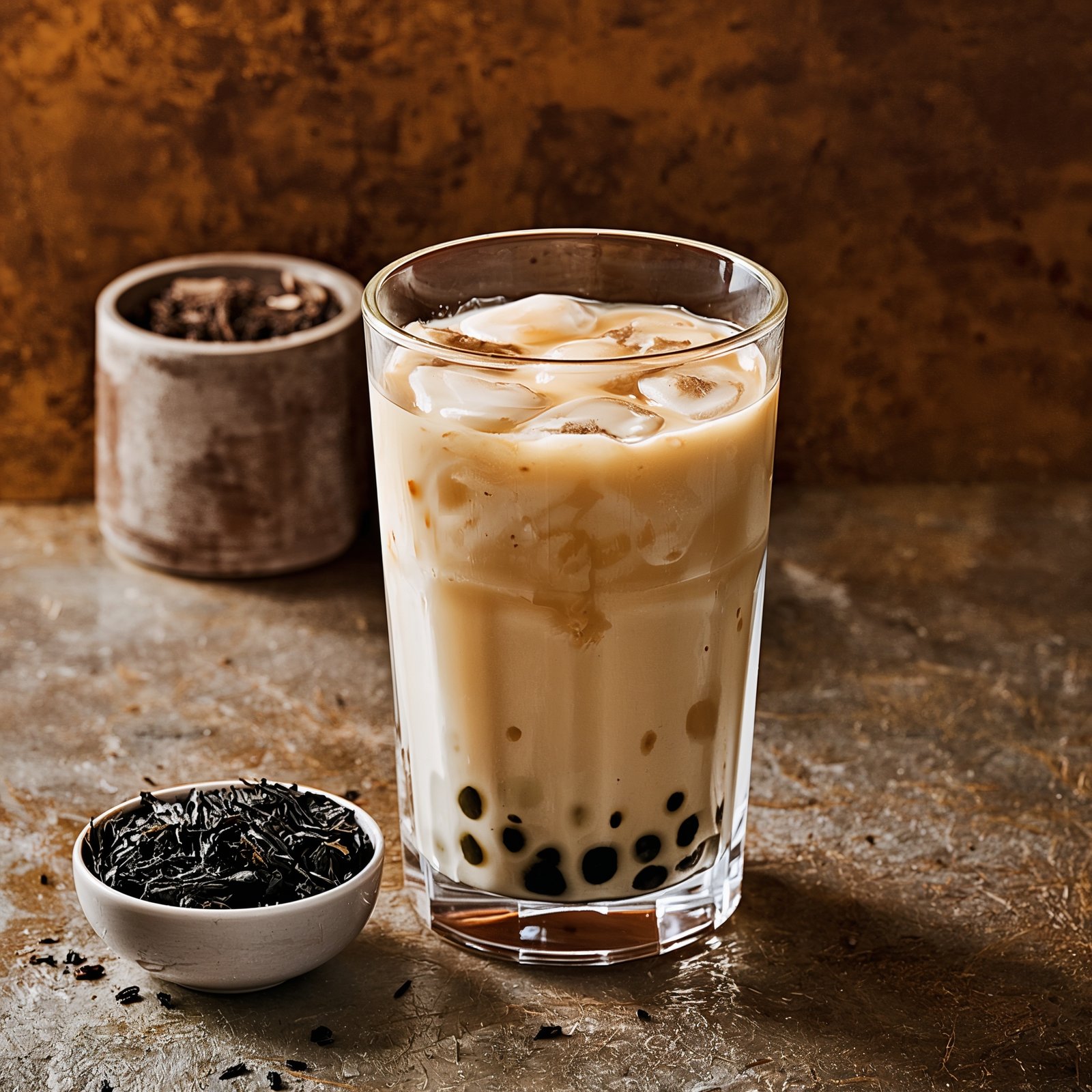
Black tea is often the strongest classic milk tea base. If a shop brews it extra strong so the flavor still comes through the milk and ice, it can hit harder than you expect.
Bigger size, less ice
Less ice usually means more tea in the cup. Good for value, yes. Not always ideal if you are ordering boba late in the day.
Anything labeled extra tea, strong tea, or espresso
Some bubble tea shops offer coffee shots, espresso boba, or other boosted add-ins. If you see anything like that, treat it more like coffee than tea.
If you’re already a matcha person, your Ultimate Matcha Bubble Tea Recipe is a good one to make at home because you can control how much matcha goes in, which is really what changes the caffeine the most.
4. Which Bubble Tea Orders Are Usually Lower in Caffeine or Caffeine-Free
This is the reassuring part. You can absolutely keep boba in your life and still sleep. You just need to stop ordering on autopilot.
The quick rule
Most of the caffeine is coming from the base. So the easiest win is to choose a lighter tea base, or skip tea altogether.
If you want lower caffeine
These orders usually feel easier than a strong black tea base:
- Green tea base instead of black tea
- Fruit tea with a lighter brew, if they make it with brewed tea
- A smaller size, which is not glamorous advice, but it works
- Milk tea made with green tea instead of black tea, if the shop allows swaps
The line to use:
“Can I do this with green tea, and can you make it a light brew?”
If you want caffeine-free, or as close as possible,
This is where one simple question can save you.
These are usually your best bets:
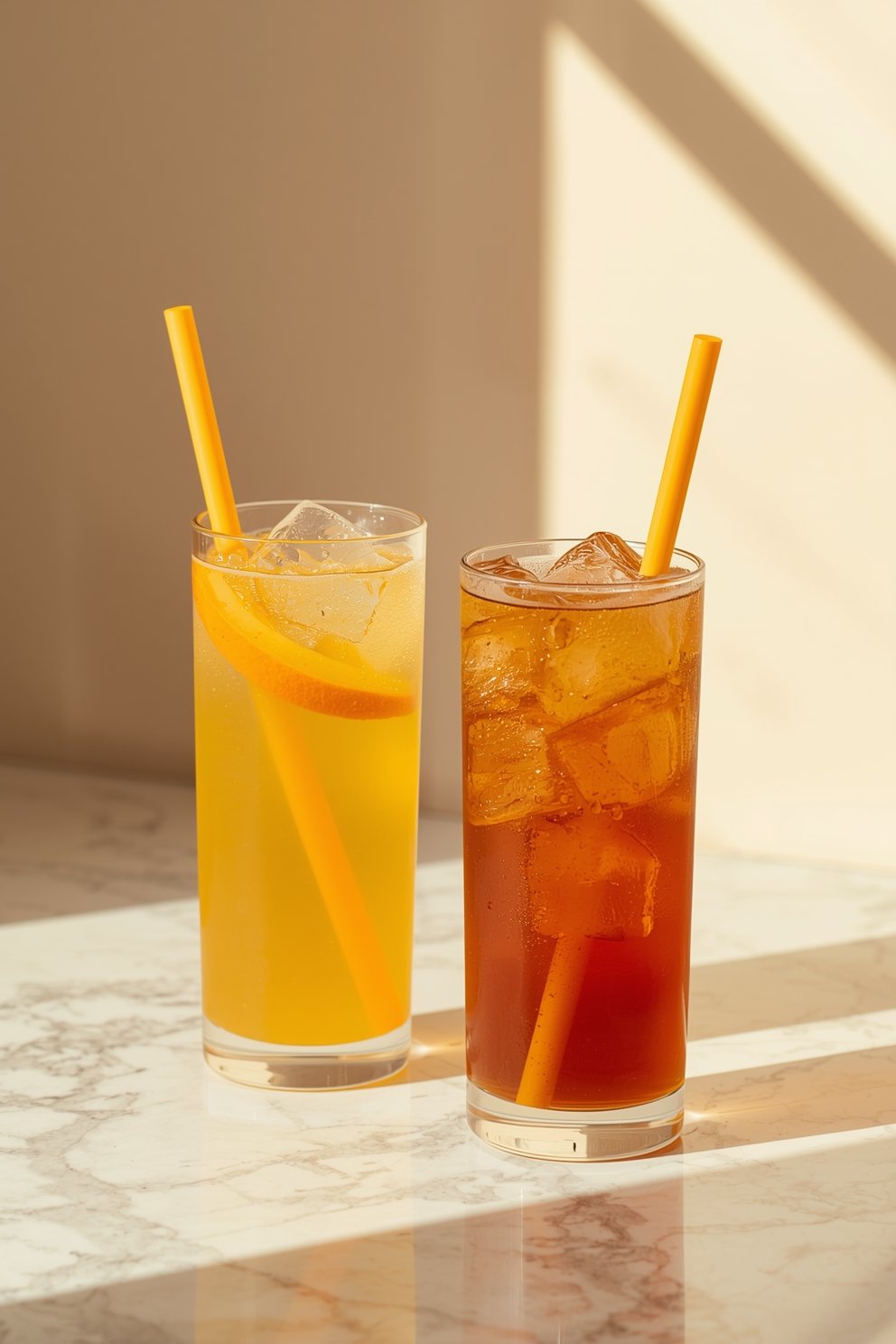
- Juice-based fruit drinks, including lemonade-style drinks, slushes, or anything listed more like a fruit drink than a tea
- Herbal options, if the shop has them
- Decaf tea, which is less common and still not fully caffeine-free
The one question to ask is:
“Is this juice or brewed tea?”
If they say it is made with brewed tea, follow with:
“Can I get the juice-based version or a caffeine-free base?”
The part that trips people up
This is where bubble tea gets misleading.
Fruit tea does not always mean a juice-based drink. Sometimes it is brewed tea with fruit flavor added, so it still has caffeine. Other times, it is much closer to juice, which is usually caffeine-free.
That is exactly why one quick question helps so much.
What about toppings?
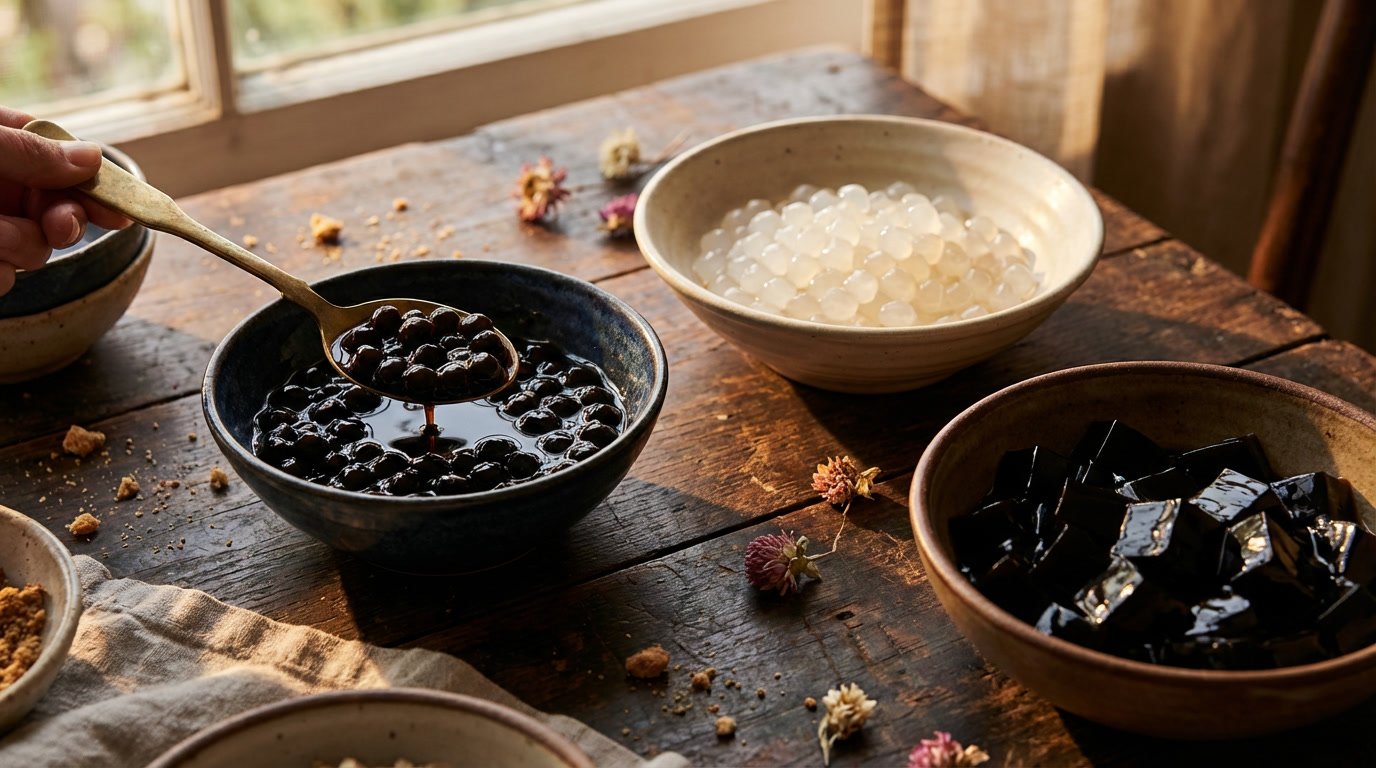
Toppings don’t usually add caffeine. If you want to keep your drink fun without turning up the energy, your best internal link here is the Bubble Tea Toppings guide – it’s full of treat-style add-ons that still work with a lighter base.
5. What Changes Bubble Tea Caffeine the Most
If you only remember four things from this post, make it these.
1. Tea type
Black tea is usually stronger than green tea. That is not a hard rule in every single case, but it is a good starting point. As a general guide, brewed black tea tends to come in higher than brewed green tea.
2. Size
More ounces usually means more tea, and more tea usually means more caffeine.
3. Brew strength
Some bubble tea shops brew their tea quite strong so the flavor still comes through the milk, ice, and sweetness. That is why the same milk tea can feel noticeably different from one shop to another.
4. Matcha amount
Matcha is easy to underestimate. A thicker, greener drink usually means more powder, and more powder usually means more caffeine.
If you do make bubble tea at home, the easiest way to manage caffeine levels is to start with a consistent base recipe. Craft the Perfect Jasmine Green Tea Base is a good example of how to standardize tea strength so your drinks don’t surprise you.
6. My Sleep-Friendly Ordering Script
Honestly, I wish every bubble tea menu came with this.
These are the exact lines I would use if you want boba without the late-night caffeine regret.
If you want lower caffeine:
“Can I do this with green tea, and can you make it a light brew?”
If you want something caffeine-free, or as close as possible:
“Is this fruit tea made with brewed tea or juice? If it’s brewed tea, can I get the juice-based version or a caffeine-free base?”
If you love matcha but still want to sleep later:
“Can you do light matcha, or half matcha, and I’ll do the smaller size?”
My personal go-to
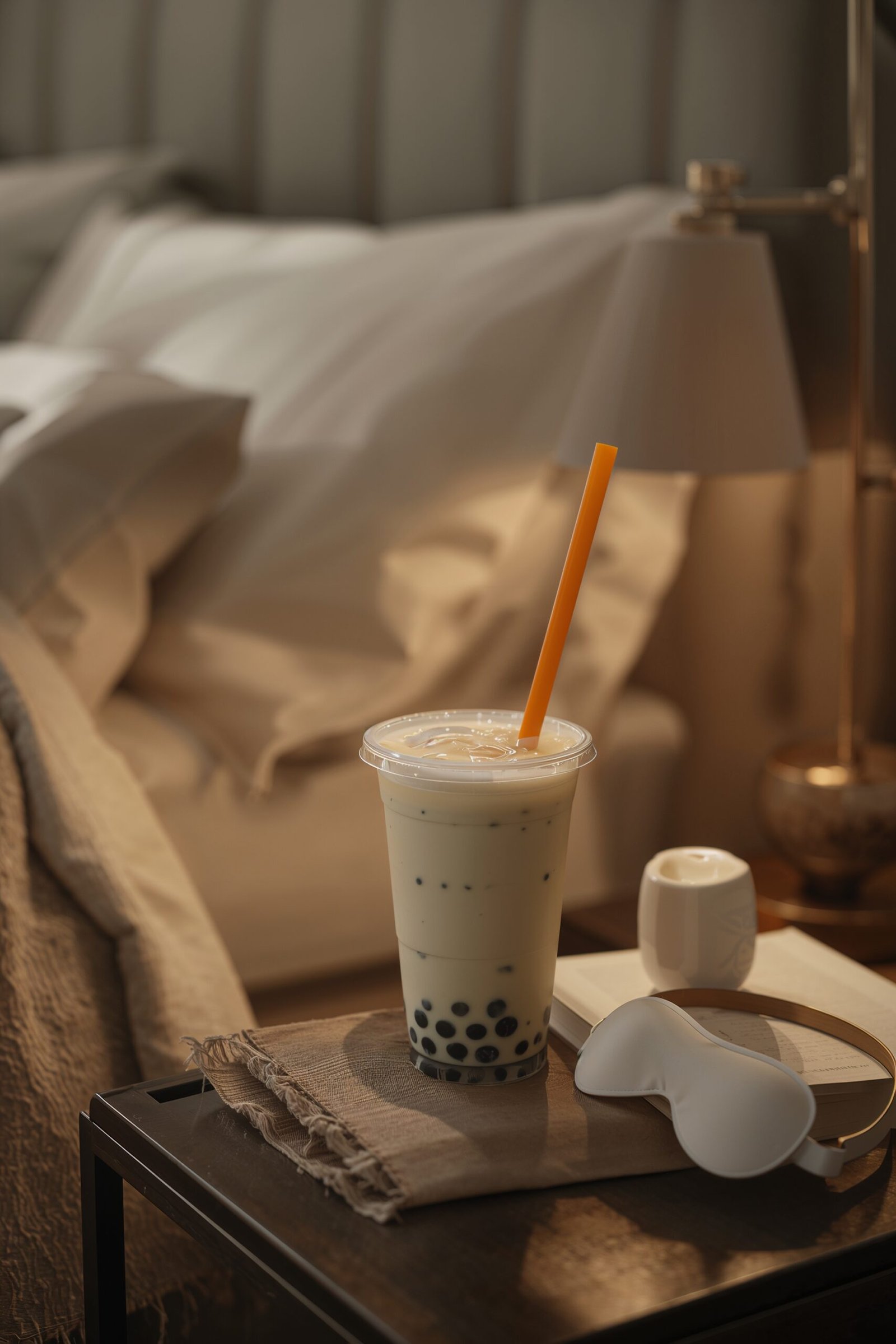
When I want boba but do not want the caffeine to drag into the rest of the day, I usually keep it simple:
- one size smaller
- 25% sweetness to start
- green tea instead of black tea, if I am doing tea at all
- a topping that still makes it feel like bubble tea, usually pearls, aloe, or grass jelly
That tends to be enough to keep the drink fun without tipping it into regret.
If sugar matters to you too, read Bubble Tea Sugar Levels (0–100%) and the Ultimate Bubble Tea Calories Guide next.
And if you want to compare your usual order with a lower-caffeine swap, the BobaCal Calculator is the easiest place to do that.
Choose your vibe
Same boba joy, different energy.
For late afternoons, evenings, or anyone caffeine-sensitive.
- Juice-based (ask “brewed tea or juice?”)
- Small size
- 25% sweetness
A gentle lift that still lets you function like a human.
- Green tea base
- Light brew
- Smaller cup
When you want it to hit. Do this earlier in the day.
- Matcha (or ask for regular, not extra)
- Strong black tea base
- Earlier timing (before late afternoon)
7. Caffeine and Teens
I do not panic about my teens having bubble tea now and then, but I am careful about caffeine. Sleep is already fragile at that age, and caffeine can throw it off quickly.
The American Academy of Child and Adolescent Psychiatry says there is no proven safe dose of caffeine for children. Pediatricians advise against caffeine for kids under 12, and for teens ages 12 to 18, the guidance is to keep it to no more than 100 mg a day.
In real life, here is what that looks like in my house:
- I treat matcha as an occasional drink, not an everyday one, because the caffeine can climb quickly depending on how much powder is used.
- I aim for boba earlier in the day, not after dinner.
- If we are out late and someone wants a fun drink, we go for a caffeine-free fruit drink or keep the size smaller and the tea lighter.
- I also pay attention to mood. Caffeine can make an already anxious teen feel worse.
Bubble Tea Caffeine FAQ
Does bubble tea have caffeine?
Often, yes. If it is made with real tea or matcha, it has caffeine. If it is a juice-based fruit drink, it may be caffeine-free, but you still need to ask because “fruit tea” can also mean brewed tea.
Is milk tea more caffeinated than fruit tea?
Not necessarily. Caffeine comes from the tea base, not the milk. A fruit tea made with black tea can easily have more caffeine than a milk tea made with green tea.
Which bubble tea usually has the most caffeine?
Matcha drinks are often the biggest wildcard because the caffeine depends on how much powder the shop uses. Strong black tea milk teas and drinks with coffee or espresso add-ins can also land high.
What’s the best caffeine-free bubble tea order?
A green tea drink in a smaller size with a light brew is usually your best low-caffeine bubble tea order. It keeps the tea base but tends to land more gently than a strong black tea drink.
What’s a truly caffeine-free bubble tea order?
A juice-based fruit drink or another non-tea option is usually your best bet. Herbal drinks can work too if the shop has them. The one question worth asking is, “Is this brewed tea or juice?”
How late is too late for bubble tea caffeine?
If caffeine affects your sleep, treat bubble tea like coffee and keep it earlier in the day. There is no perfect cutoff for everyone, but late afternoon or evening is usually where people start regretting the matcha decision.
9. My Final Sip
Bubble tea itself is not the problem. Caffeine is.
So do not leave it to chance. Check the base, keep an eye on the size, and ask the one question that makes bubble tea much easier to figure out:
“Is this tea or juice?”
Sometimes that is all it takes to avoid the late-night regret.