Milk Tea vs Fruit Tea Calories: Which Is Lower?
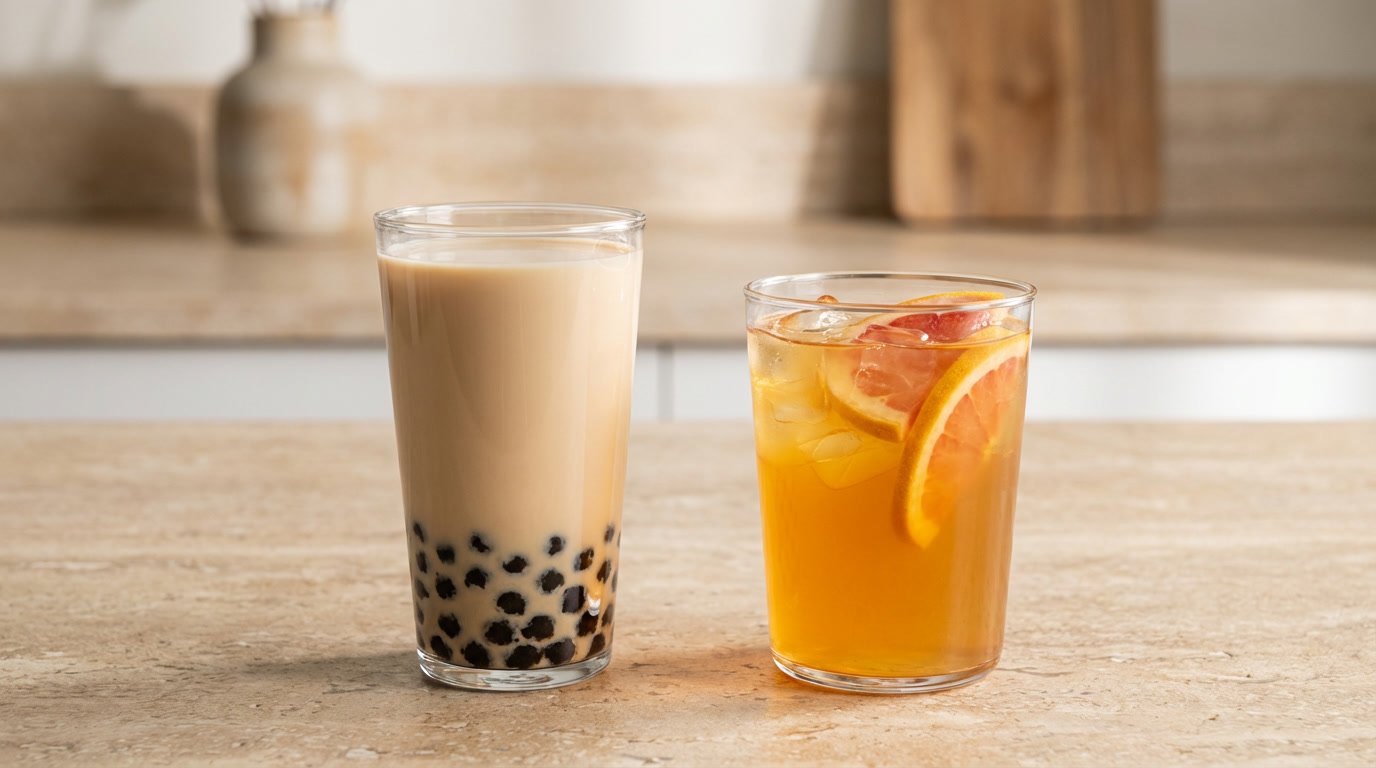
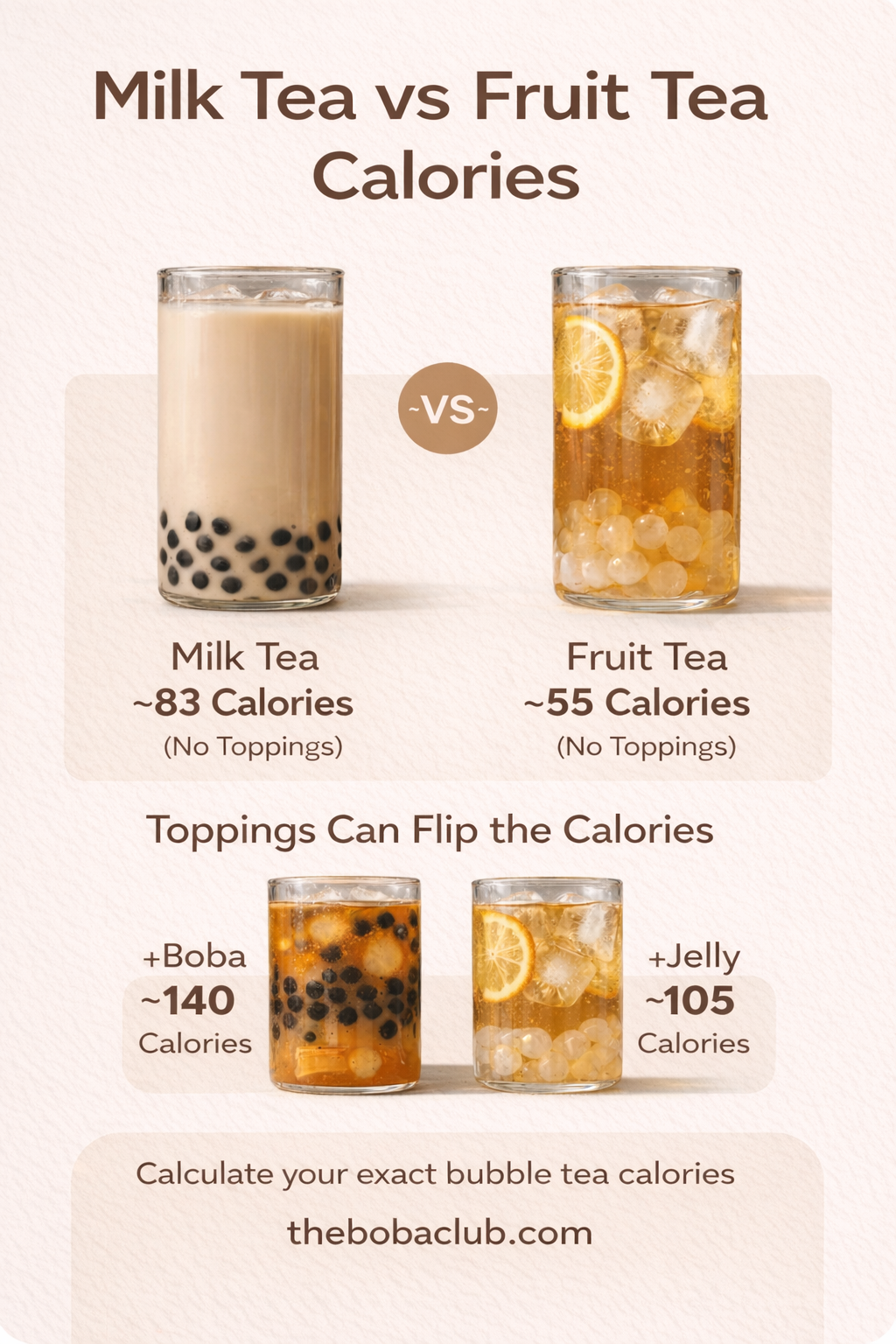
Milk tea vs fruit tea calories is the question almost everyone asks at the bubble tea counter: which one is actually lower?
When people go to the bubble tea counter, they always ask, “Which one has fewer calories, milk tea or fruit tea?”
Milk tea vs fruit tea calories is the question almost everyone asks at the bubble tea counter: which one is actually lower?
| Drink Type | No Sugar, No Toppings | With Pearls + 100% Sugar |
|---|---|---|
| Fruit Tea | ~40–120 cal | ~250–400+ cal |
| Milk Tea | ~120–200 cal | ~350–500+ cal |
Exact values vary by brand, cup size, milk type, sugar level, and toppings.
Lowest calorie overall: Fruit tea at 0–25% sugar with no toppings
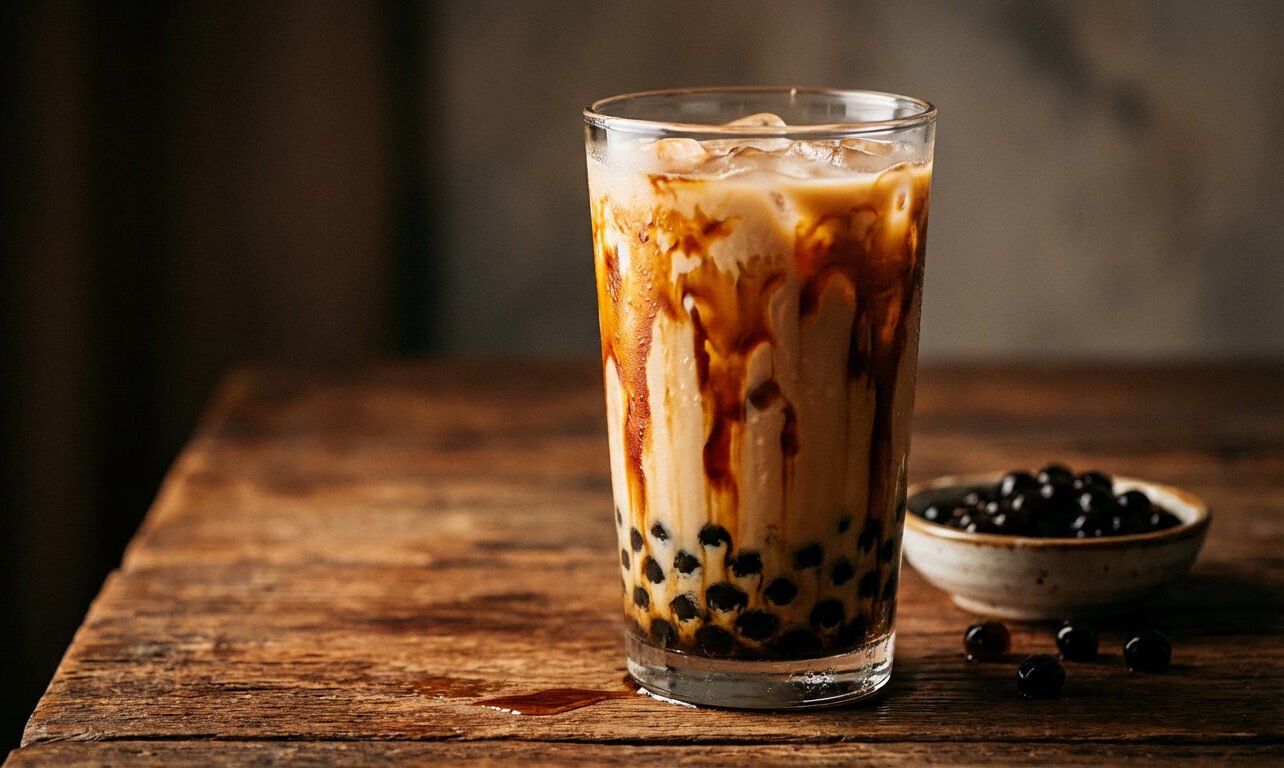
Highest calorie: Milk tea with full sugar and pearls
Biggest calorie driver: Tapioca pearls
What Makes Fruit Tea Different From Milk Tea?
To understand the calorie difference, it helps to know what’s in each drink.
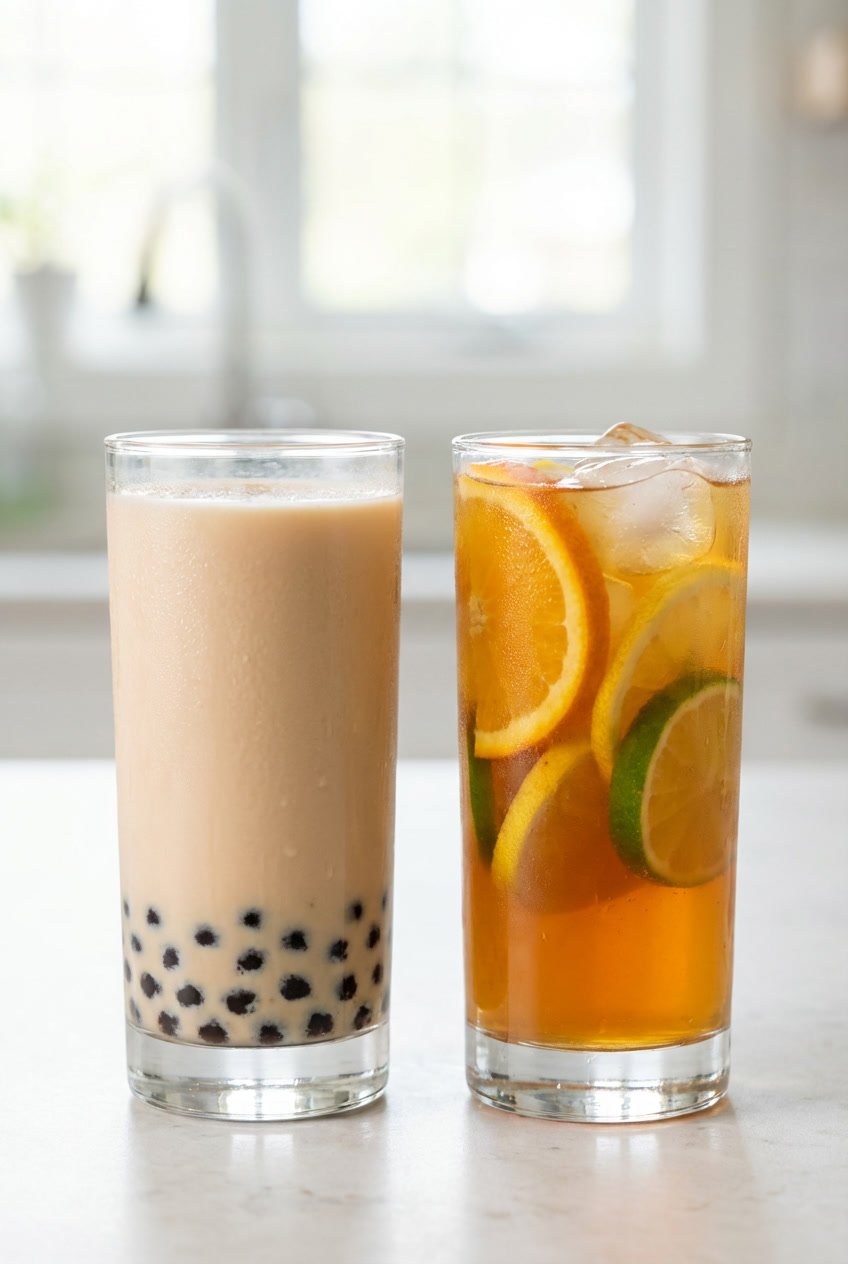
Milk Tea Basics
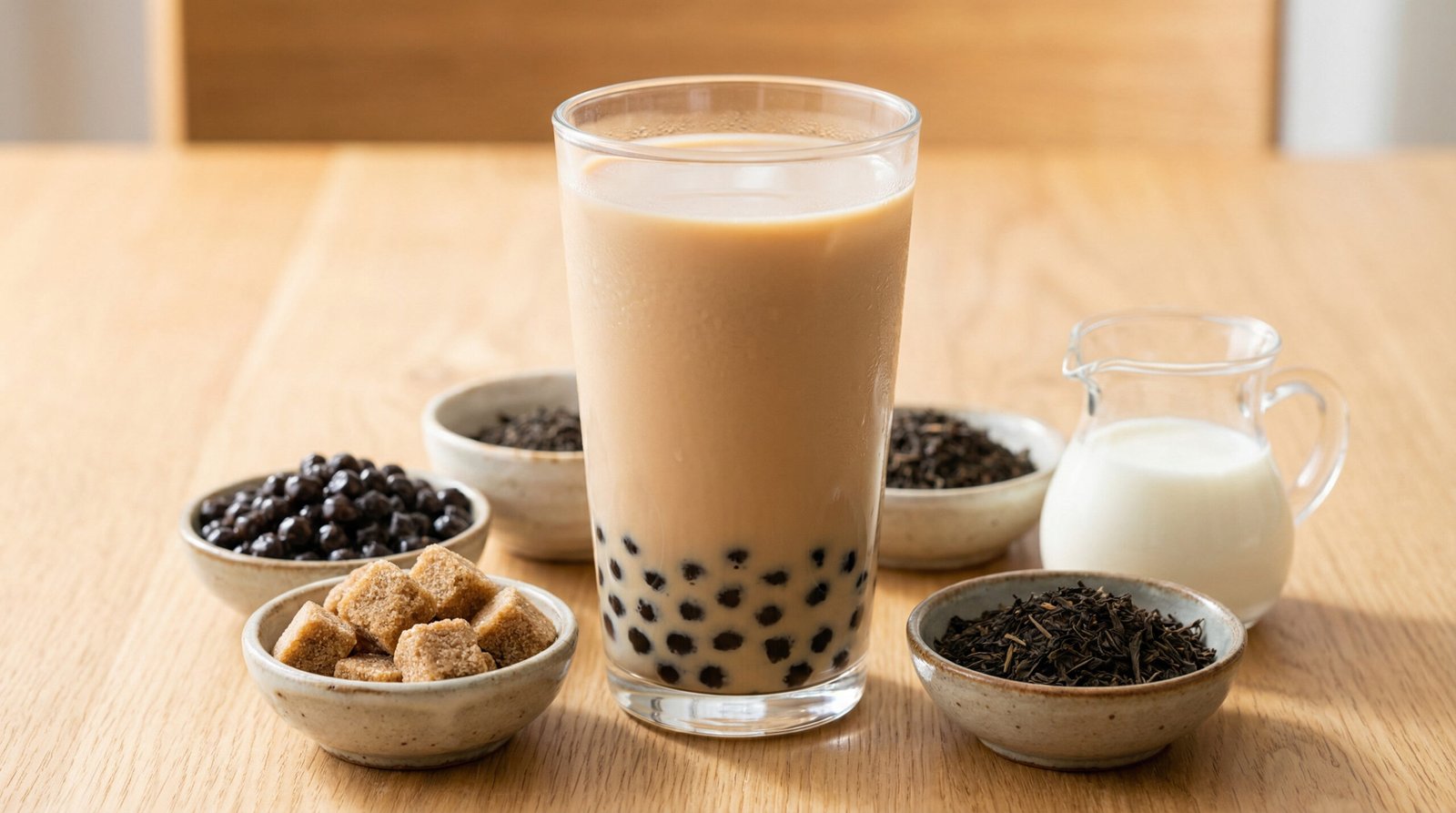
Milk tea is usually made with:
- Brewed tea (black, green, oolong, or jasmine)
- Milk, half-and-half, or non-dairy creamer
- Added sugar or syrup
Milk tea has calories from the milk or creamer, even if you don’t add any sugar. Non-dairy creamers can have more calories than regular milk because they often have oils and sugars in them.
Milk tea tends to:
- Taste creamier
- Feel more filling
- Start with a higher calorie “base.”
Fruit Tea Basics
Fruit tea is usually made with:
- Brewed tea (often green or black)
- Fruit syrup, juice concentrate, or puree
- Added sugar (varies by shop)
Fruit tea doesn’t have milk in it, which means it has fewer calories. But fruit syrups can have a lot of sugar, especially when they are very sweet.
Fruit tea tends to:
- Taste lighter and more refreshing
- Start at lower calories and low sugar
- Rise quickly as sugar levels increase
Fruit tea usually starts out lower because the ingredients are different, but that doesn’t always stay true when you add sugar and toppings.
How Sugar Levels Change the Comparison
Most of the confusion about the calories in milk tea and fruit tea comes from sugar, not the tea itself.
Sugar often has more calories than the tea itself.
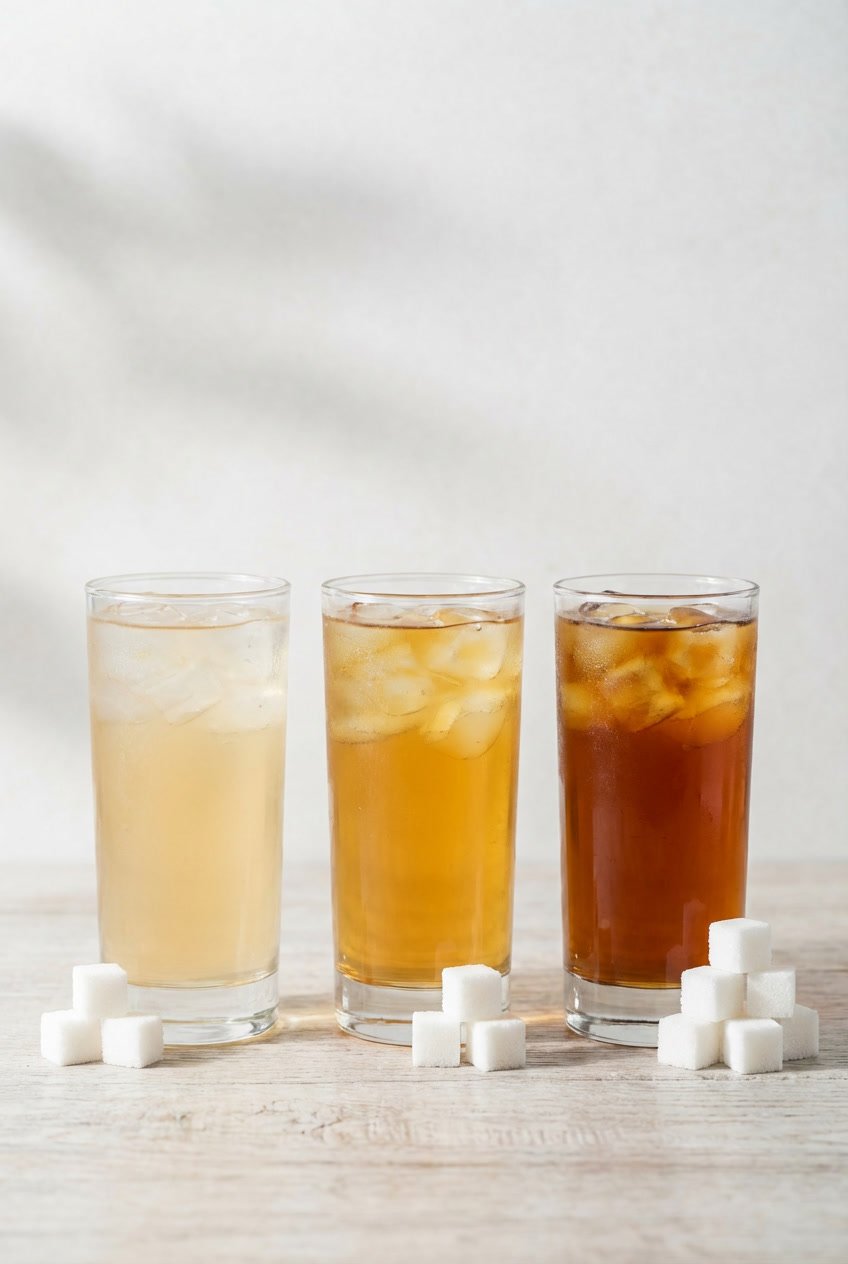
Fruit tea can get very sweet very quickly because many shops use concentrated syrups. If you order 70–100% sweetness, you may be getting a lot more sugar than you expect.
Milk tea also rises with sugar, but it starts from a higher calorie base because of the milk or cream.
Two things can be true at the same time:
- A fruit tea with little sugar is usually the lowest-calorie option.
- A fruit tea with a lot of sugar can be as sweet as or even sweeter than a milk tea with a little sugar.
If you’re unsure what 0%, 30%, 50%, 70%, or 100% sugar really means, read the Bubble Tea Sugar Level Guide.
What Happens When You Add Boba or Jellies?
Toppings are where the comparison can change.
A plain fruit tea may start out lower, but adding classic tapioca pearls can make that advantage disappear quickly.
In general:
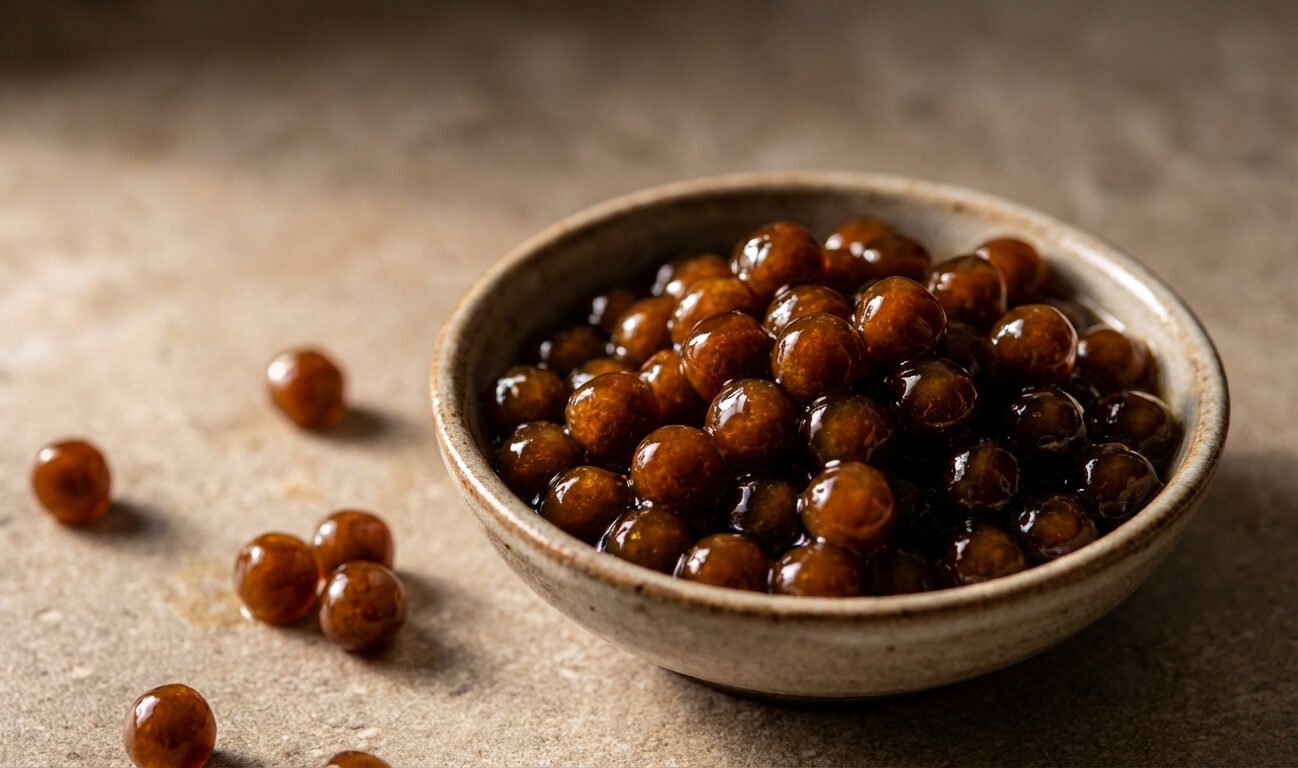
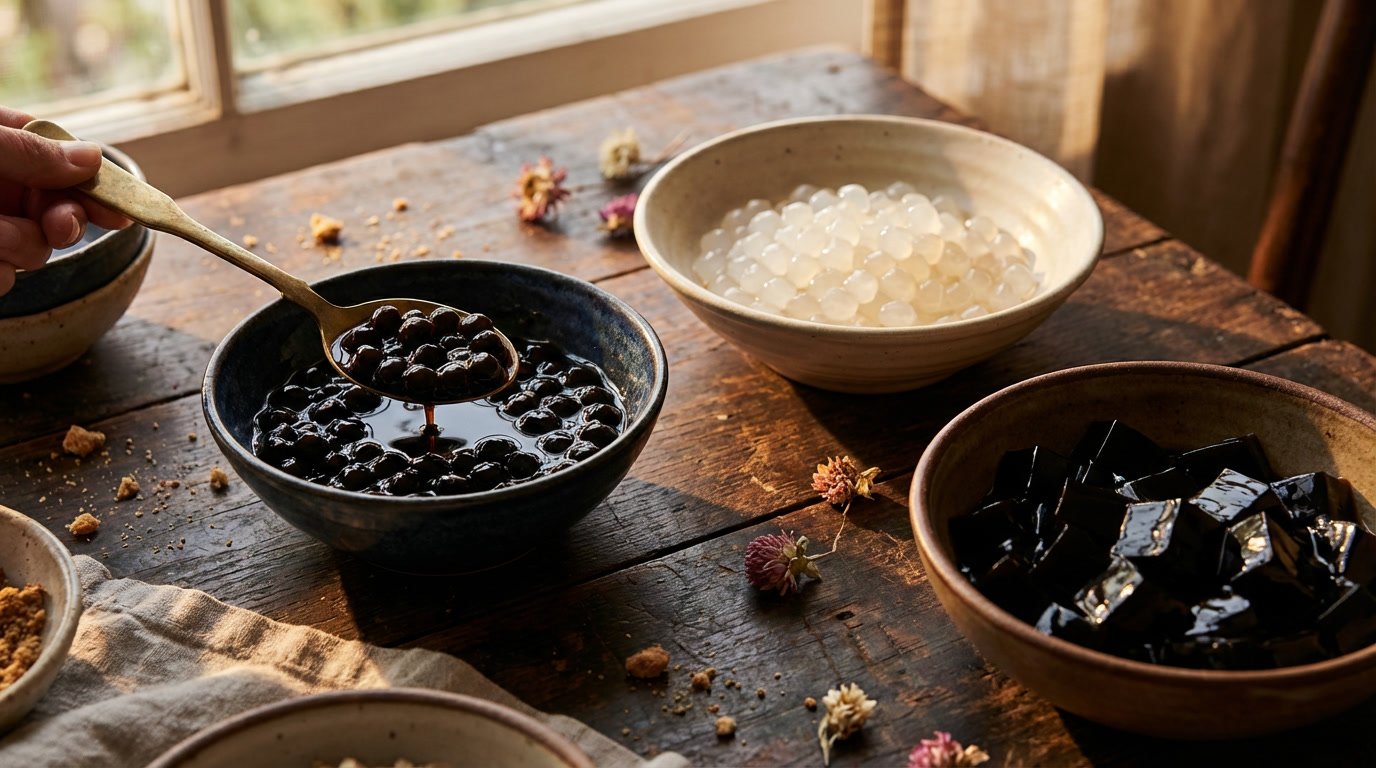
- The most calories come from classic tapioca pearls.
- Popping boba adds fewer calories than classic pearls, but it still adds calories.
- Aloe, grass jelly, and crystal boba are often lighter choices.
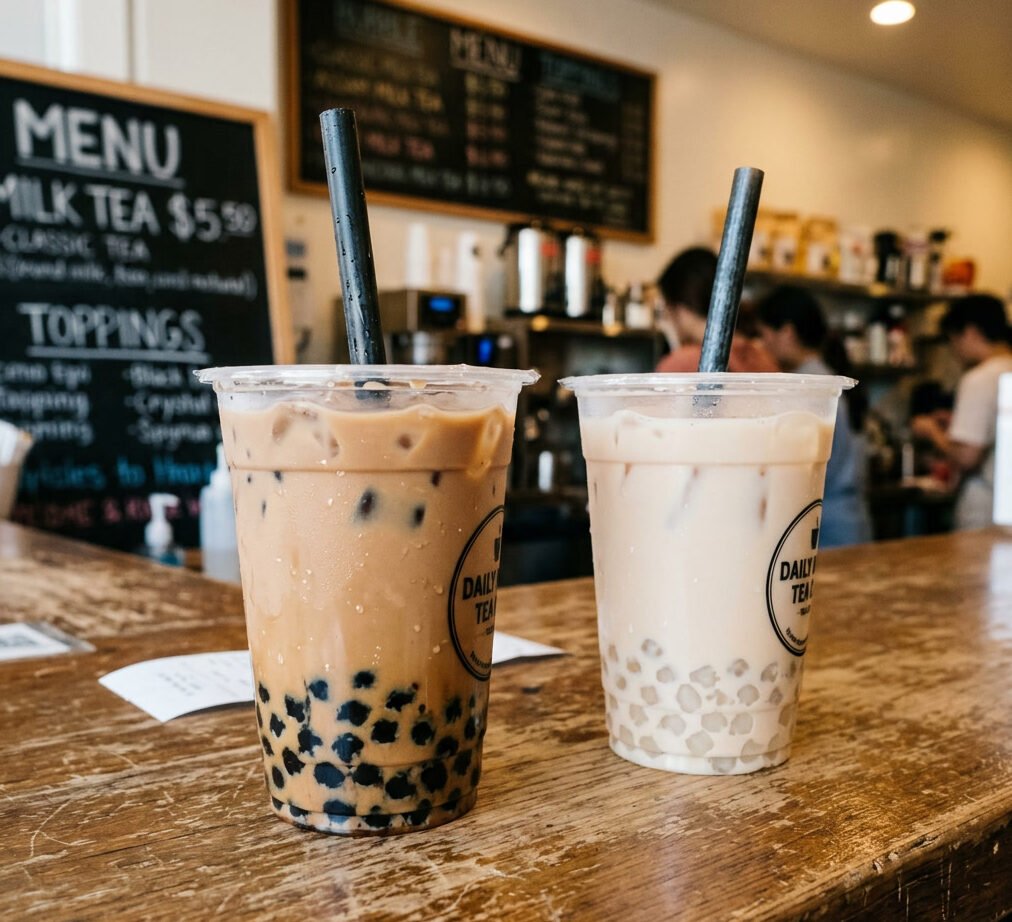
Fruit tea with a lighter topping can be a good compromise if you want texture but are watching calories. One of the easiest ways to keep calories from climbing in milk tea is to limit the toppings.
For a full list, see the Bubble Tea Toppings Calorie Guide.
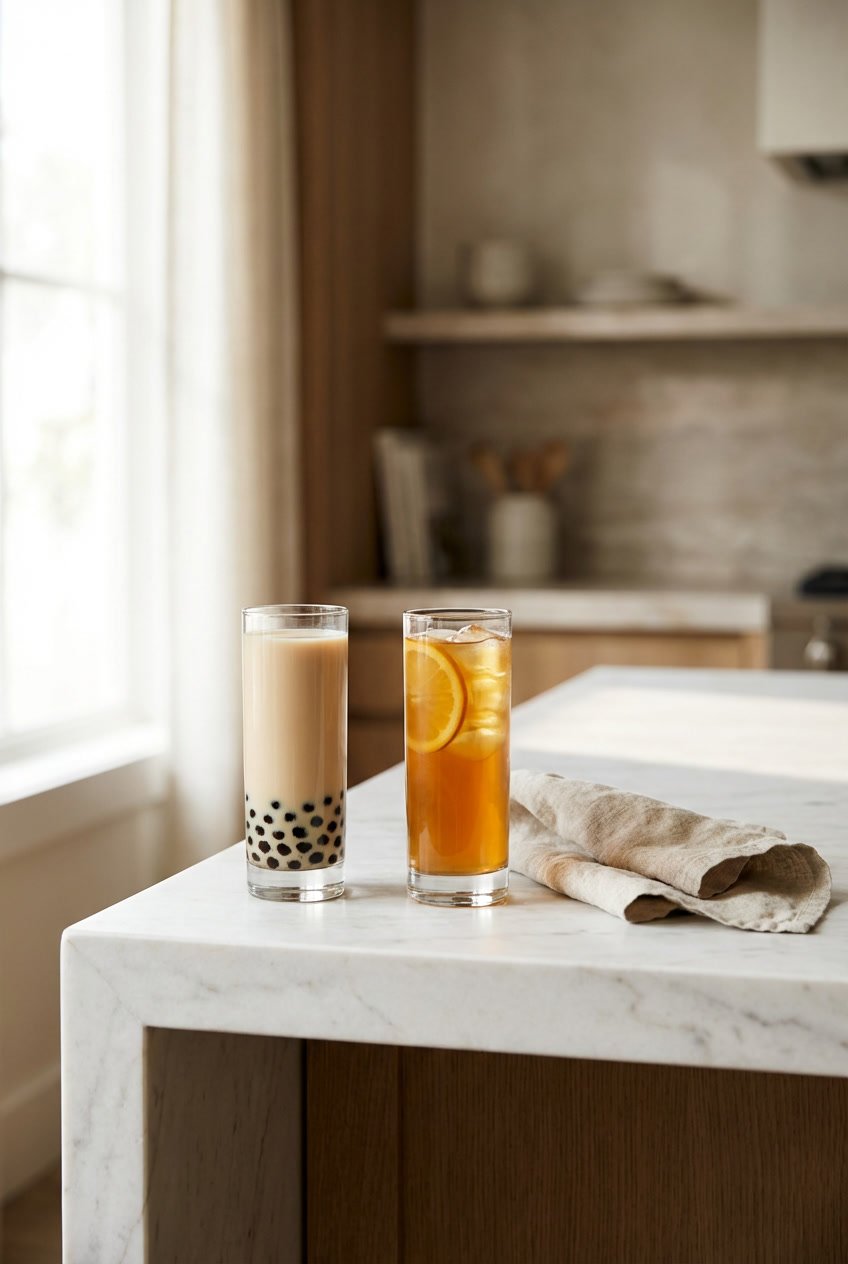
Ordering in Real Life
The base matters, but your exact order matters even more.
Simple and Low Sugar
Fruit tea with no toppings and 0–25% sugar is usually lower in calories than milk tea.
Pearl Fruit Tea
Fruit tea with classic boba can end up higher in calories than a milk tea with no toppings and a little sugar.
Light Milk Tea Order
Milk tea with 0–25% sugar and a lighter milk option can be moderate, especially without toppings.
Fruit Tea with a Lot of Sugar
Fruit tea at 75–100% sweetness can be calorie-heavy even before you add toppings.
If you only remember one thing, let it be this: compare your full order, not just the drink category.
Hot vs Iced: Does Temperature Change Calories?
Calories don’t change with temperature; ingredients do.
The total depends on the milk, syrup, sugar level, and toppings, not whether the drink is hot or cold. Sometimes hot drinks seem lighter because people don’t always ask for extra toppings.
Best Low-Calorie Milk Tea Orders
If you love milk tea but want to keep calories lower:
- Order 0–25% sugar
- Choose a lighter milk option
- Skip classic pearls
- Let the tea flavour carry more of the drink
Example:
Jasmine or oolong milk tea, 0–25% sugar, no toppings.
Best Low-Calorie Fruit Tea Orders
To keep fruit tea lighter:
- Start at 0–25% sugar
- Choose brewed tea bases
- Use toppings sparingly
- Pick lighter add-ons like aloe or grass jelly
Example:
Green tea fruit tea (mango or passionfruit), 0–25% sugar, optional light jelly.
FAQ’s
What drink has the lowest calories?
Fruit tea with no toppings and 0–25% sugar usually has the fewest calories.
Can milk tea be low calorie?
Yes. If you choose low-sugar milk, lighter milk, and no high-calorie toppings, milk tea can have fewer calories.
Do toppings add more calories than the tea base?
Yes, a lot of the time. Tapioca pearls can have more calories than the tea itself.
🧋 Calculate Your Exact Drink?
These ranges are useful, but the number of calories can change quickly based on the level of sugar, milk, and toppings. Use the tools below to change your order and see the numbers right away:
👉 Bubble Tea Nutrition Calculator
👉 Bubble Tea Sugar Level Guide
👉 Bubble Tea Toppings Calorie Guide
Why These Are Ranges and Not Exact Numbers
Calories vary because:
- Shops use different syrup and milk amounts
- Cup sizes vary by brand
- “25% sugar” can mean different things at different chains
That’s why ranges of calories are better than just one number. You can only get a good estimate if you change how you order because every store uses different syrups, milk, and portion sizes.
The Bubble Tea Nutrition Calculator below will show you how the calories change when you change the sugar level, milk type, or toppings. You can change your drink the same way you would at the counter, and you can see how the numbers actually change.

A plain fruit tea usually starts lower than milk tea, but toppings can erase that advantage fast. Even with low sugar, toppings add calories.
In general:
- Classic tapioca pearls add the most calories.
- Popping boba adds calories too, but often less than classic pearls.
- Low-calorie jellies like aloe or grass jelly are often the lightest option.
If you want the chew but you’re trying to keep calories lower, fruit tea with a lighter topping can be a great middle ground. If you prefer milk tea, keeping toppings minimal or choosing a lighter jelly is one of the easiest ways to prevent calories from jumping.
For exact numbers, use the Bubble Tea Nutrition Calculator and toggle toppings on and off to see which add-ons change calories the most. If you want to compare every add-on, see my full bubble tea toppings guide.
Calculate Your Bubble Tea Calories
Find out how many calories are in your bubble tea.
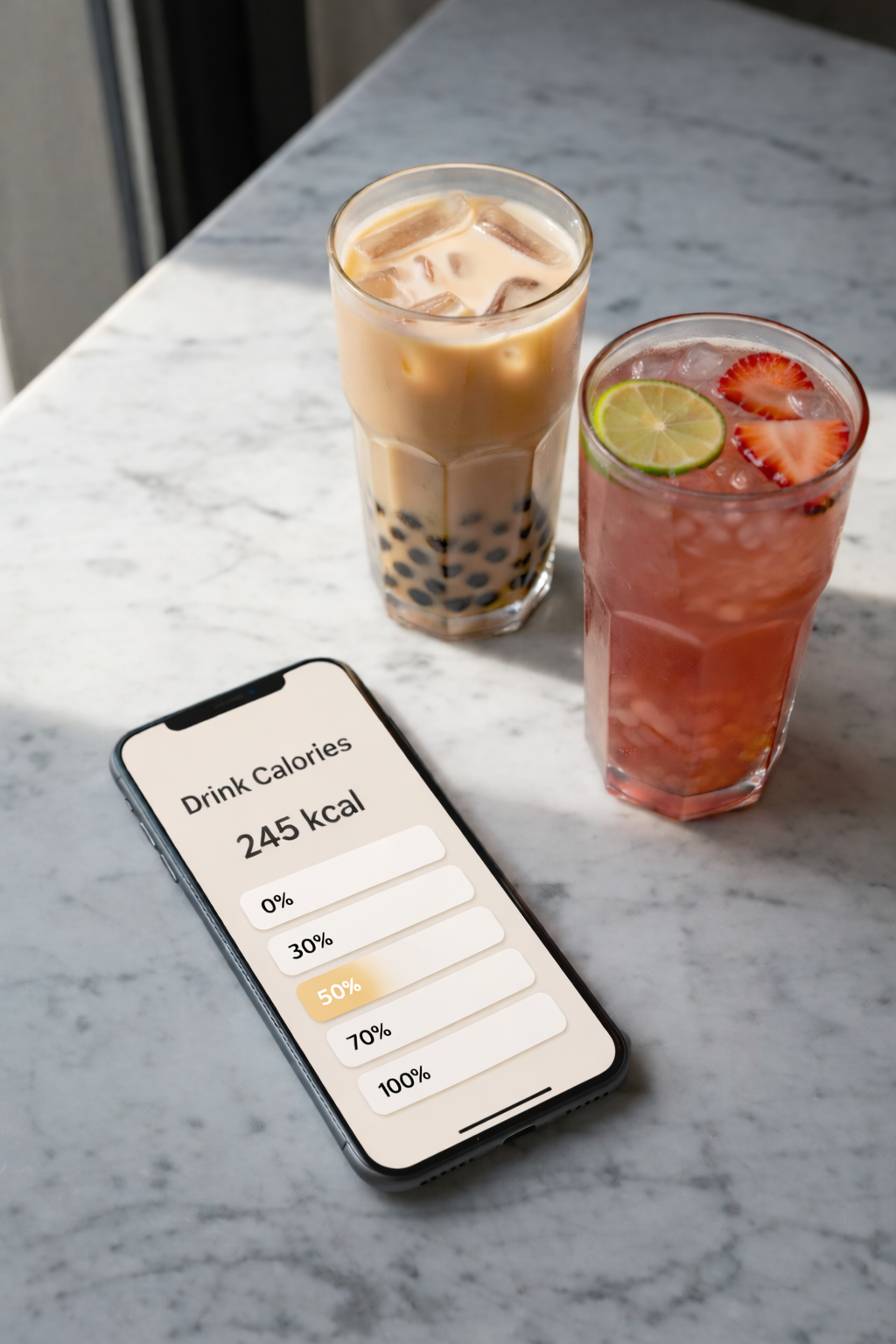
If you’ve read this far, you already know that there is no one “right” solution to the question of how many calories are in milk tea and fruit tea. How many calories you get depends on how you order, the sugar amount, the milk or cream, and the toppings you choose.
That’s why it’s hard to guess.
For the most accurate milk tea vs fruit tea calories estimate, plug in your sugar level and toppings here to make your drink just like you would at the counter. You can modify the tea base, the level of sweetness, and the toppings, and you can see how each choice affects the number of calories in real time.
It only takes a few seconds and provides you a good idea of how much it will cost, so you can order without worrying too much or giving up your favorite drink.