Crystal Boba vs Tapioca: Crunch, Texture, and Calories
Crystal boba looks pretty in a drink, but the real question is whether it actually tastes better than tapioca.
That depends on what you want. Traditional tapioca pearls are chewy, dense, and sweet in that classic boba way. Crystal boba is lighter, snappier, and usually lower in calories.
If you have ever stared at the toppings counter wondering which one is actually worth it, this crystal boba calories vs tapioca guide will help you decide. We’re comparing texture, calories, flavor, convenience, and which drinks each one works best in.
1. Crystal Boba Calories vs Tapioca: What’s the Difference?
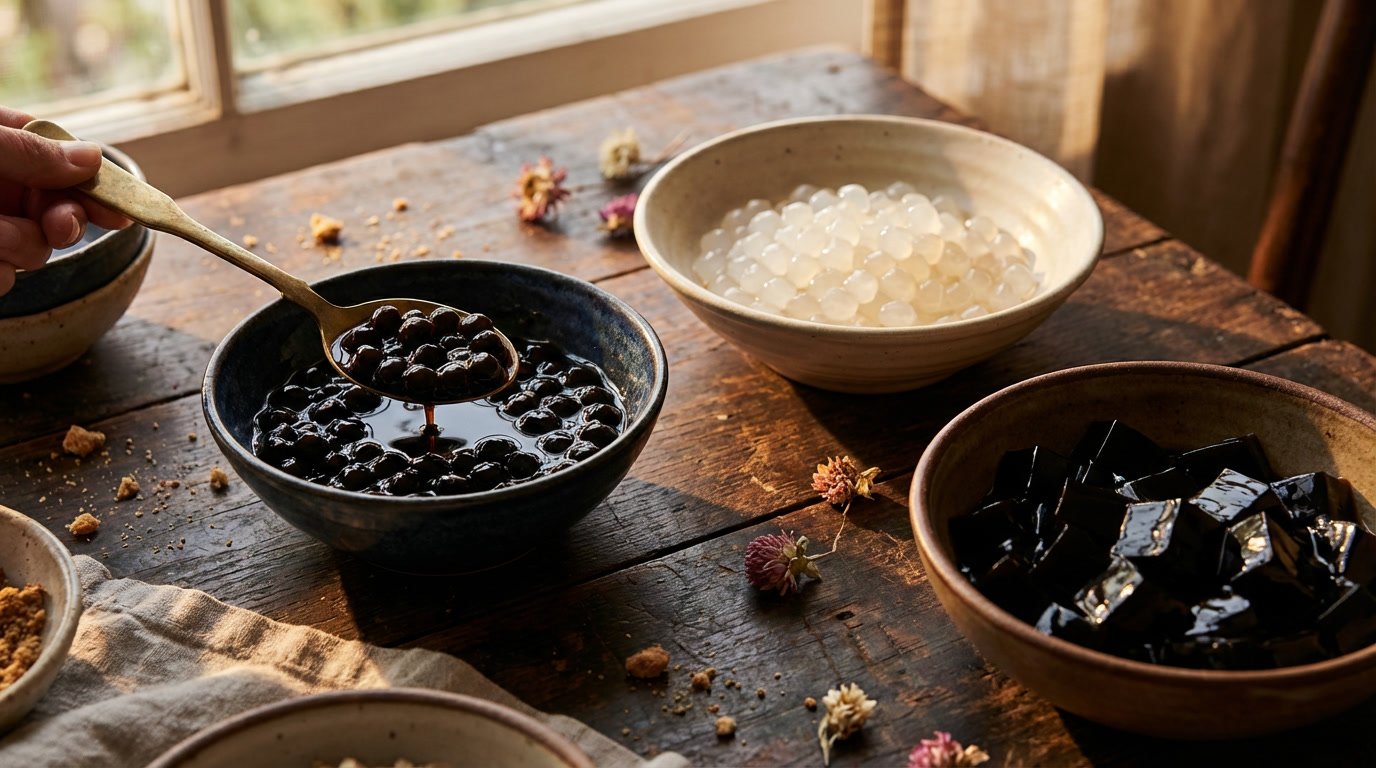
Traditional tapioca pearls are made from cassava starch, which is why they are dense and chewy. Crystal boba is usually made from konjac or agar, so it has a lighter, jelly-like bite instead of that classic chew.
Tapioca: Starchy, dense, chewy, and usually cooked before serving.
Crystal boba: Ready to eat, lighter in texture, and usually packed in syrup.
This is the biggest difference right from the start. Tapioca feels heavier and more filling. Crystal boba feels lighter and crisper.
2. Texture: Snap vs. Chew
This is really what the choice comes down to.
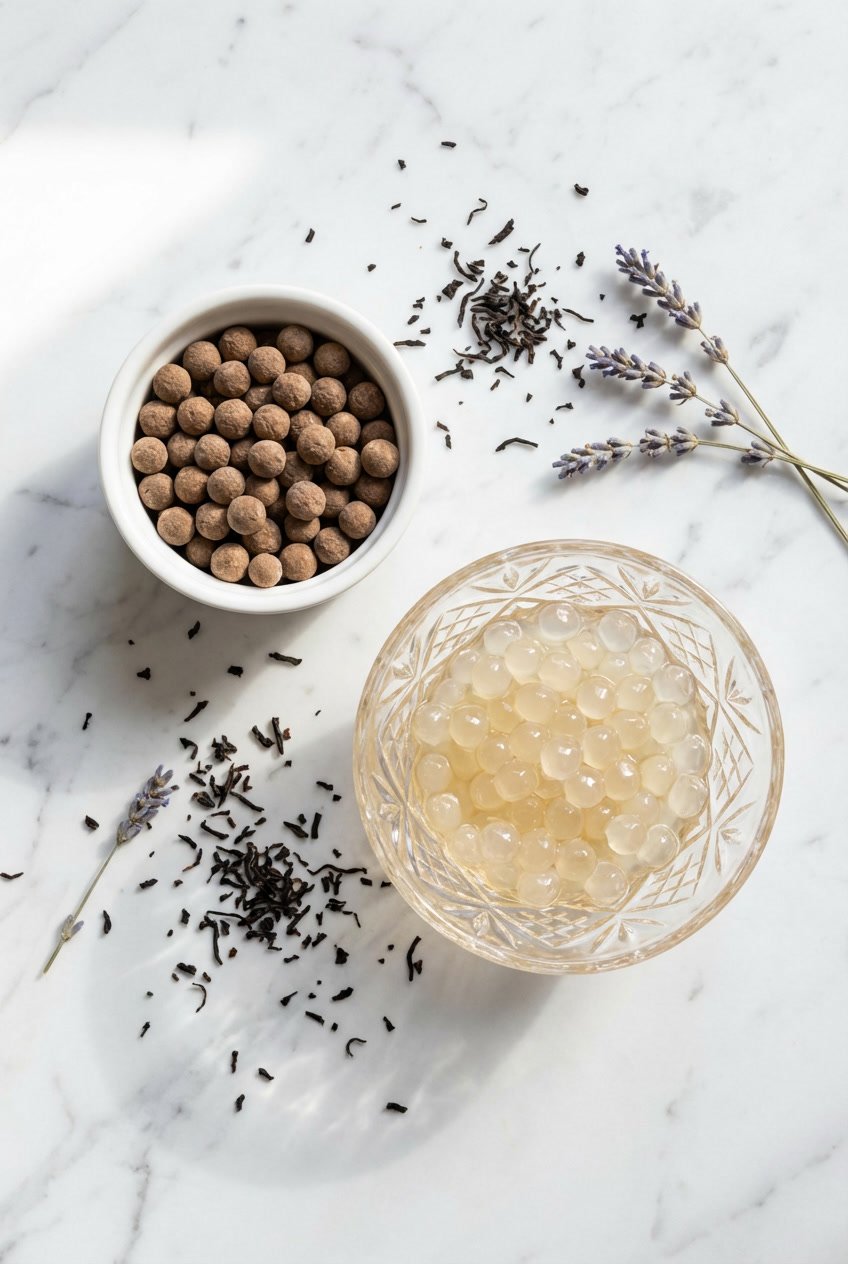
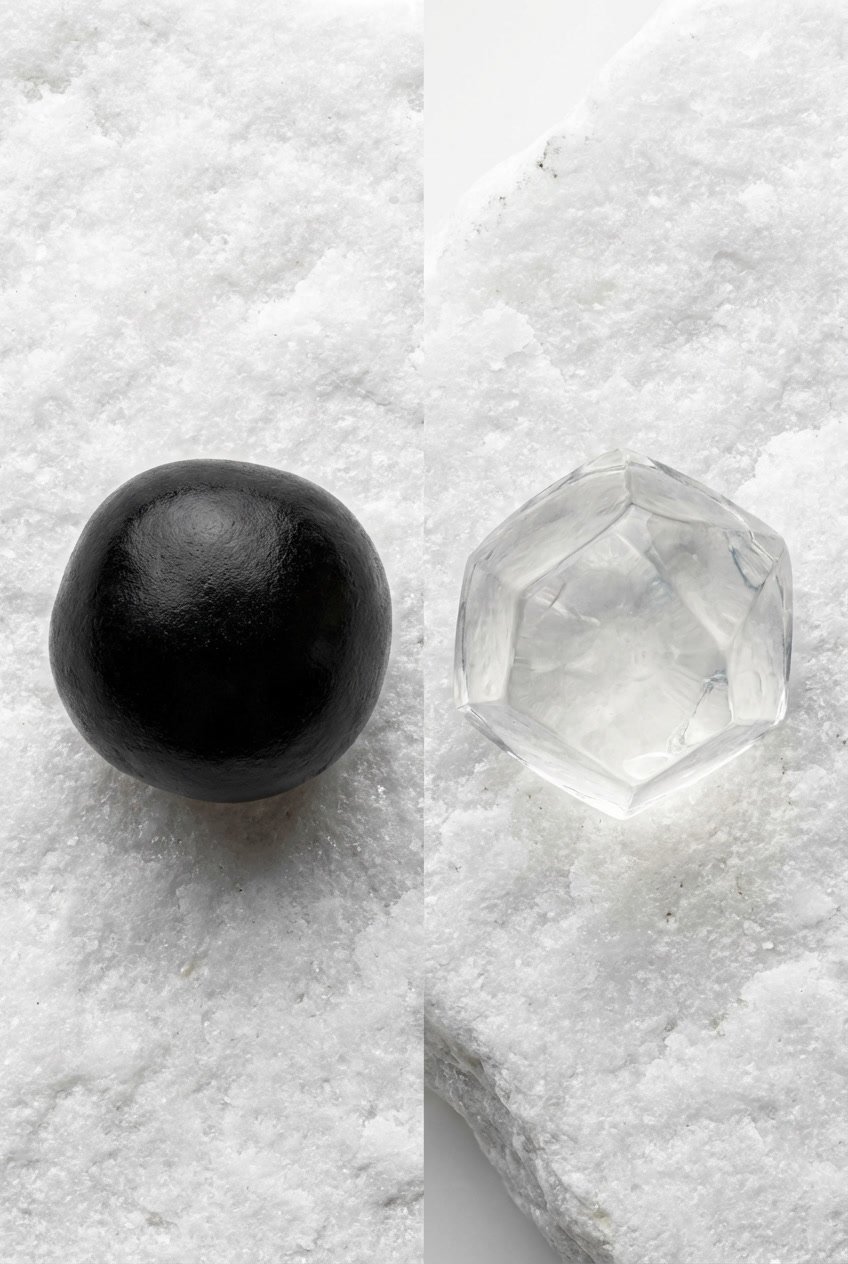
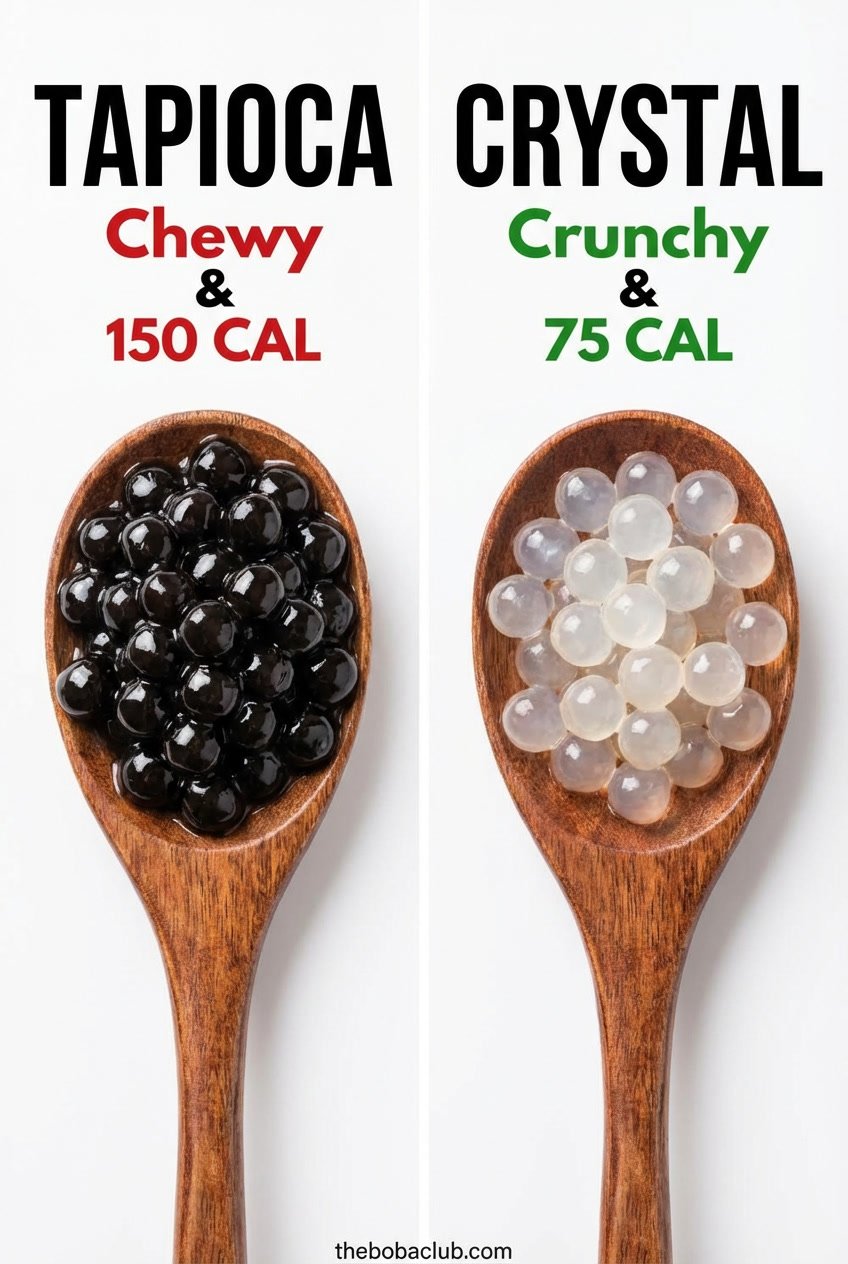
Traditional tapioca has that classic QQ texture, meaning chewy, springy, and a little bouncy. Crystal boba is firmer and snappier. It breaks faster when you bite into it, which is why it works so well in fruit teas and lighter drinks.
If you love that slow chew, go with tapioca. If you want something lighter and less sticky, crystal boba usually wins.
The Showdown
3. Calories: Which One Is Lighter?
If calories matter to you, crystal boba usually comes out ahead.
This is where the crystal boba calories vs tapioca comparison is most useful, because the difference can be pretty noticeable once you add a full scoop.
Tapioca pearls: around 150 calories per standard scoop
Crystal boba: around 70 to 80 calories per standard scoop
It is not calorie-free, and it still depends on the syrup and brand, but crystal boba is usually the lighter pick. That makes it a smart swap when you still want texture in your drink but do not want the full starch hit.
Want the fuller health picture? I break that down in my Is Bubble Tea Healthy? post.
4. Flavor: Which One Works Better in a Drink?
Tapioca is better at soaking up syrup, which is why it tastes sweeter all the way through. Crystal boba usually keeps more of its own flavor and texture.
That means:
Tapioca works best in milk teas, brown sugar drinks, and richer orders.
Crystal boba works best in fruit teas, citrus drinks, and lighter iced teas.
This is why crystal boba can feel a little odd in a rich milk tea. It is not bad, just a different vibe.
5. Which One Looks Better in a Drink?
Looks are not everything, but with boba, they do matter a little.
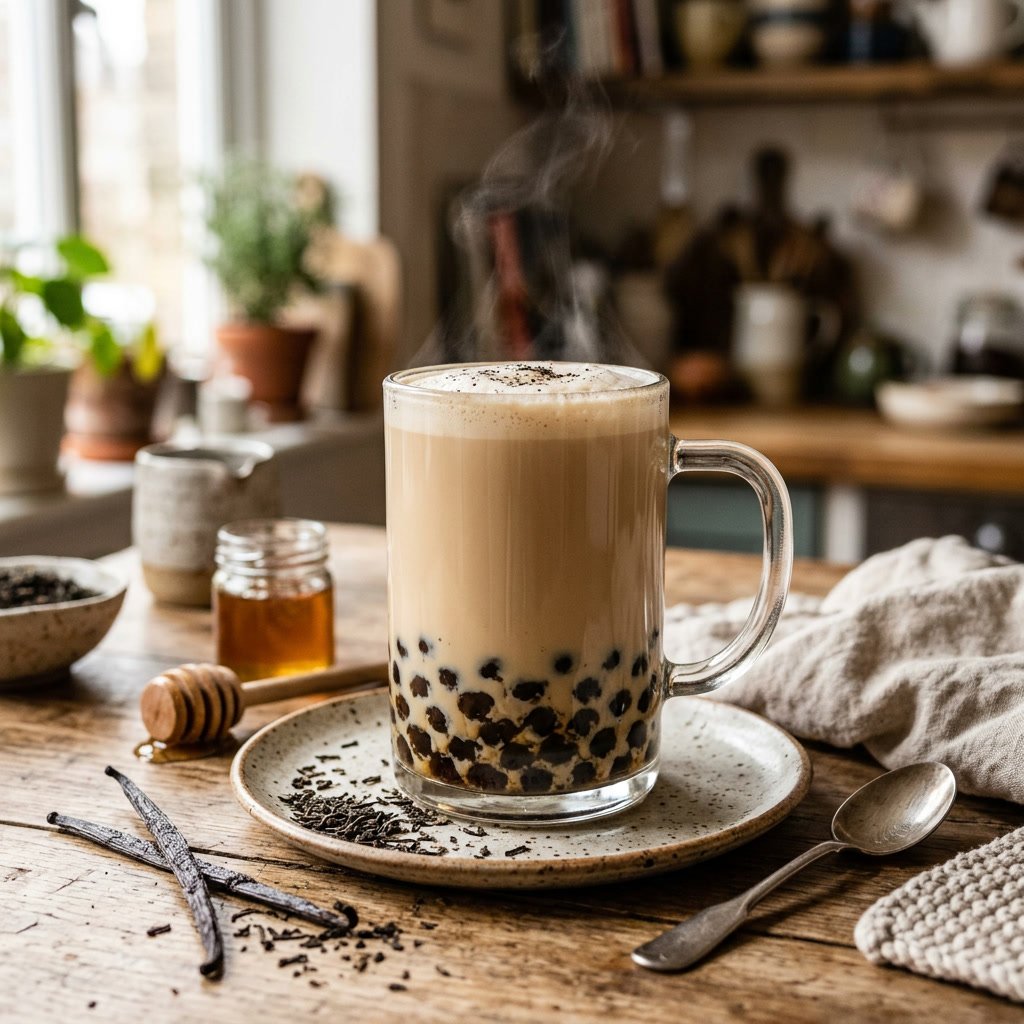
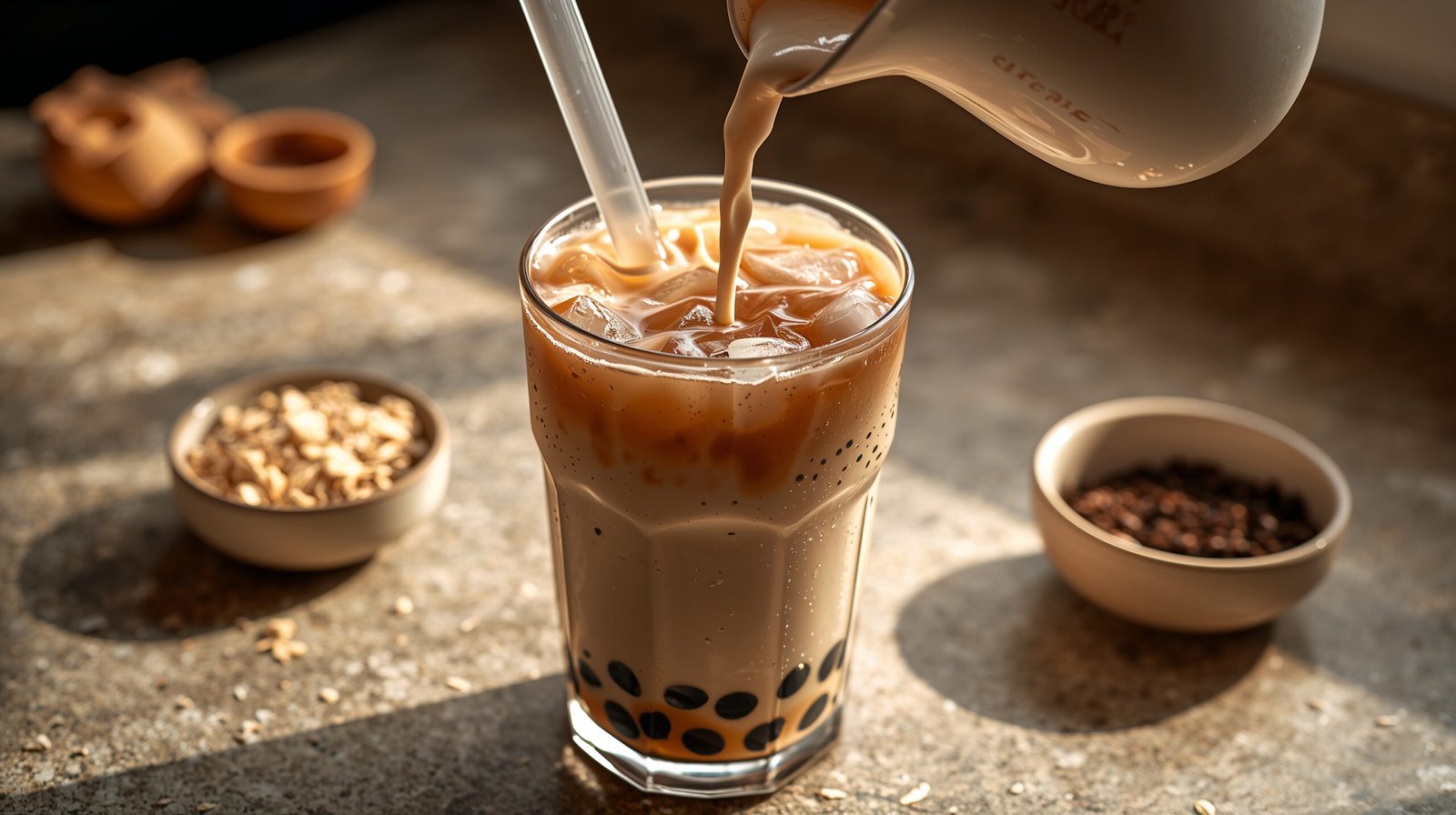
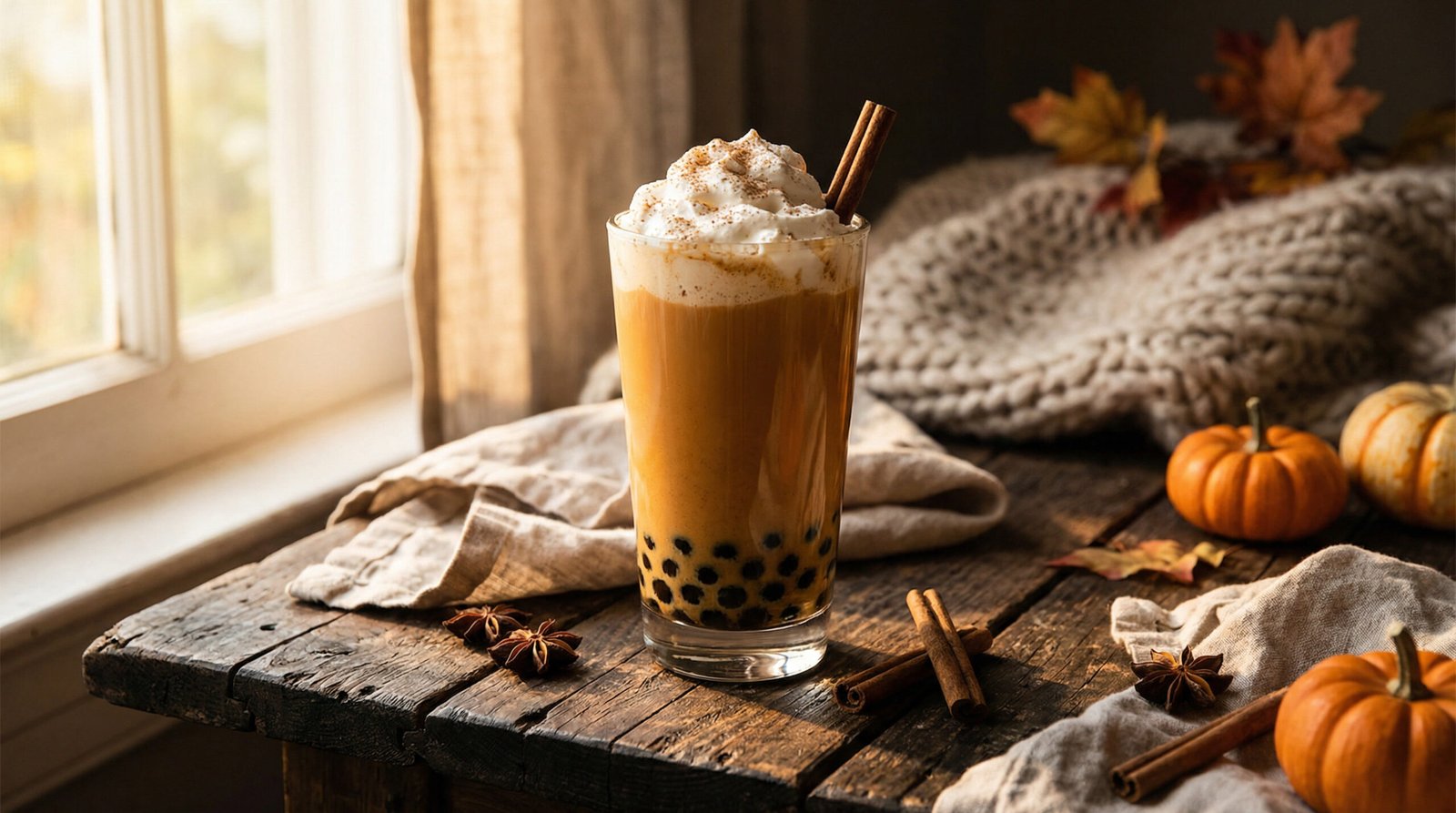
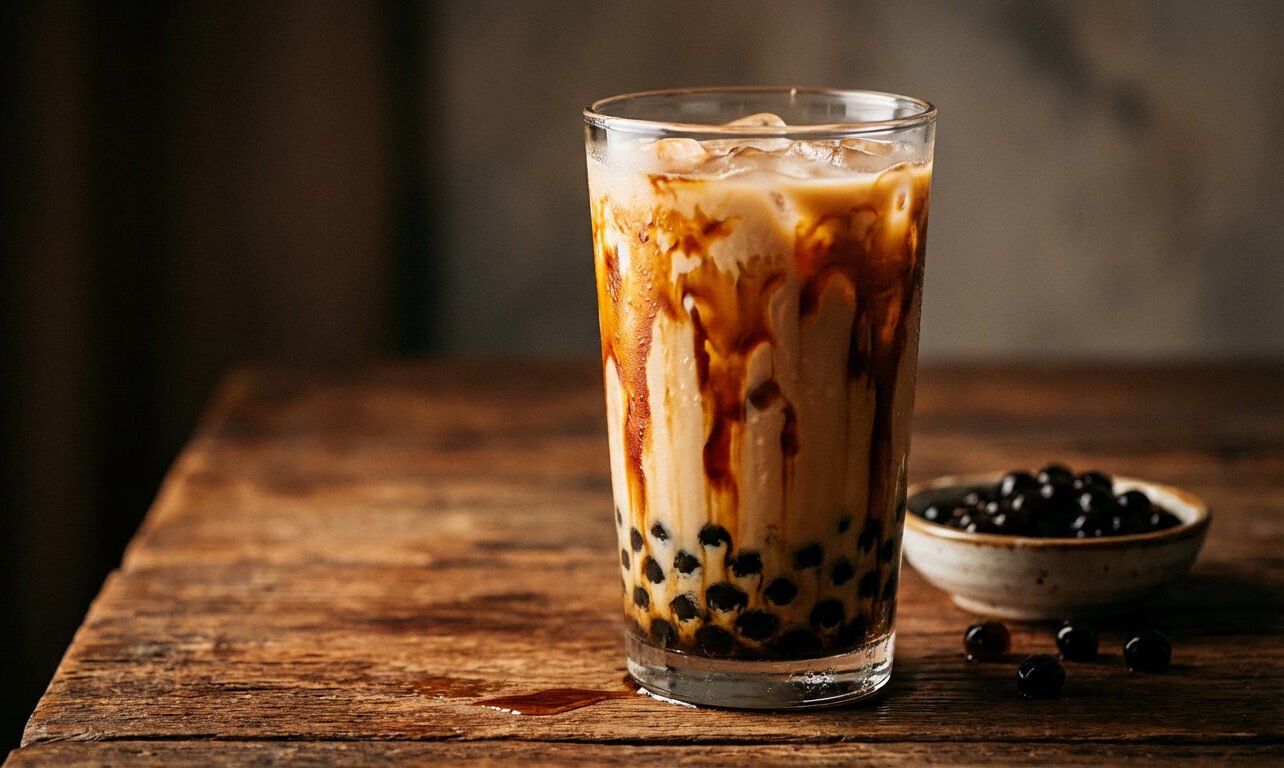
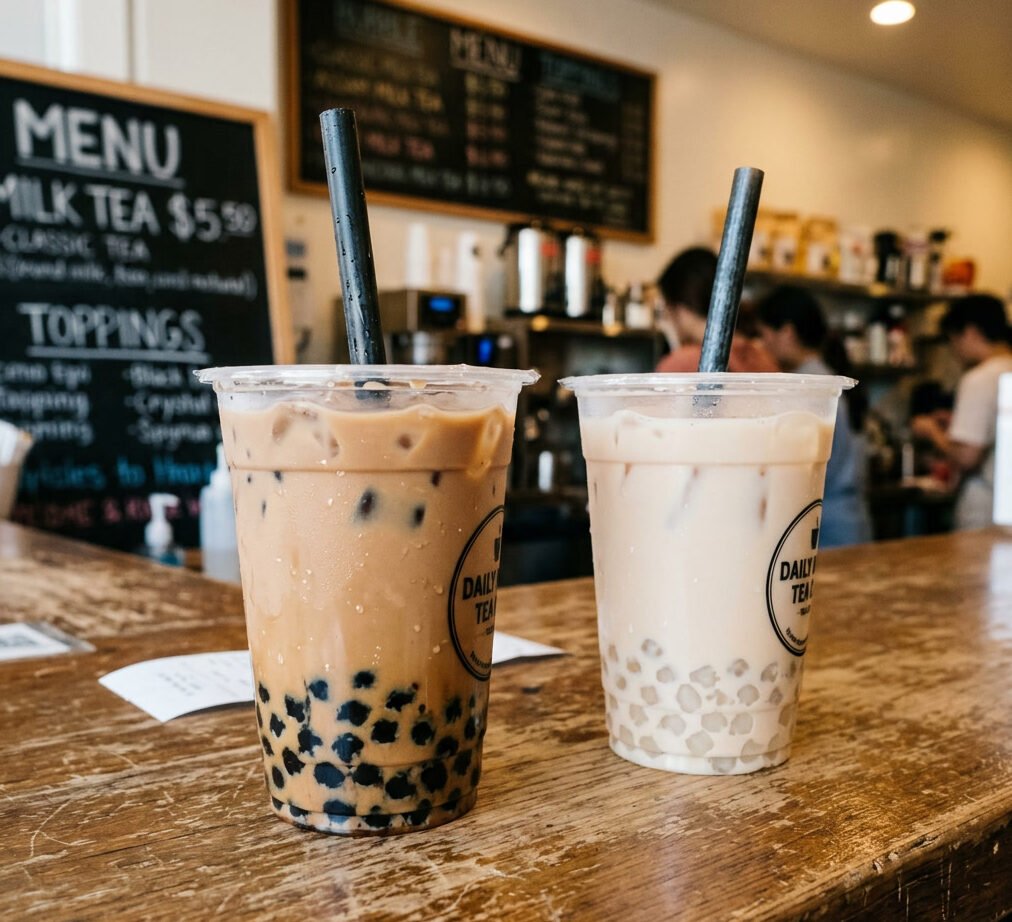
Traditional tapioca gives you that classic bubble tea look. The dark pearls stand out in milk tea and instantly read as familiar, rich, and comforting. It is the version most people picture first.
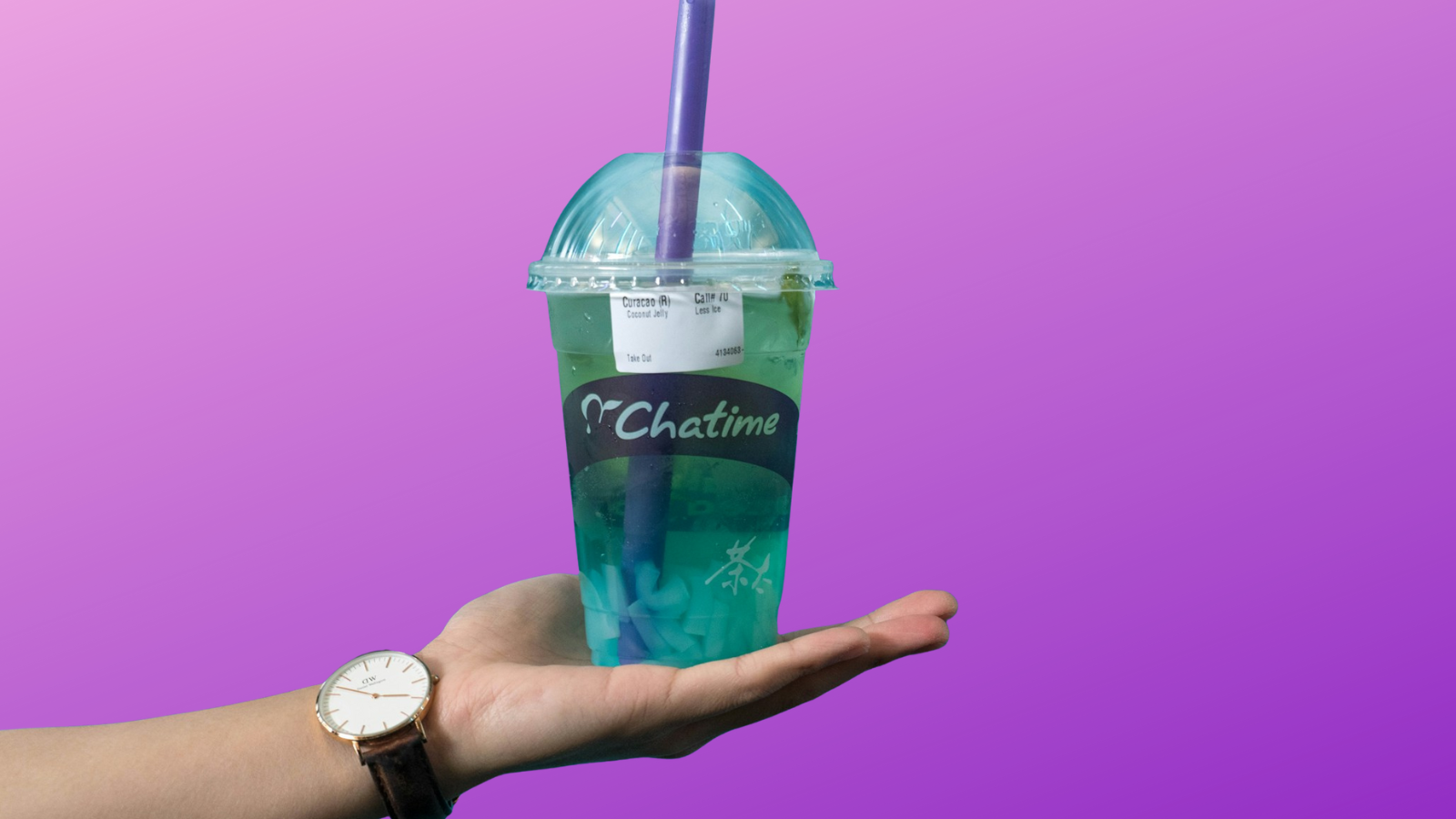
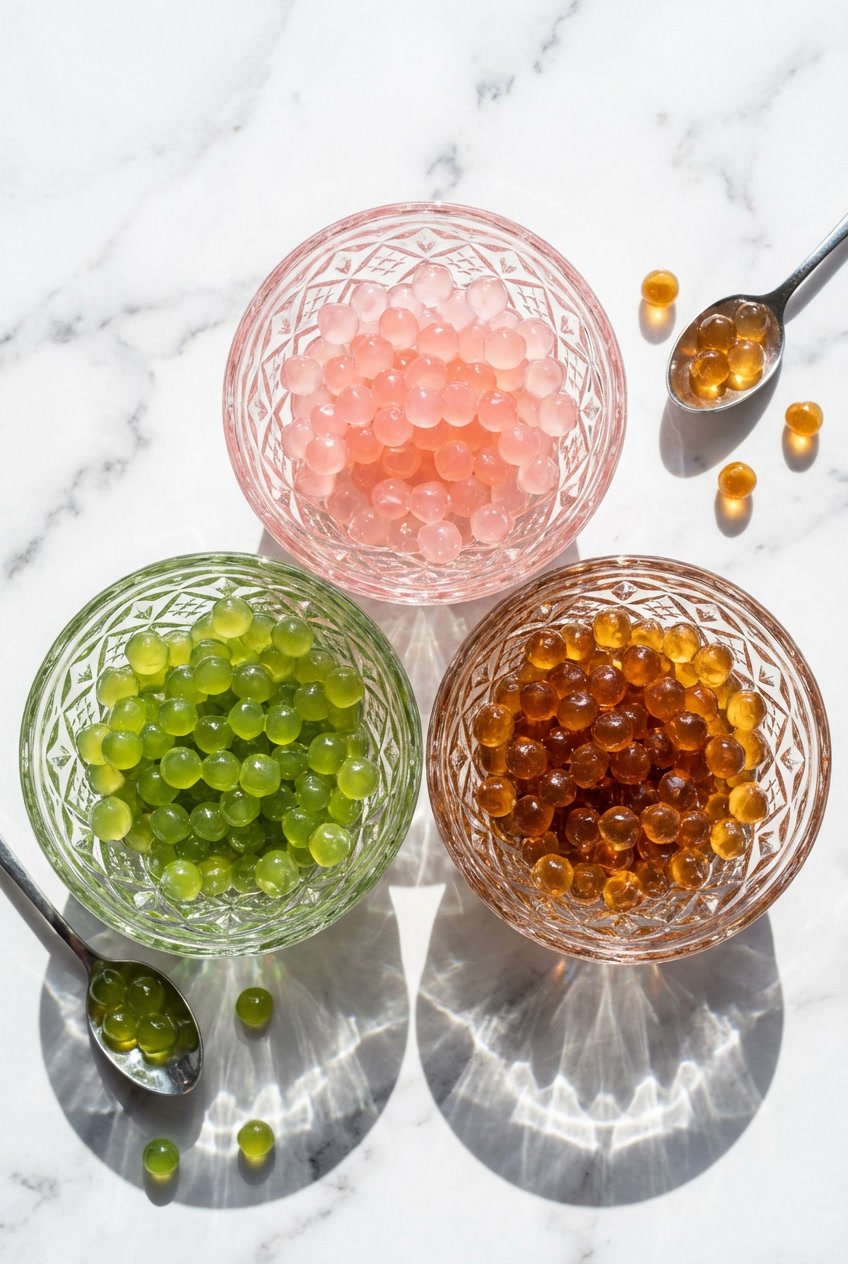
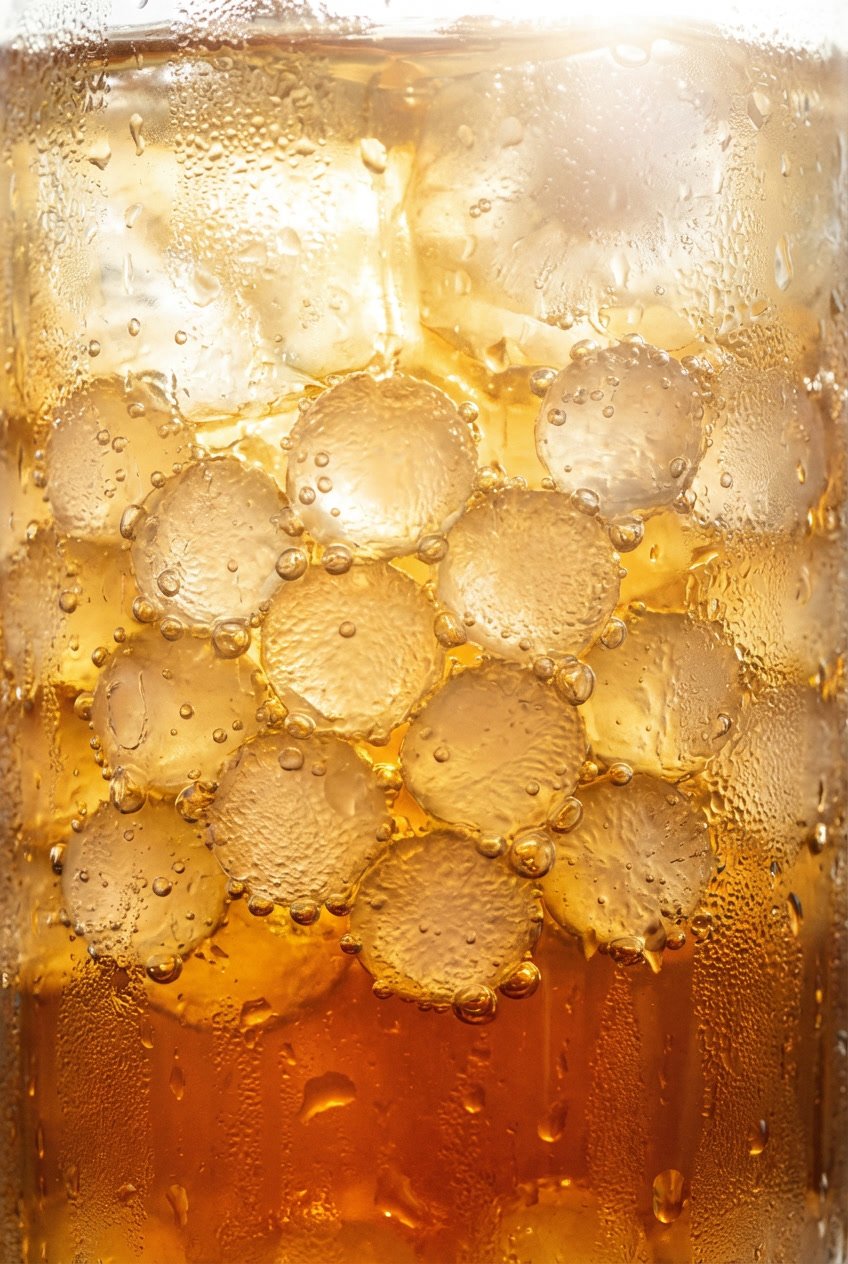
Crystal boba has a different appeal. Because it is translucent, it catches the light and looks cleaner, brighter, and a little more eye-catching in the cup. It especially stands out in fruit teas, sparkling drinks, and lighter orders where you can actually see the pearls.
This is where the crystal boba calories vs tapioca choice becomes less about numbers and more about the drink you want in front of you. Tapioca looks classic and cozy. Crystal boba looks lighter, glossier, and more modern.
That does not make crystal boba “better.” It just means the visual vibe is different.
6. Storage and Shelf Life
If you are making boba at home, this is where the difference really shows up.
Tapioca pearls are best eaten soon after cooking. Once they sit too long, the texture starts to go off. Leave them out too long and they get mushy. Put them in the fridge and they usually turn firm and unpleasant.
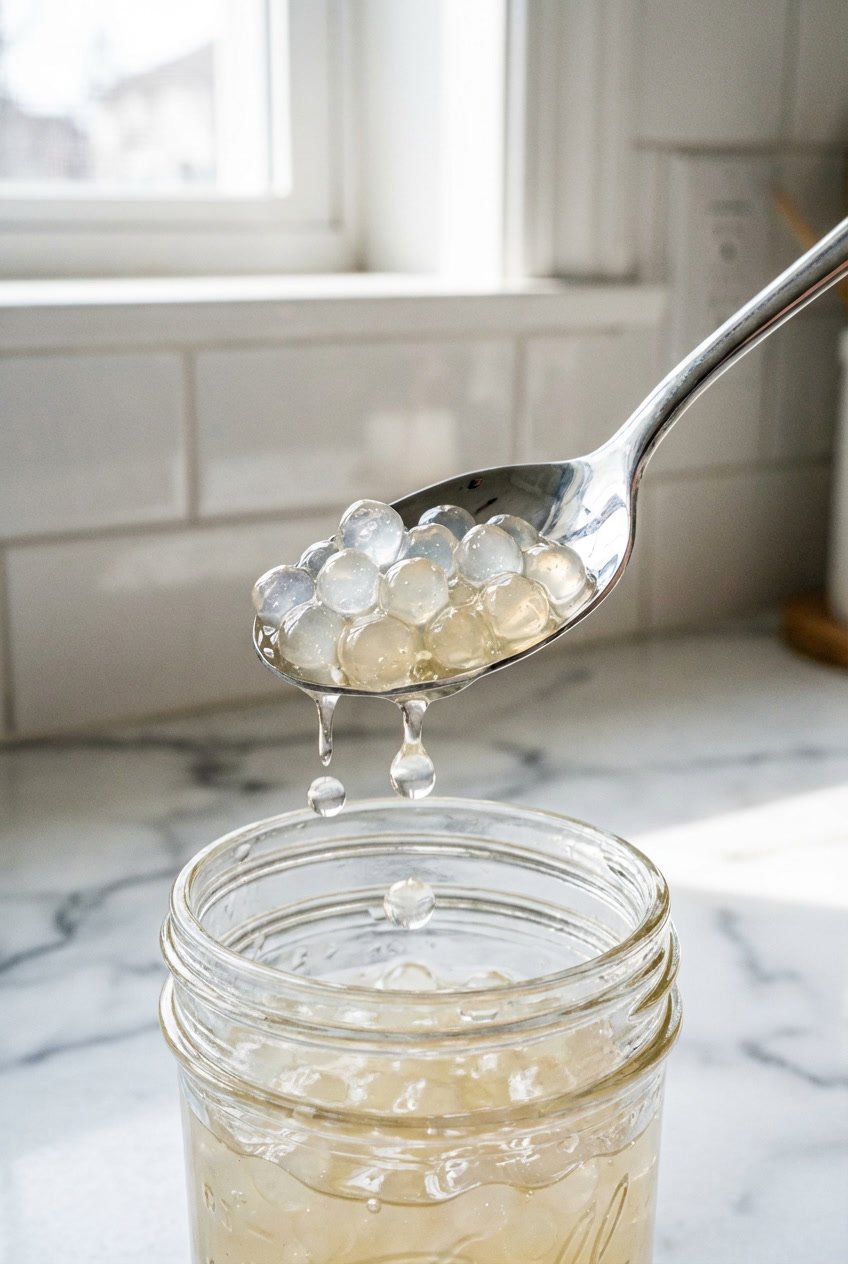
Crystal boba is much easier to keep on hand. Since it usually comes packed in syrup and ready to use, you can scoop out what you need, seal it up, and store the rest in the fridge for later.
This is one reason crystal boba feels so much more convenient for home drinks. Tapioca gives you that classic chew, but it also comes with a shorter window. Crystal boba is easier, faster, and less fussy.
7. Cost & Convenience
If you are making bubble tea at home, the price difference is real, but so is the effort.
Tapioca pearls are usually cheaper per serving. A bag can go a long way, which makes them the more budget-friendly option if you do not mind the cooking time.
Crystal boba usually costs more, but it also saves time. Since it comes ready to use, you are paying for convenience as much as the topping itself.
This is another place where the crystal boba calories vs tapioca comparison depends on what you value most. Tapioca usually wins on cost and classic chew. Crystal boba wins on convenience, lighter texture, and quicker homemade drinks.
8. Where to Buy: The Brands I Actually Use
Don’t just click “Add to Cart” on the cheapest bag you find unless you want your kitchen to smell like old plastic. Trust me on this. Before you buy, check the nutrition label against my BobaCal Calculator to make sure you aren’t accidentally buying a sugar bomb.
For Crystal Boba: Look for Mayde or Fanale brands. They come ready-to-eat in the bag. You literally just snip the corner and pour. Warning: The bags are heavy because they come packed in syrup, so don’t be alarmed by the shipping weight.
For Tapioca Pearls: I have said it before, and I will say it again: WuFuYuan Black Pearls. They cook in 5 minutes. I simply do not have the patience for the traditional pearls that require an hour of simmering. Life is too short.
9. Quick Dietary Notes
If dietary restrictions matter to you, here is the short version:
Vegan: Usually yes. Both tapioca and crystal boba are plant-based, though it is still smart to check the full ingredient list.
Gluten-free: Usually yes. Both are generally gluten-free, but flavored syrups and add-ins can vary by brand.
Halal or kosher: Often yes, especially crystal boba made with agar or konjac instead of gelatin. If this matters for your diet, look for a certified product to be safe.
10. Crystal Boba Calories vs Tapioca: Quick Questions
Is crystal boba plastic?
No. Crystal boba is usually made from konjac or agar. It only looks plastic because it is clear and glos
Why is it sometimes called “White Pearls”?
It is mostly a naming difference. Some bubble tea shops call it white pearls, while others call it crystal boba or agar boba.
Do I need to cook crystal boba at home?
Usually no. Most crystal boba sold for home use comes ready to eat straight from the bag.
Does crystal boba usually have fewer calories than tapioca?
In most cases, yes. Crystal boba is usually lower in calories than tapioca pearls, though the exact number depends on the brand and syrup.
Is crystal boba actually healthier than tapioca?
Not automatically. It is often lower in calories, but the full drink still matters. Sugar level, milk choice, portion size, and toppings all make a difference.
Do different colors of crystal boba change the calories?
Usually not by much. The calories mostly come from the base and the syrup, not the color itself.
Can crystal boba be your regular topping?
Absolutely. If you prefer a lighter texture or want a lower-calorie swap, it can easily become your go-to topping.
My Favorite Sip
I still lean traditional, so in milk tea, I usually go for classic black tapioca pearls. But in fruit tea, especially when it is warm out, crystal boba really works.
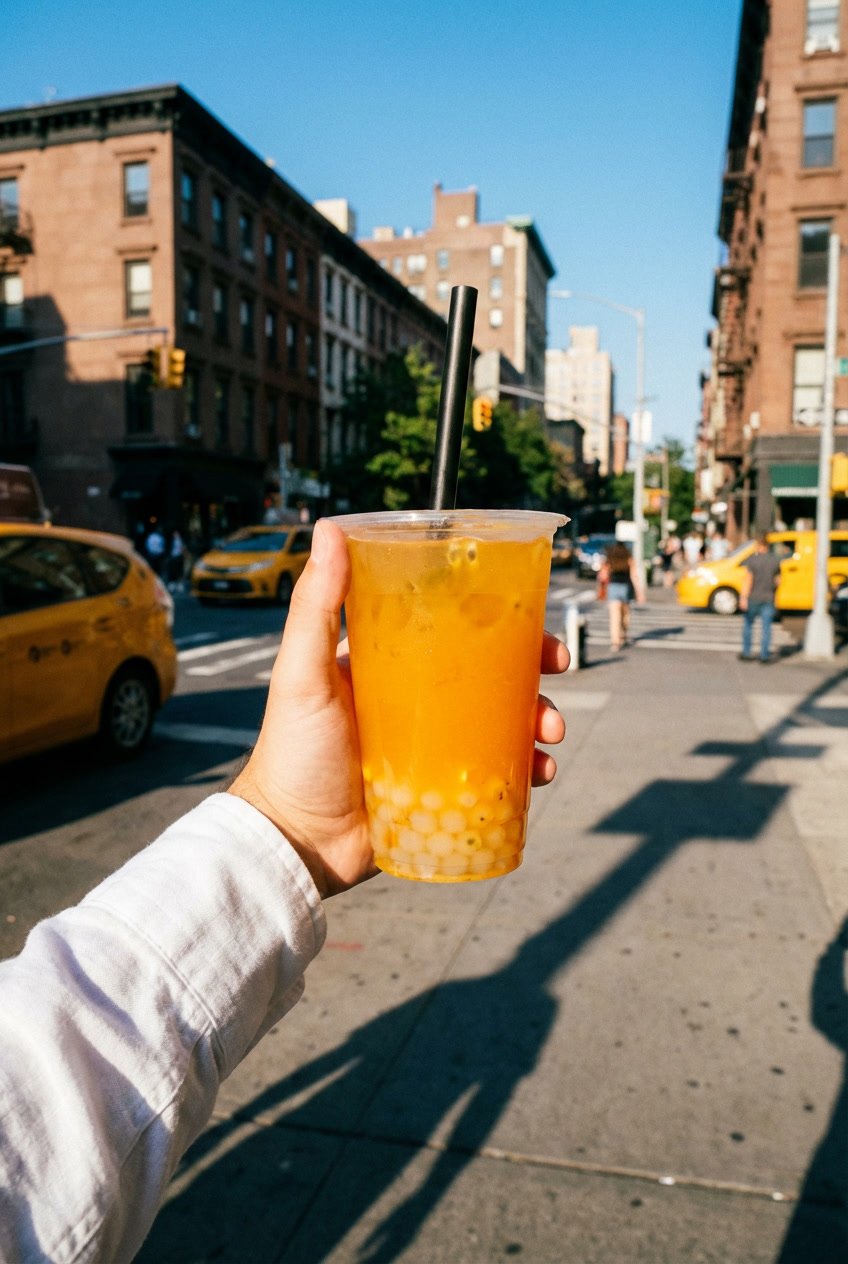
My favorite is a passion fruit green tea with crystal boba. The tart tea and the light snap of the pearls just make sense together, and it feels fresher and less heavy than a drink loaded with tapioca.
For me, this is where the crystal boba calories vs tapioca choice becomes practical, not just technical. If I want cozy milk tea, I still like tapioca. If I want something bright, cold, and lighter, crystal boba wins.
More Bubble Tea Guides You Might Like
If you found this post helpful, you might also like: