Beyond Tapioca: The Ultimate Guide to Low Calorie Boba Jellies – Grass, Aloe, & More

Let’s be real: the best part of bubble tea isn’t the tea. It’s the chew. That satisfying texture at the bottom of the cup is what turns a simple drink into an experience.
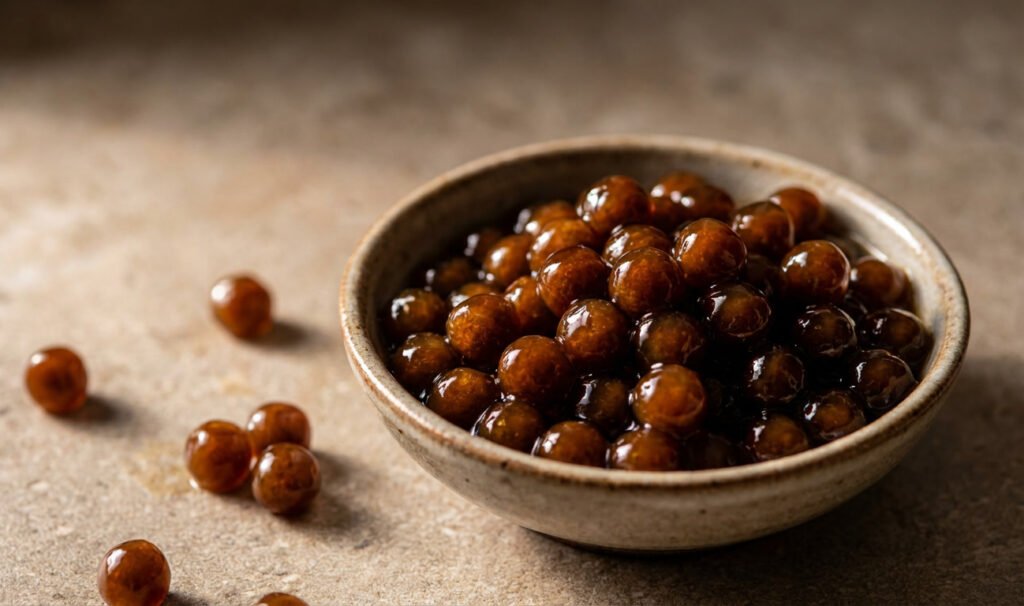
For most of us, that obsession starts with classic tapioca pearls. They are iconic for a reason. But they are also dense, starchy carb-bombs that are soaked in sugar syrup. As much as I love them, my daily NYC life (and my jeans) can’t handle a large tapioca milk tea every single afternoon.
This is where the wonderful, weird world of bubble tea jellies comes in.
If you’ve ever stared at a boba menu, confused by options like “Grass Jelly” or “Aiyu,” this guide is for you.
These aren’t just sad, low-calorie substitutes for the real thing. Bubble tea jellies are sophisticated, refreshing, and often much lighter alternatives that offer a totally different kind of satisfying chew. They are the secret weapon of the “savvy sipper” who wants flavour and texture without the massive calorie hit.
Let’s get right into it. This is your crash course on the most popular bubble tea jellies – what they actually taste like, and why it might be time to shake up your usual order.
Why Swap Pearls for Jellies?
Before we get into the specific types, we need to address the elephant in the room: why would you ever abandon classic tapioca?
The Calorie Reality Check
Look, tapioca pearls are delicious, but they are essentially little balls of cassava root starch. That means they are pure carbohydrates. A typical half-cup serving in a large drink can easily add 200+ calories and 30g+ of sugar just from the pearls alone. (For a full breakdown of where the calories come from in your cup, check out my Ultimate Guide to Bubble Tea Calories.)
Most bubble tea jellies, on the other hand, are plant-based and made from ingredients that are naturally lower in calories and higher in water content. They give you volume and texture for a fraction of the energy density.
A Sophisticated Texture
When it comes to bubble tea toppings, flavour is only half the story. The real magic is in the mouthfeel. While tapioca is famous for its dense, chewy ‘QQ’ bounce, jellies open up a whole new world of textures.
Are you looking for the firm, snappy bite of coconut jelly to wake up your palate? Or perhaps the incredibly smooth, silky melt of grass jelly that slides right up the straw? Understanding these textural differences is the key to building your perfect, sophisticated drink. Here is a quick guide to navigating the jelly spectrum.

Tapioca is all about that “QQ” bounce – a substantial, gummy chew. Bubble tea jellies open up a whole new world of textures, ranging from the firm, snappy bite of coconut jelly to the soft, silky melt of grass jelly.
It’s generally a lighter, cleaner mouthfeel that pairs beautifully with fruit teas and less creamy milk teas. It’s a lighter, cleaner mouthfeel that pairs beautifully with fruit teas and lighter milk teas.
The Herbal Classic: Grass Jelly
This is probably the most intimidating name on the menu for beginners. “Grass” doesn’t exactly scream “delicious dessert.” But trust me, this is the undisputed king of bubble tea jellies for a reason.
What is it?
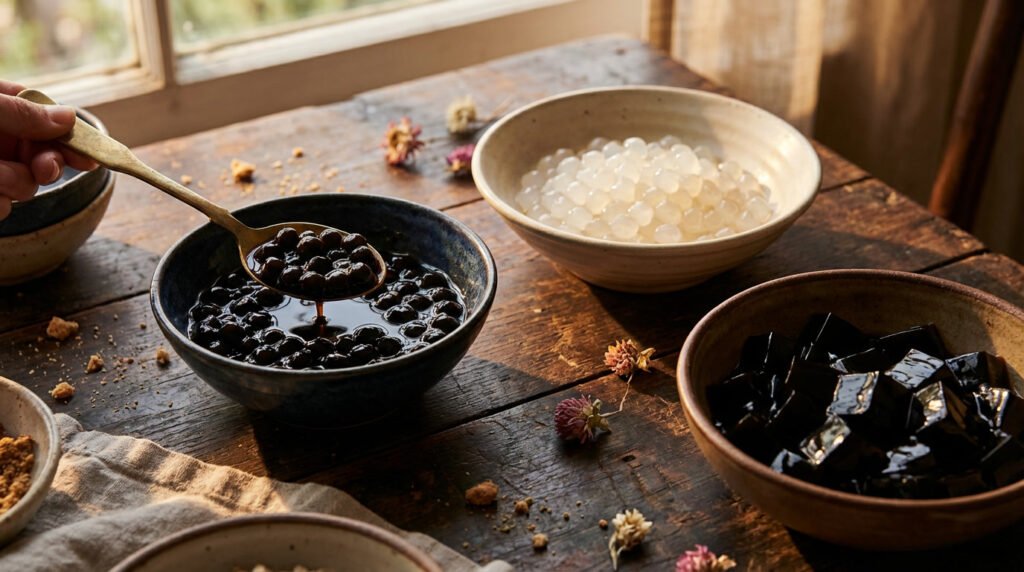
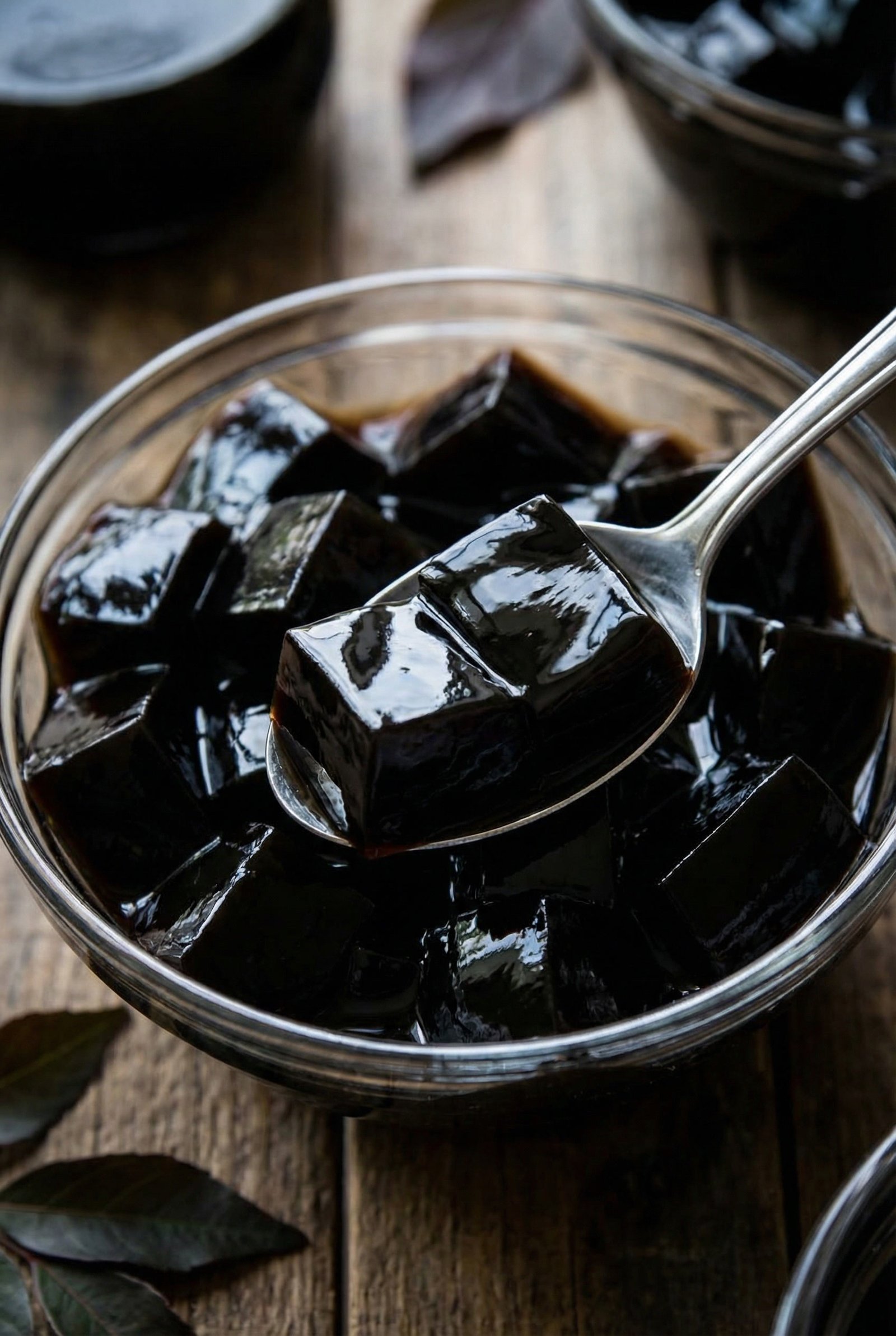
It’s not made from lawn clippings. Grass jelly is made by boiling the aged stalks and leaves of a specific plant in the mint family (Platostoma palustre). The resulting liquid is set into a dark, almost black jelly with a little bit of starch or a coagulant.
Taste & Texture
Taste-wise, it’s very mild and slightly herbal. It has a hint of natural bitterness that cuts through sweet drinks, making it feel much cleaner and more refreshing than sugary toppings. It’s not overtly sweet on its own. Texture-wise, it’s soft, silky, and smooth with a very gentle wobble. It’s much less firm than gummy candy.
Why it’s a Smart Sip
It’s widely considered one of the healthiest toppings. In traditional Chinese medicine, it’s known for its “cooling” properties, making it perfect for hot NYC summer days. It’s naturally very low in calories.
- Best Pairings: It is stunning in a classic Brown Sugar Milk Tea (where its bitterness balances the caramel sweetness) or a simple roasted oolong milk tea.
- Calorie Estimate: ~30-50 calories per serving.
The Chewy Favourite: Coconut Jelly (Nata de Coco)
If you like gummy bears, this is the bubble tea jelly for you. It’s the gateway jelly for people who find tapioca too heavy.

What is it?
It’s not actually jelly made from coconut water. It’s technically “Nata de Coco,” a chewy, translucent, jelly-like food produced by the fermentation of coconut water. It’s usually cut into small rectangular strips or cubes.
Taste & Texture
This one has the most satisfying “bite” of all the jellies. It’s firm, incredibly chewy, and has a slight crunch to it. While it does have a subtle, natural coconut flavour, it mostly just acts like a sponge for whatever fruity syrup it’s stored in, making it sweet and flavourful through and through.
Why it’s a Smart Sip
While it’s often stored in syrup, the jelly itself is high in dietary fibre and fat-free. It gives you a substantial chew that rivals tapioca but feels cleaner.
- Best Pairings: It’s practically made for fruit teas. Try it in a Passionfruit Green Tea or a Lychee Slush.
- Calorie Estimate: ~70-90 calories per serving (higher due to syrup).
The Health Hero: Aloe Vera
This is the ultimate “I’m being good today” topping. When I’ve had a heavy week of eating out in the city, this is my reset button order.
What is it?
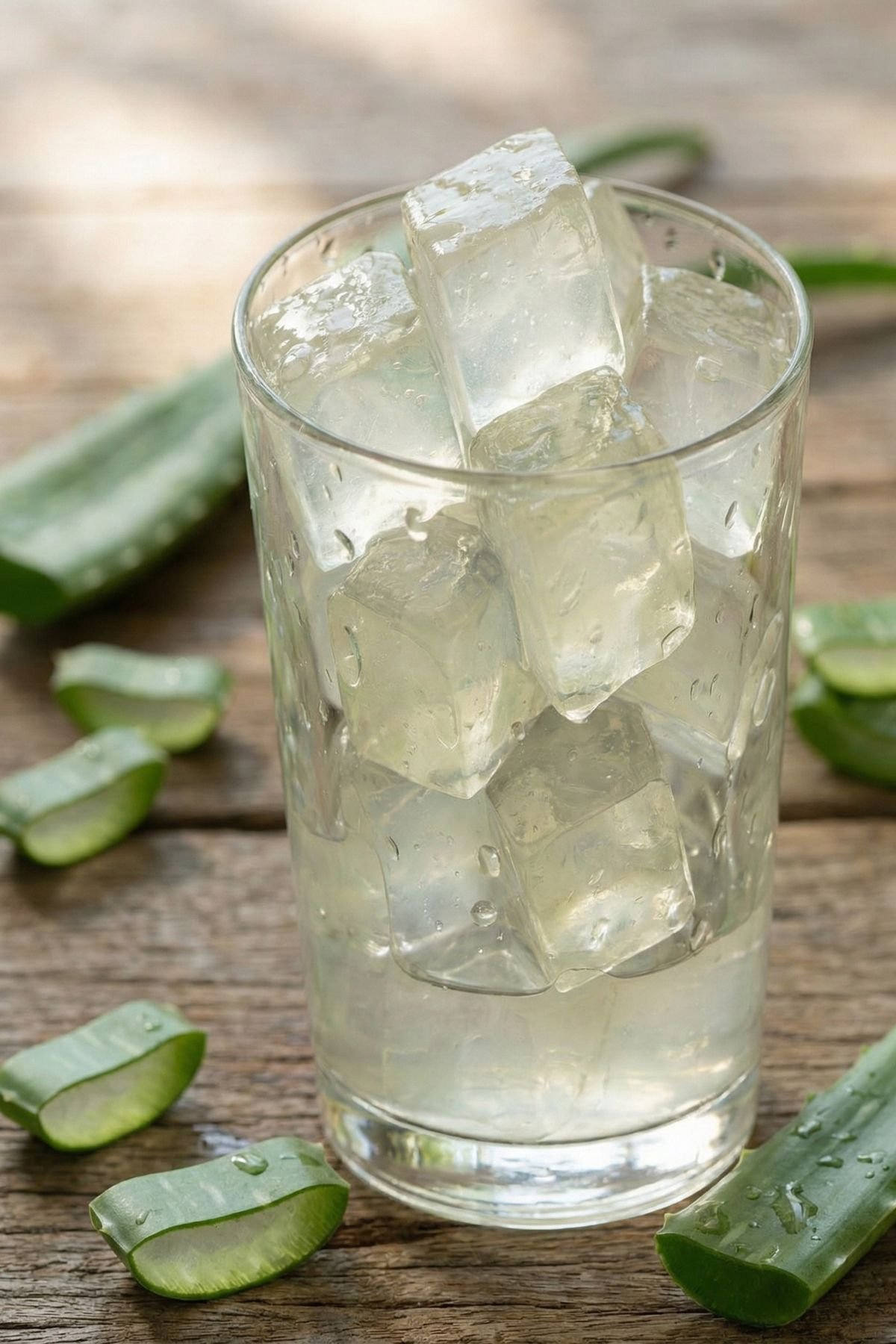
It’s exactly what it sounds like – the clear, gel-like flesh from inside the aloe vera plant leaf. It’s cut into small cubes for drinks.
Taste & Texture
Fresh, hydrating, and clean. It has a very mild, slightly vegetal taste that is usually brightened up by being soaked in a light honey or lemon syrup. The texture is unique: it’s firm on the outside but has a soft, succulent, almost crunchy interior that bursts with hydration when you bite it.
Why it’s a Smart Sip
It is packed with vitamins, minerals, and amino acids. It’s incredible for hydration and digestion. It’s arguably the most functional “health” topping on the menu. (Curious how it stacks up against other “healthy” options? See my post on Is Bubble Tea Healthy?)
- Best Pairings: Perfect in a Honey Green Tea, Lemon Aiyu, or any light, citrusy fruit tea.
- Calorie Estimate: ~40-60 calories per serving.
The Rare Gem: Aiyu Jelly
You won’t find this at every shop, but if you do, snap it up. It’s a Taiwanese speciality that feels incredibly premium and luxe.
What is it?
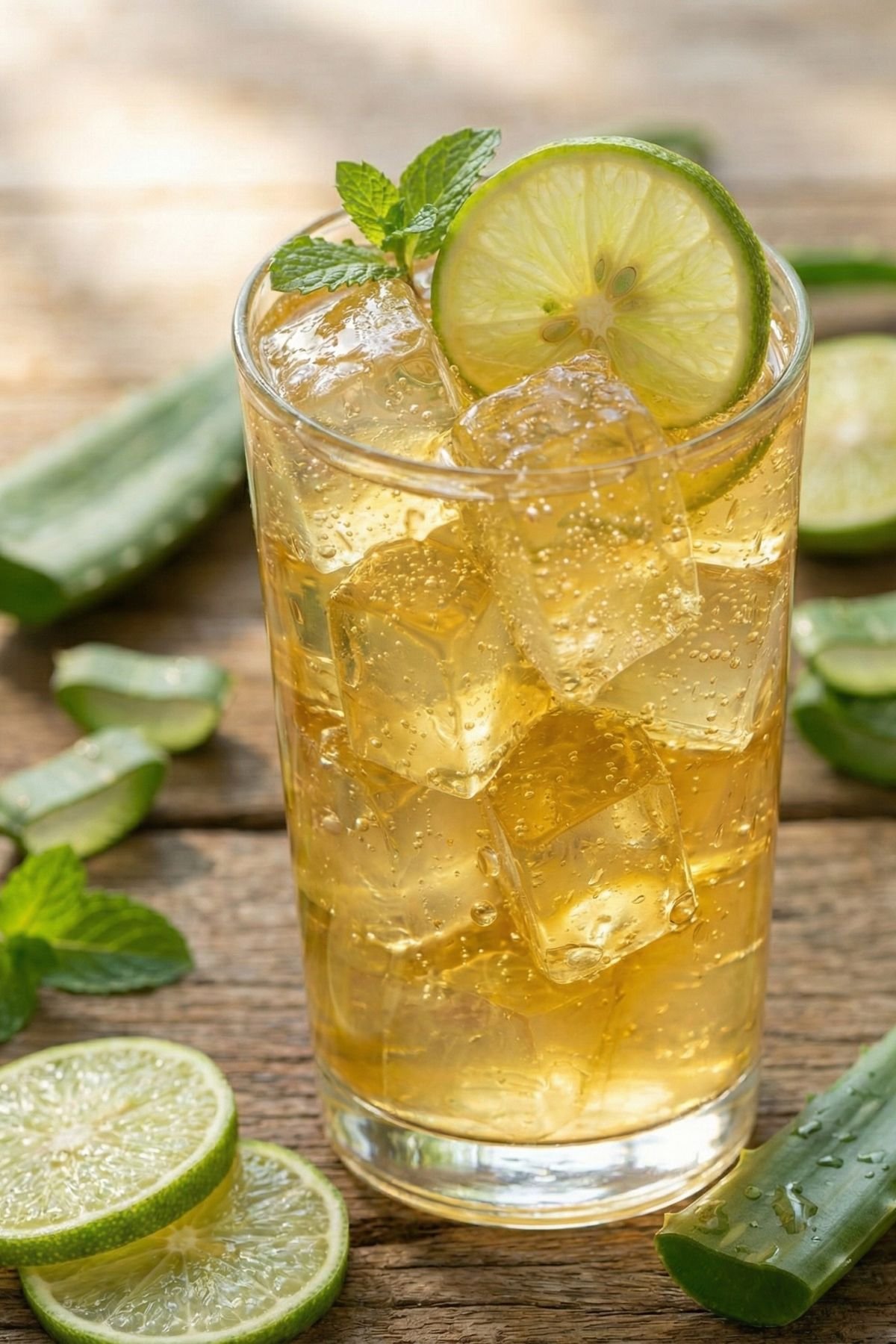
The awkeotsang climbing fig seeds from Taiwan are used to make this jelly. When the seeds are rubbed together in water, they release a natural pectin that turns into a soft, golden jelly.
Taste & Texture
It is really soft and delicate, and it almost melts in your mouth. It doesn’t have much flavor on its own; therefore, it’s almost always eaten with honey or sugar and lemon juice. The end result is a bright, zesty, citrusy topping that is quite refreshing.
Why it’s a Smart Sip
It’s naturally plant-based and very light. Because it’s served with citrus, it feels much brighter and less cloying than heavier toppings.
- Best Pairings: Essential in a Lemon Green Tea or Wintermelon Tea.
- Calorie Estimate: ~40-60 calories per serving.
The Topping Showdown: Jellies vs. Tapioca
If you need hard proof to be convinced to swap out your usual order, looking at the actual numbers usually does the trick.
Especially if your goal is to watch your sugar intake – something I talk a lot about in my Guide to Bubble Tea Sugar Levels – swapping pearls for jelly is one of the easiest wins.
Here is a quick comparison of a standard scoop:
| Topping Type | Texture Profile | Est. Calories (per scoop) | Savvy Vibe |
|---|---|---|---|
| Tapioca Pearls (Boba) | Chewy, bouncy, dense | 150 – 200+ | The Indulgent Classic |
| Grass Jelly | Soft, silky, smooth | 30 – 50 | The Herbal Refresher |
| Coconut Jelly | Firm, crunchy chew | 70 – 90 | The Fruity Bite |
| Aloe Vera | Crunchy & succulent | 40 – 60 | The Health Kick |
Note: These are estimates. The exact nutrition depends heavily on how much syrup the shop uses to store their toppings.
Stop Guessing Your Topping Calories
Want to know exactly how much that scoop of coconut jelly adds to your specific drink? Get precise numbers for your custom order.
Calculate My Toppings NowMy Final Sip
Exploring bubble tea jellies is the sign of a maturing boba drinker. It shows you are moving beyond the basics and appreciating different textures and flavour profiles.
Next time you’re at the counter, feeling that familiar panic to just order “the usual,” be bold. Swap those pearls for some herbal grass jelly or refreshing aloe.
Your drink will feel lighter, more sophisticated, and yes – it’s a smarter sip. And honestly? You might find you actually prefer the new chew.
(Now that you know what to order, do you have the right gear for enjoying it at home? Check out my essential Bubble Tea Equipment Guide for the best reusable straws and tumblers.)