Crystal Boba vs. Tapioca: The Honest Truth About Crunch & Calories
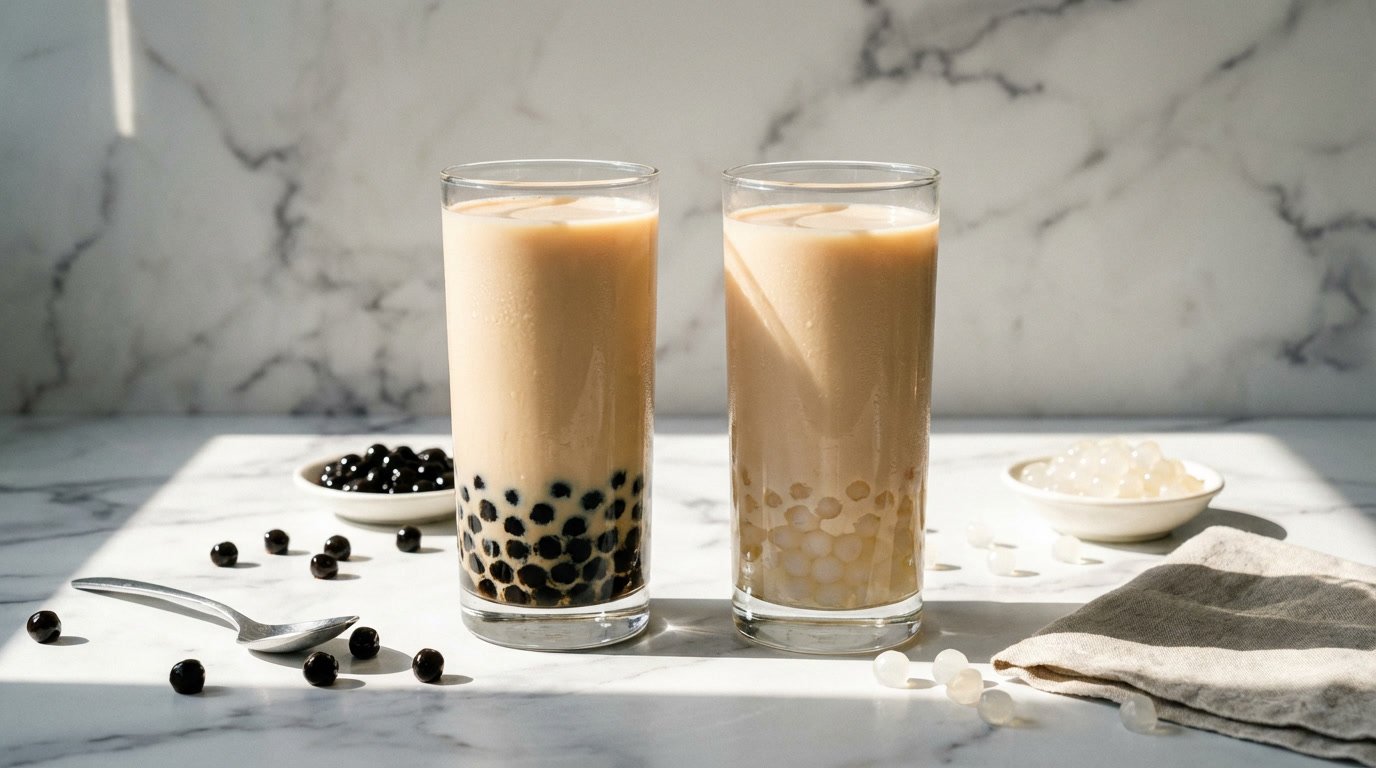
If you have walked into a bubble tea shop recently, you have probably noticed those translucent, jewel-like spheres sitting next to the classic black pearls. They look pretty, but what on earth are they?
This is the great crystal boba vs. tapioca debate. While traditional pearls are the comfort food of the boba world, crystal boba (also known as white pearls or agar boba) is the cooler, lighter cousin.
It has a completely different texture that people either obsess over or find confusing. If you are tired of the jaw workout from traditional boba or just want to save some calories without drinking plain tea, it is time we had a proper chat about these crunchy little gems.
1. What Actually Is Crystal Boba?
Here is the science bit, simplified. Traditional tapioca pearls start their life as cassava starch (a root vegetable), which explains why they are so dense. Crystal boba, on the other hand, is made from the konjac plant or agar-agar. It is basically a plant-based gelatin that skips the starch entirely. This is a crucial distinction when comparing crystal boba vs. tapioca ingredients.
- Tapioca: Pure starch. It requires serious cooking, boiling, and a sugar bath to become edible. It is dense, heavy, and fills you up.
- Crystal Boba: Plant-based magic. It is usually pre-sweetened and ready to eat straight out of the bag. Because it is made from konjac, it is mostly water and fibre, meaning you don’t get that ‘heavy stomach’ feeling after drinking it. If you are exploring options beyond the basics, check my Bubble Tea Toppings guide to see where other jellies fit in.
2. The Texture Test: The Snap vs. The Chew
This is where the battle of crystal boba vs. tapioca is truly fought.
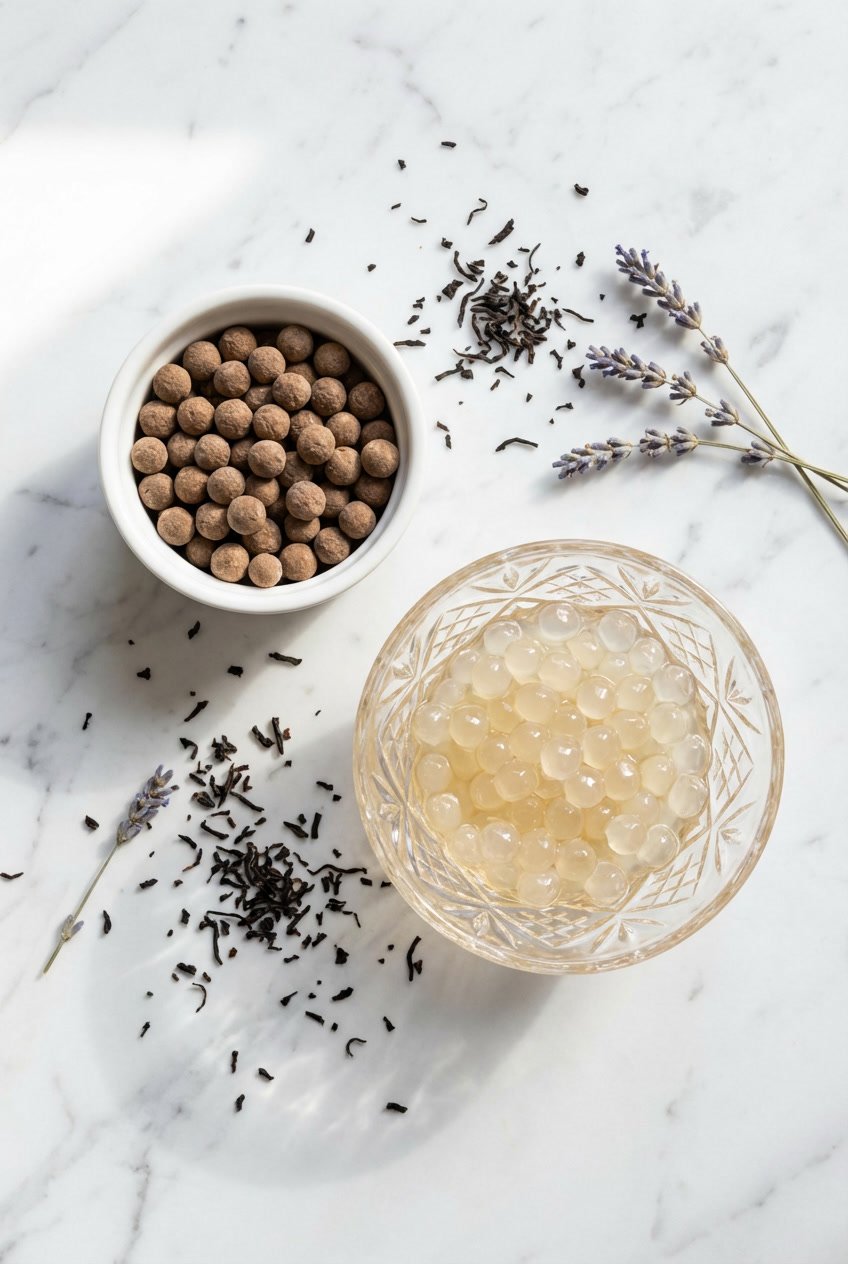
- The Tapioca Chew (QQ): As we discussed in my Ultimate Bubble Tea Guide, traditional pearls are all about the “QQ” bounce. They are gummy, sticky, and chewy.
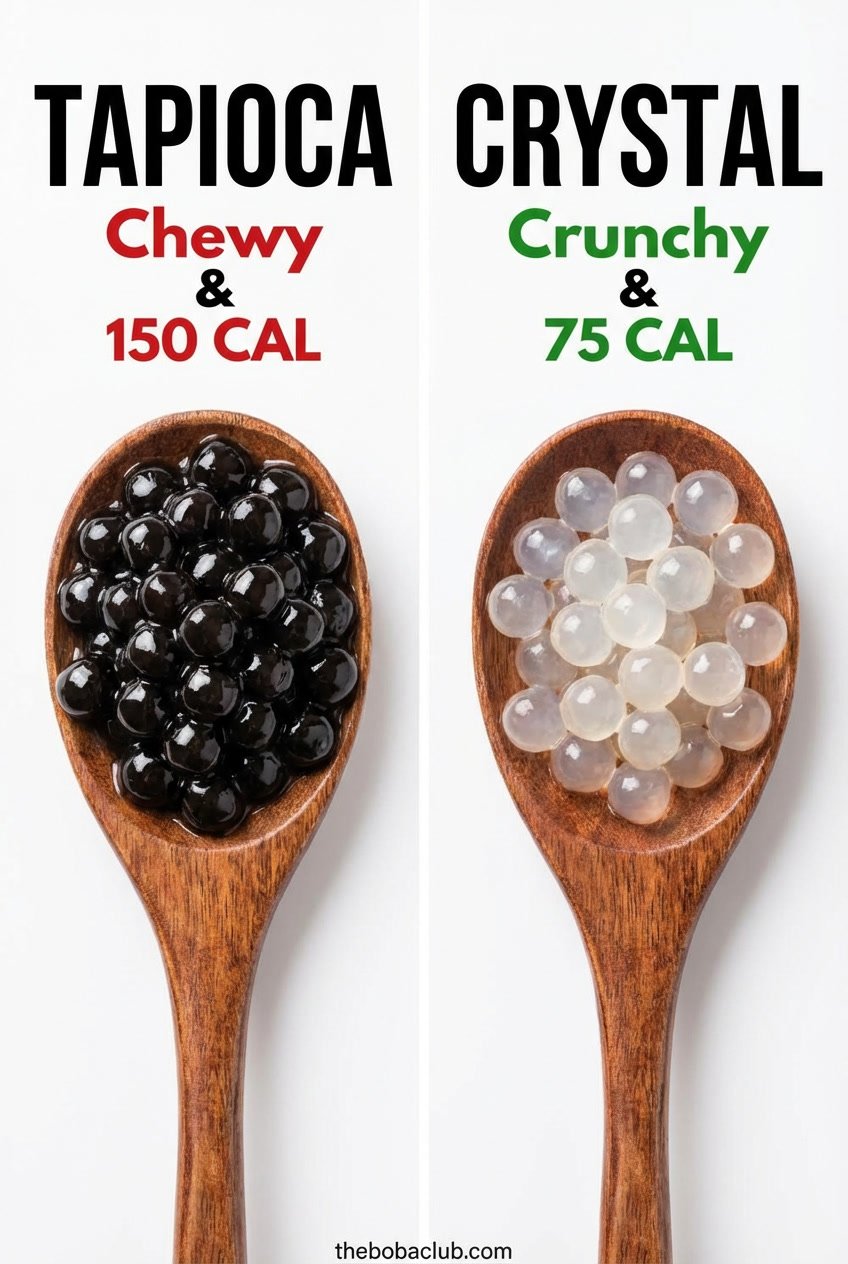
- The Crystal Crunch: Think of it like biting into a really crisp grape or a firm jelly. It has this satisfying “snap” that breaks instantly. No chewing required. It feels remarkably crisp and light, which is why it’s so refreshing in fruit teas. If you hate how traditional boba gets stuck in your teeth, crystal boba is your saviour.
Quick Definition: What on Earth is “QQ”?
If you’ve been reading my recipes and wondering why I keep typing “QQ” like I’ve fallen asleep on my keyboard, let me explain. It isn’t a typo! In the world of bubble tea, QQ is everything. It is the Asian equivalent of al dente pasta. It refers to that satisfying, springy “rebound” you get when you bite into a perfectly cooked tapioca pearl. If your boba doesn’t fight back a little bit, it has zero QQ.
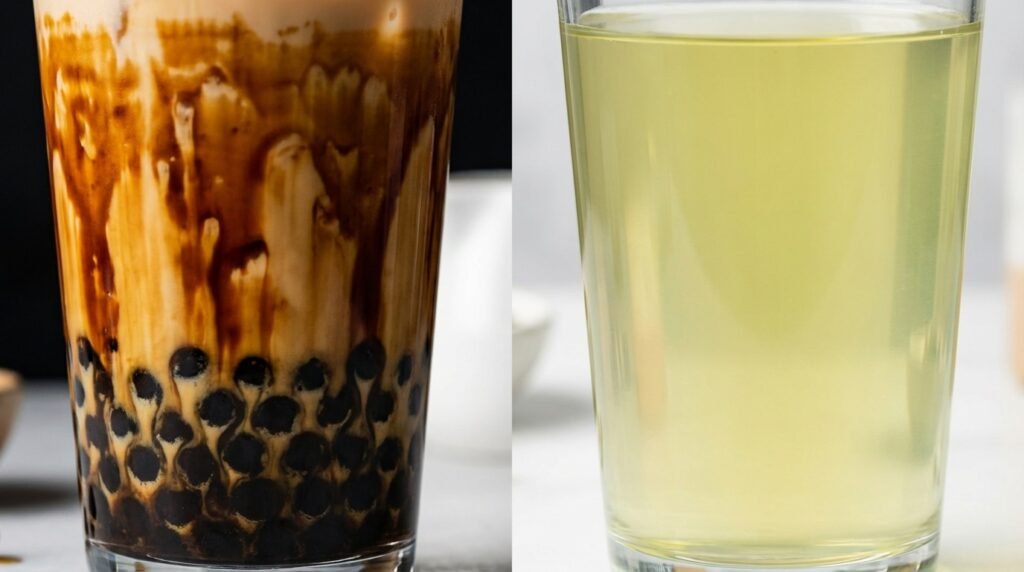
The Showdown
3. The Calorie Breakdown (The Shocking Part)
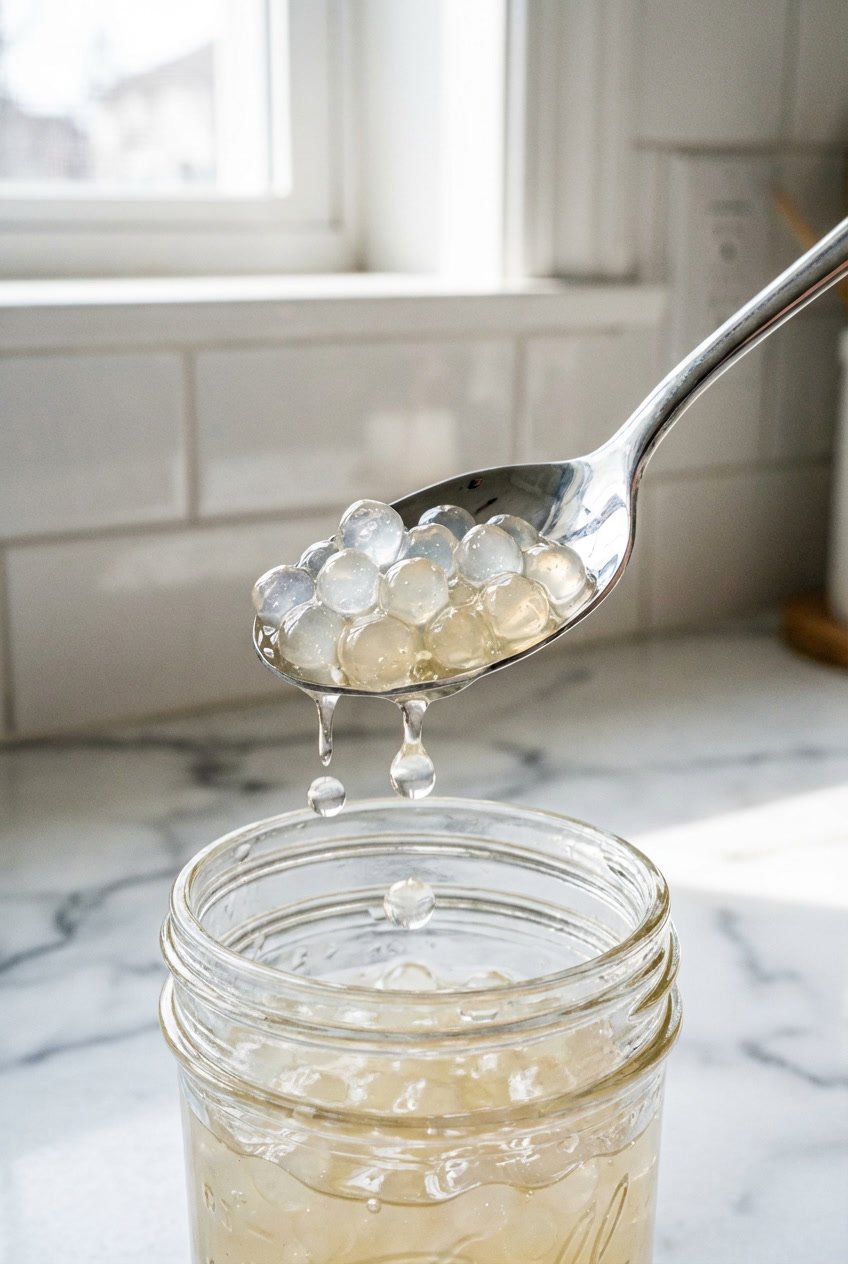
If you are trying to follow CDC guidelines on sugar but refuse to give up toppings (I relate), this is the most important section. In the crystal boba vs. tapioca calorie breakdown, the clear pearls are the undisputed winner.
- Tapioca Pearls: A standard scoop is roughly 150 calories and is almost entirely carbs.
- Crystal Boba: That same scoop is usually 70–80 calories.
It isn’t a “zero calorie” miracle food (it is still soaked in syrup, after all), but it cuts your topping calories in half. Run the numbers on my BobaCal Calculator to see exactly how swapping to crystal boba changes your specific drink order.
4. The Flavour Sponge Factor
Here is the honest truth that most people miss regarding crystal boba vs tapioca.
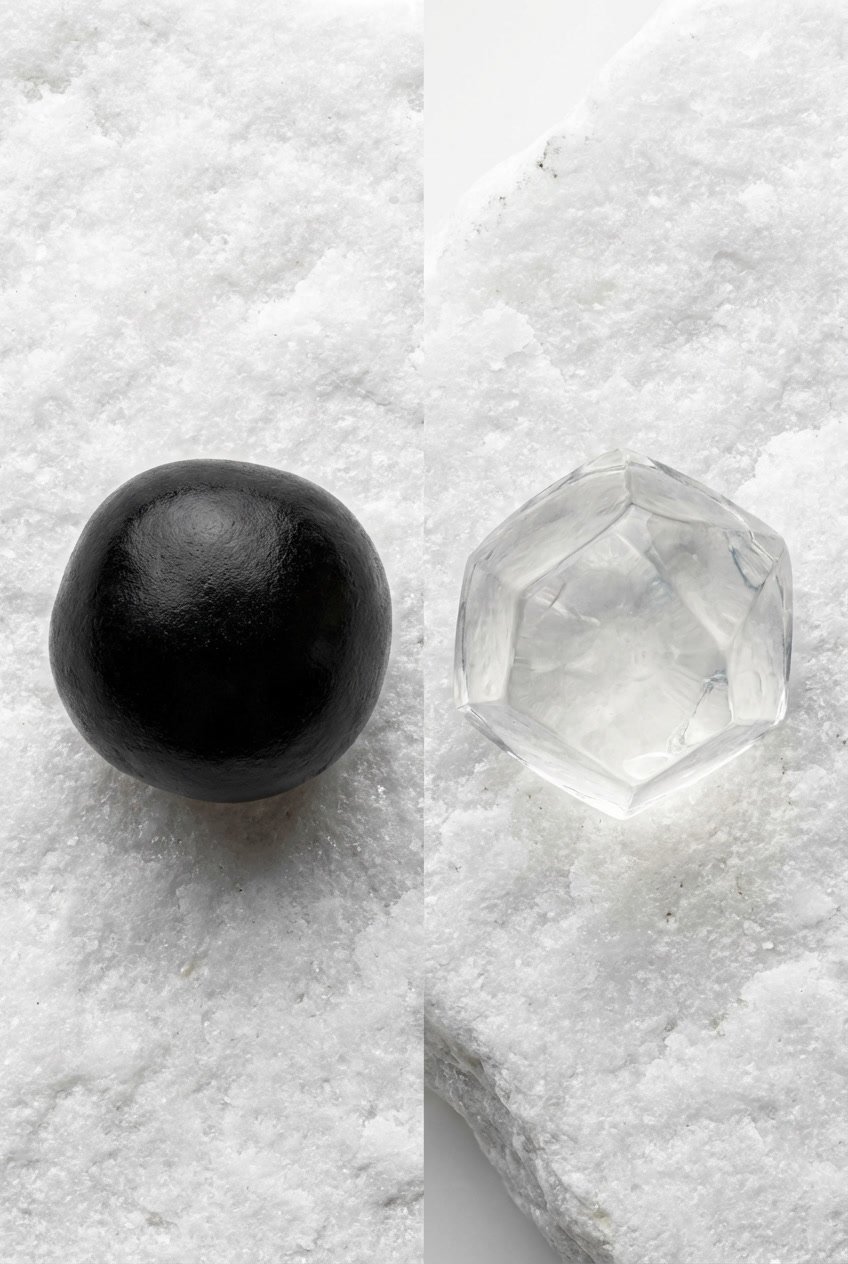
- Tapioca is a sponge. It absorbs the brown sugar or honey syrup deep into its core. That is why a good boba pearl tastes sweet all the way through.
- Crystal Boba is less absorbent. It usually comes pre-flavoured (often with citrus, lychee, or original syrup). It retains its own flavour rather than soaking up your tea. This makes it excellent for fruit teas (like Passion Fruit or Mango) but, in my opinion, slightly weird in a rich Milk Tea where you want that caramel note.
5. The Aesthetic Factor: Gemstones vs. Blobs
Let’s be shallow for a moment. If you are taking photos for social media, the visual difference in crystal boba vs. tapioca is huge – one absorbs light, the other reflects it.
- Tapioca is Traditional: Standard boba gives you that classic “black and white” contrast. It looks authentic, but let’s be honest. Sure, you can find “Golden Boba” online, but it usually just looks like beige sludge in a cup. It doesn’t exactly scream “luxury” for your Instagram feed.
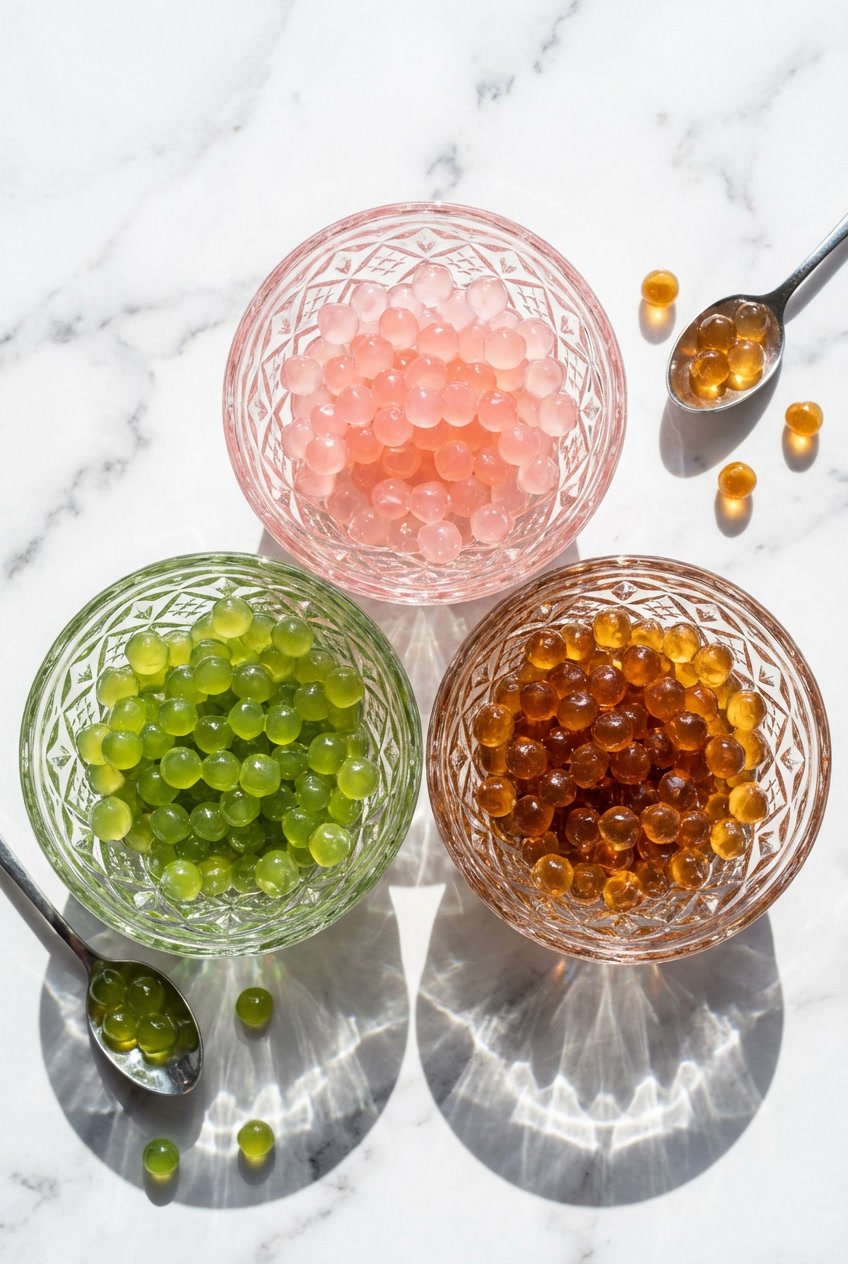
- Crystal Boba is Beautiful: The name isn’t just marketing. These pearls are genuinely translucent, catching the light like little glass beads. While the standard version is clear, you can buy them infused with everything from Matcha (Green) to Sakura (Pink) and Brown Sugar (Amber).
- The “Jewel” Effect: When you add coloured crystal boba to a clear fruit tea or a sparkling drink, they glow like little jewels. If you are making a layered sunset drink or a fancy mocktail for a party, crystal boba vs. tapioca is no contest. The crystal pearls elevate the drink from “snack” to “art.”
6. Storage Wars: The 4-Hour Deadline vs. The 2-Week Miracle
Let’s be real: if you are making this at home, shelf life matters more than calories. Nobody wants to spend an hour cooking pearls just to throw them away. The shelf life is perhaps the biggest practical difference when comparing crystal boba vs. tapioca for home use.”
- Tapioca Pearls (The Diva): Traditional boba is high maintenance. Once cooked, it has a “Goldilocks” window of about 4 hours. If you put it in the fridge, it turns rock hard immediately because starch retrogrades at cold temperatures. If you leave it out on the counter too long, it gets mushy. You basically have to cook it and eat it instantly. I once tried to rescue day-old fridge boba with a microwave, and let me tell you, it was like chewing on a shoe.
- Crystal Boba (The Hero): This stuff is practically indestructible. Because it sits happily in its own syrup bath, you can open a bag, use a scoop, seal it up, and it stays crunchy in the fridge for weeks. For a busy parent who barely has time to boil a kettle, let alone a pot of starch, this convenience wins every time.
7. The Wallet Impact: Cost & Convenience
We all know a daily boba habit requires a small mortgage these days. But is making it at home actually cheaper, or are we just trading money for time?
- Tapioca is Cheap (But Annoying): Raw tapioca is incredibly cheap—you can get a huge bag for $5. But the hidden cost is your time. You are paying with 45 minutes of stirring and staring at a pot.
- Crystal Boba is Premium (But Worth It): You pay a ‘convenience tax’ here. It costs about double per serving compared to raw pearls, but you are buying back your time. On a chaotic Tuesday afternoon between school runs, skipping the entire boiling-and-simmering ordeal is absolutely worth the extra pennies. My sanity is worth more than the $2 I’d save on raw starch.
Ultimately, the crystal boba vs. tapioca cost comparison depends on how much you value your own time
8. Where to Buy: The Brands I Actually Use
Don’t just click “Add to Cart” on the cheapest bag you find unless you want your kitchen to smell like old plastic. Trust me on this. Before you buy, check the nutrition label against my BobaCal Calculator to make sure you aren’t accidentally buying a sugar bomb.
For Crystal Boba: Look for Mayde or Fanale brands. They come ready-to-eat in the bag. You literally just snip the corner and pour. Warning: The bags are heavy because they come packed in syrup, so don’t be alarmed by the shipping weight.
For Tapioca Pearls: I have said it before, and I will say it again: WuFuYuan Black Pearls. They cook in 5 minutes. I simply do not have the patience for the traditional pearls that require an hour of simmering. Life is too short.
9. Quick Dietary Cheat Sheet
For my friends with allergies or dietary restrictions, here is the quick breakdown of crystal boba vs tapioca:
- Vegan? YES. It’s 100% plant-based (Root vegetable vs. Konjac plant). No gelatin here.
- Gluten-Free? YES. Both are naturally gluten-free, but always double-check the syrup ingredients just in case.
- Halal/Kosher? USUALLY. Since Crystal Boba uses Agar or Konjac (not animal gelatin), it is generally safe, but look for the certification if you are strict.
10. Your Crystal Boba Questions Answered
Is crystal boba plastic?
Absolutely not. I hear this myth constantly. It is made from Konjac (a root vegetable) or Agar (seaweed derivative). It looks like plastic because it is translucent, but it is 100% plant-based food.
Why is it sometimes called “White Pearls”?
It’s all marketing nonsense. Gong Cha calls them “White Pearls,” other shops say “Agar Boba.” It is literally the same ingredient with a fancy new label.
Do I need to cook crystal boba at home?
No! That is the best part. Unlike tapioca which demands an hour of your life, crystal boba comes ready-to-eat. It is the ultimate lazy hack.
10. Your Crystal Boba vs. Tapicoa FAQ’s Answered
Are crystal boba calories always less than those of tapioca?
In most cases, yes – crystal boba typically contains less starch; therefore, it generally has fewer calories than regular tapioca for the same serving size. However, this will vary based on the manufacturer and the amount of sweetener that the crystal boba sits in.
Is crystal boba really “healthier,” or are there simply fewer calories?
What does “healthier” mean to YOU?
Crystal boba typically contains fewer calories than tapioca, and that could be good news if you’re looking to lighten up your drinks. On the other hand, many folks enjoy the heavier chew of tapioca rather than the crystal boba; it’s a matter of what works best for you, your mood, and your day.
Do the color variations of crystal boba affect their caloric content?
No, not greatly.
The colors of crystal boba usually come from fruit juices, flavorings, and/or food dyes. The calories of crystal boba primarily come from the konjac base (the foundation of the boba) and the sweet syrup that it’s sitting in, not from the color of the boba.
Can I use crystal boba as my “go-to” topping?
Absolutely. If using crystal boba instead of tapioca helps you enjoy your beverage even more because you feel like it’s “better” for you, then you can absolutely use it as your go-to topping. Just like some people prefer using tapioca on heavy chew days and switching to crystal boba when they’re craving a lighter option, you can choose whatever makes you happy. There is no “correct” answer here.
My Favourite Sip
I am a traditionalist at heart, so I usually stick to black pearls for my milk teas. However, when the NYC summer humidity hits, the crystal boba vs tapioca choice becomes easy.
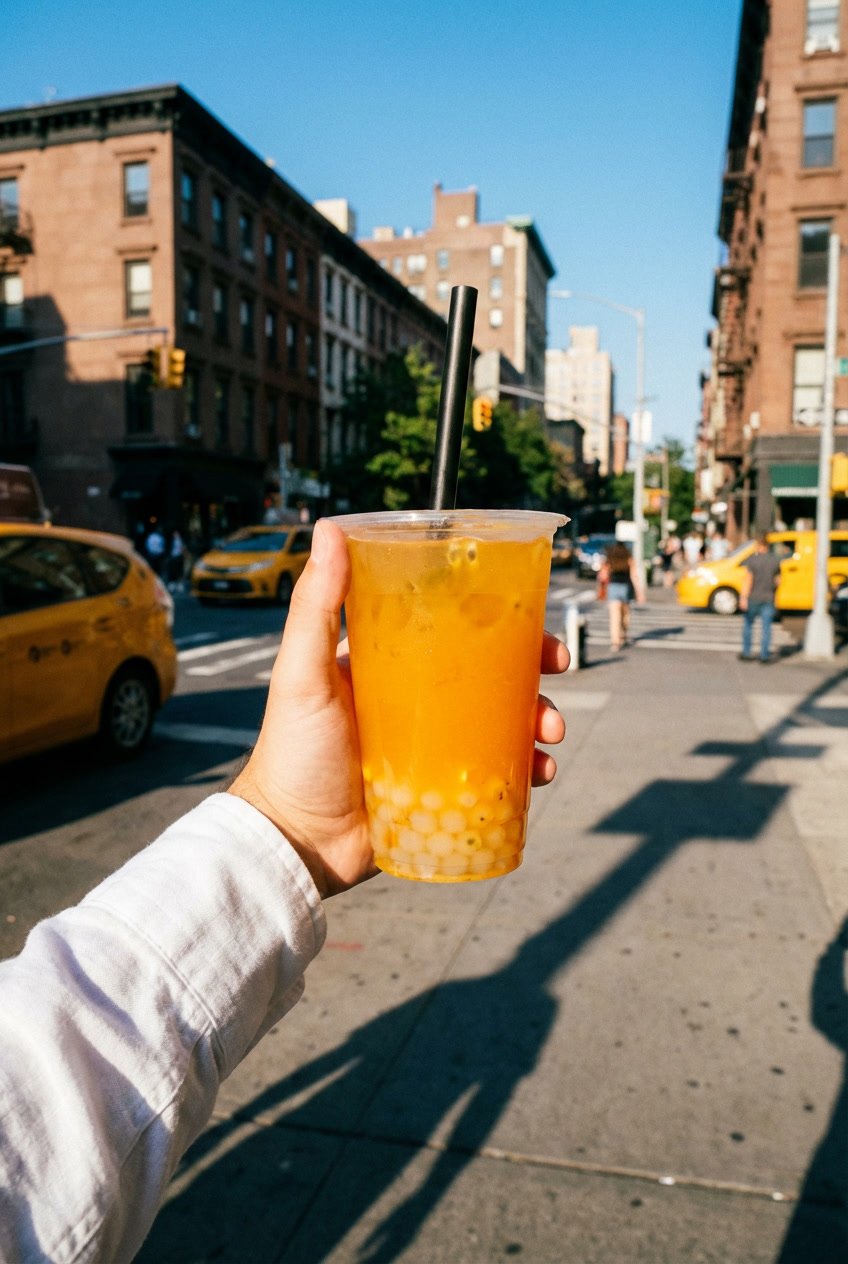
My refreshing go-to is a Passion Fruit Green Tea with Crystal Boba. The citrusy crunch of the pearls pairs perfectly with the tart fruit tea, and it feels much lighter than a heavy scoop of starch.
If you are feeling adventurous, try mixing them into the Salted Maple Pecan Boba for a texture clash that actually works. Are you Team Crunch or Team Chew? Let me know below!
More Bubble Tea Guides You Might Like
If you found this post helpful, you might also like: