Gong Cha Calories: How to Keep the “Premium” Taste Without the Premium Calories
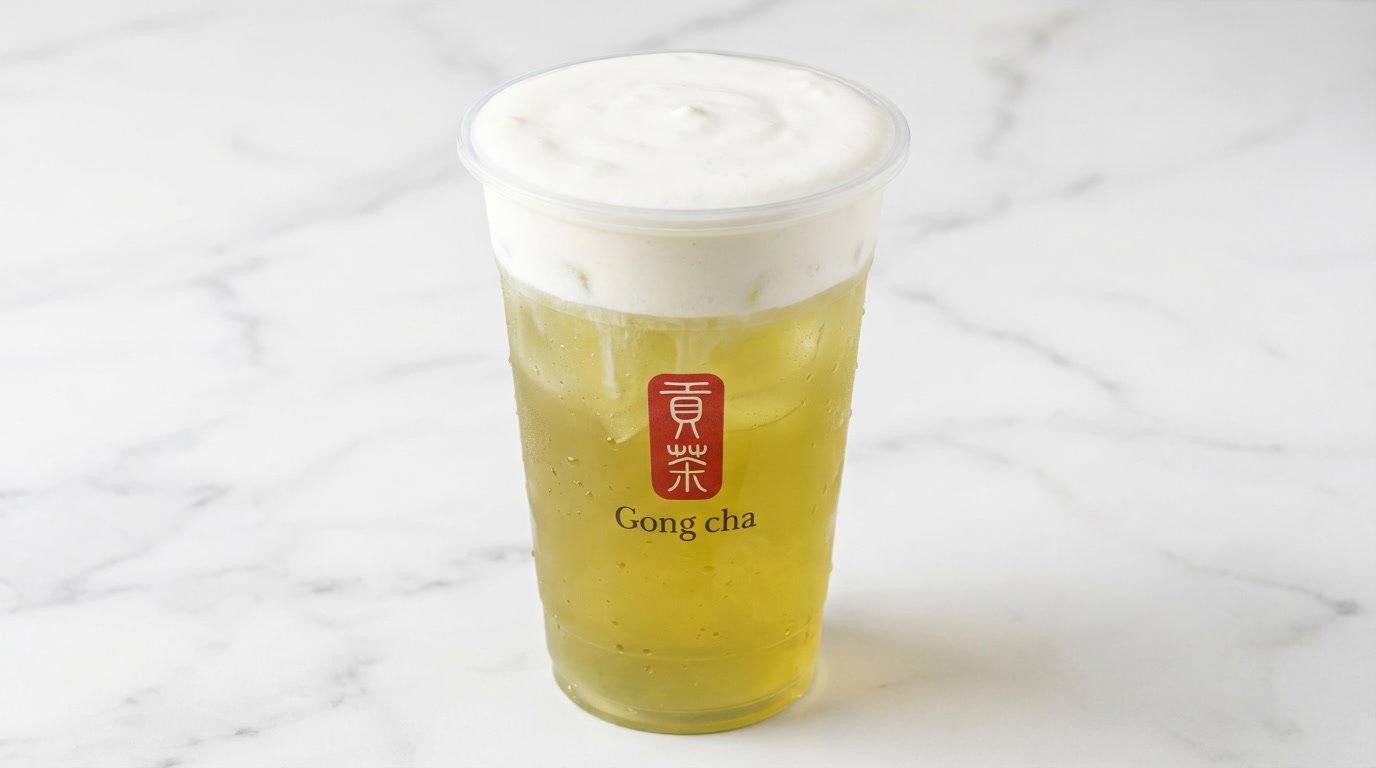
1. The Gong Cha Reality: Quality Tea, Sneaky Calories
As a Brit living in New York, I take my tea seriously. When I first look up Gong Cha calories, I can tell that this brand is different; they actually brew proper tea – you can taste the roasted oolong and the jasmine. It’s not just sugar water. But even premium tea can become a calorie bomb when you load it with milk foam and pearls.
Here is the thing about Gong Cha: because the tea base is so good, we often assume the whole drink is “lighter” than a heavy slushie place.
That is a dangerous assumption.
While a plain Gong Cha Alishan Tea is nearly zero calories (you can see their full menu on the Gong Cha US website), the moment you add their signature Milk Foam (about 120+ calories of salty-sweet cream) and a scoop of Pearls (another 200+ calories), your “light” tea is suddenly pushing 500 calories.
The actual Gong Cha calories don’t come from the tea; they come from the ‘extras’ we treat as defaults
To skip the mental math entirely, you can plug your exact order into my BobaCal Nutrition Calculator to see the numbers instantly.”
2. Sugar Levels: The 30% Rule You Need to Know
Gong Cha isn’t the only chain with hidden calories; see how it compares to the others in my Ultimate Bubble Tea Calories Guide.
In the UK, we like our tea to taste like tea (as any member of the UK Tea & Infusions Association would attest). Here, “100% sugar” often tastes like syrup with a vague hint of leaf.
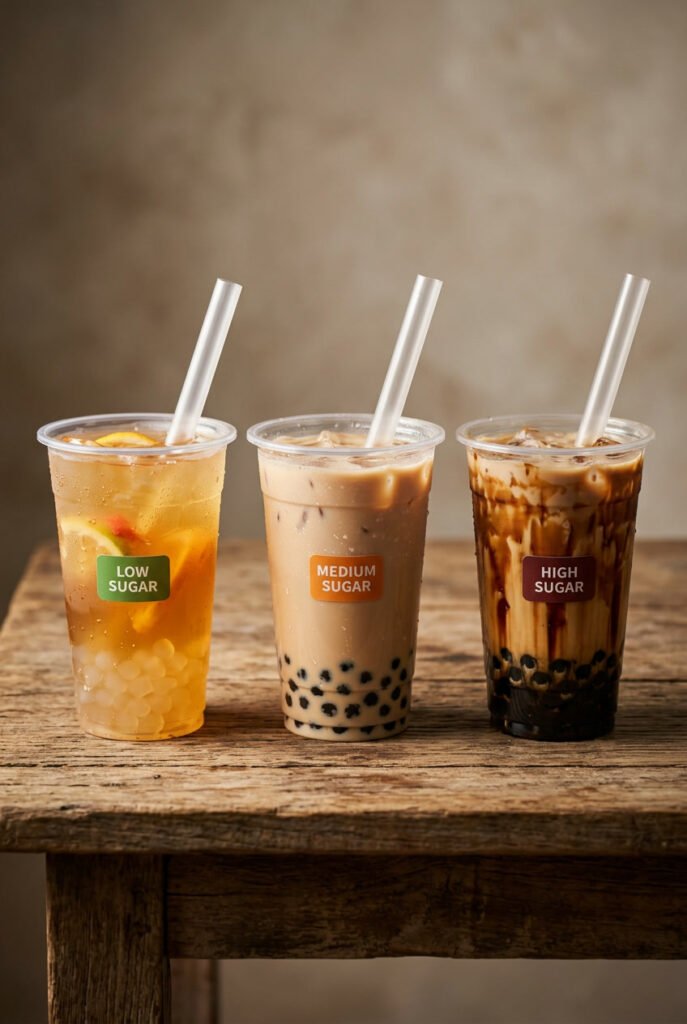
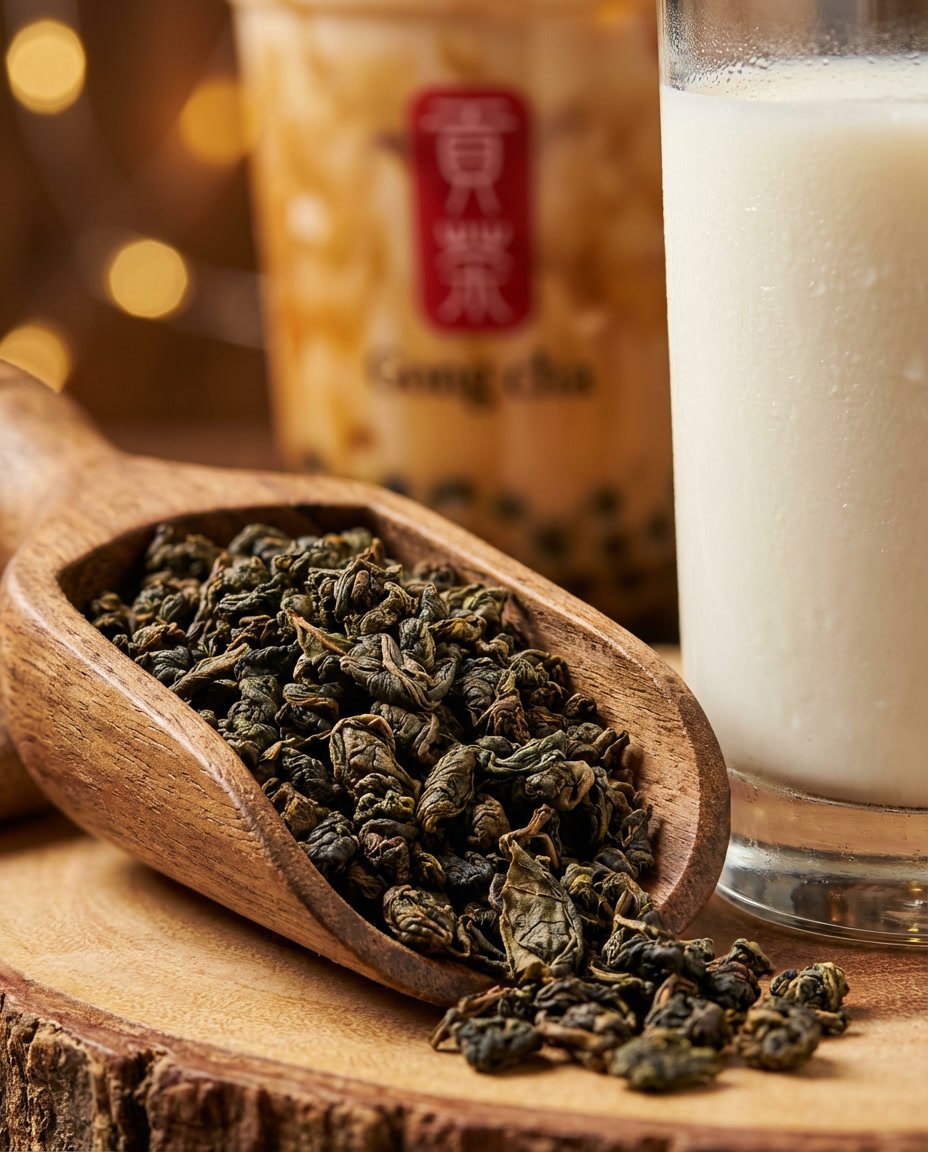
At Gong Cha, the “Standard” (100%) sugar level is intense. Honestly, it masks the quality of the brewing. The sweet spot for most people – especially if you actually want to taste the Alishan or Oolong notes – is 30%.
Going from 100% to 30% saves you about 100 to 150 calories instantly. It is the easiest swap on the menu because you don’t lose any texture; you just lose the cloying sweetness. If you want a deeper dive into how sugar percentages work across all chains, check out my full guide on Bubble Tea Sugar Levels.
Since most drinks can be customised, you can use the Sugar Swap Calculator to compare sugar swaps before placing your order.
Gong Cha Sugar: The Sweet Spot
3. The Milk Factor: Why “Fresh Milk” Wins

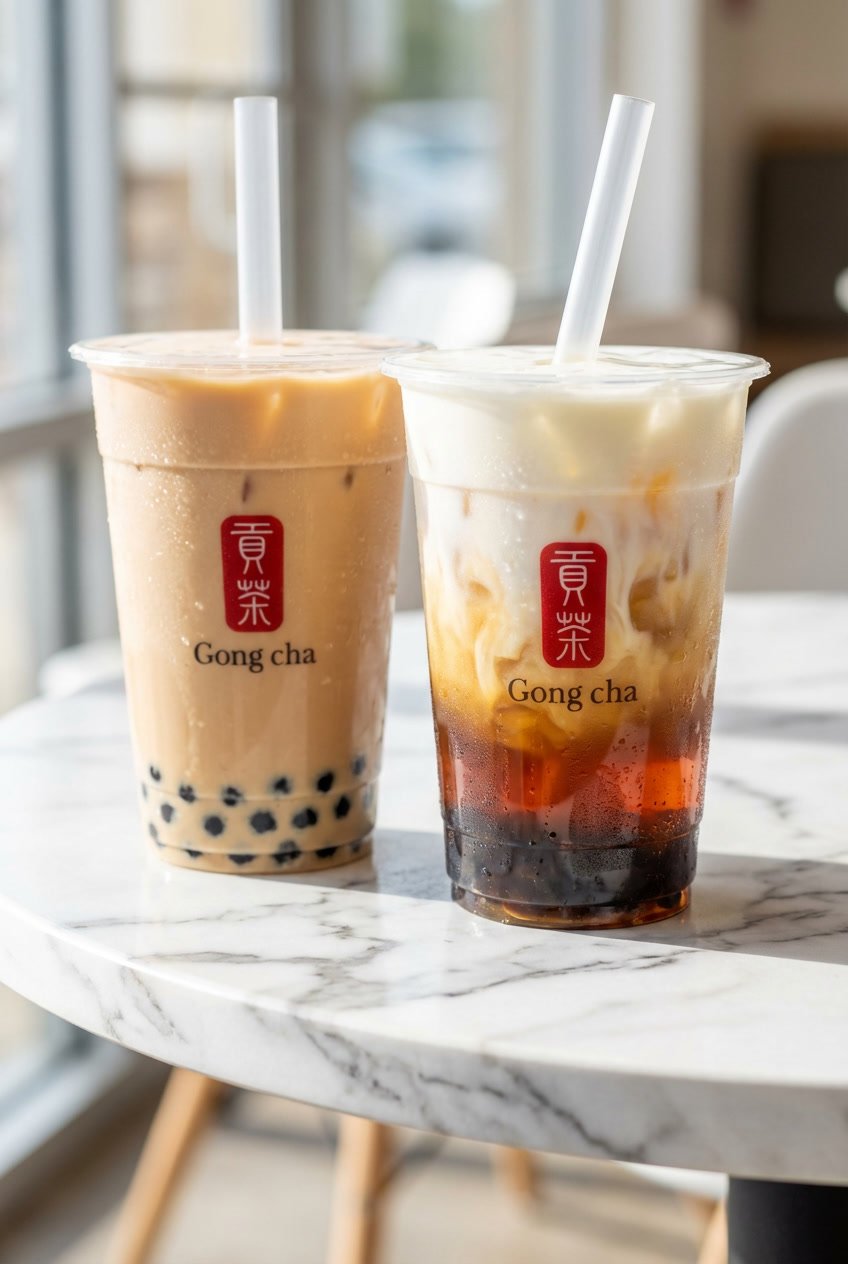
If you are used to the powdered “creamer” used at cheaper bubble tea spots, Gong Cha offers a refreshing upgrade: the Fresh Milk series.
In the UK, we wouldn’t dream of putting powdered whitener in a proper cup of tea unless it was an emergency. The same rule applies here. Choosing the Fresh Milk (latte) option over the standard “Milk Tea” (creamer) is one of the smartest calorie swaps you can make.
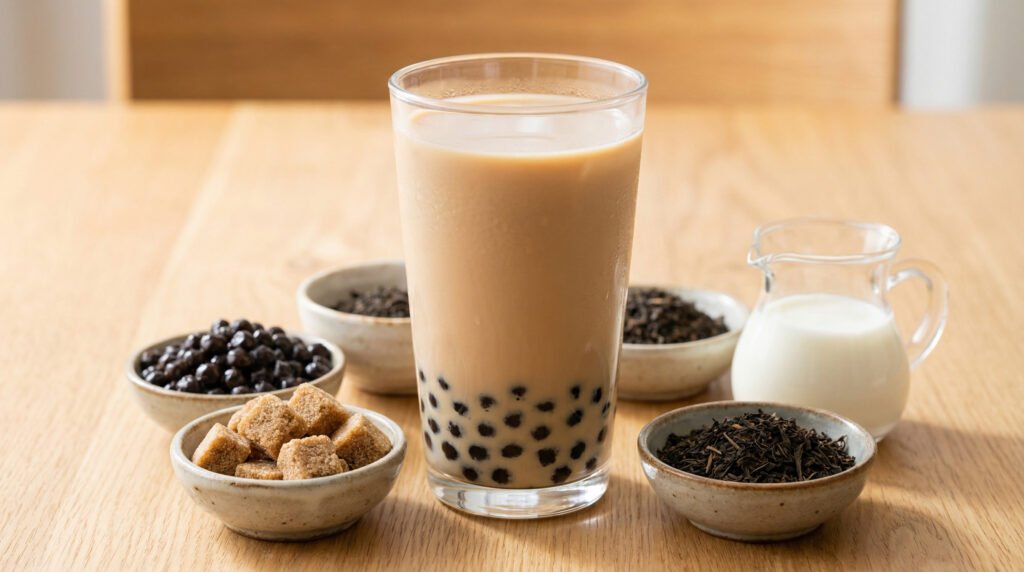
Why? Because standard non-dairy creamer is often calorie-dense and processed (think oil and corn syrup solids). Fresh 2% or whole milk gives you protein and calcium for a similar or often lower calorie count, plus a much cleaner mouthfeel. It’s a subtle but powerful way to reduce your overall Gong Cha calories. It turns a “treat” into something that actually has some nutritional value.
It turns a ‘treat’ into something with actual nutritional value, which is one of the 7 Key Facts about Bubble Tea Nutrition that surprises most people
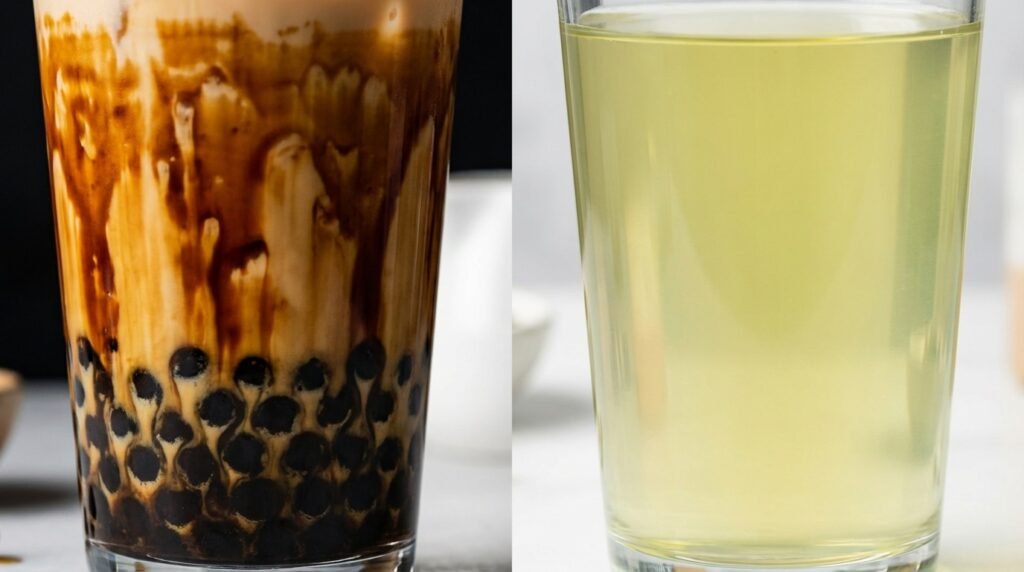
Milk vs. Creamer: The Breakdown
4. Toppings Cheat Sheet: Foam vs. Jelly
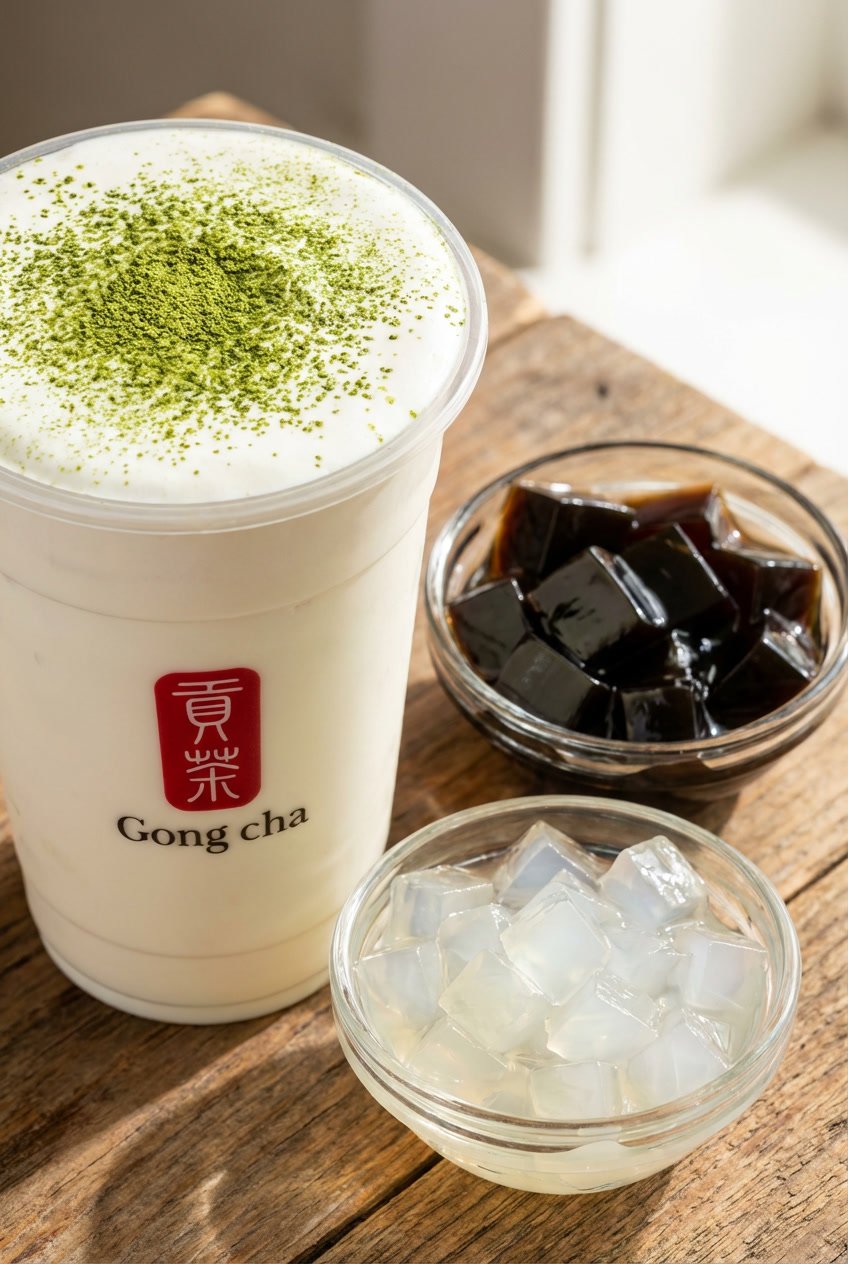
If you want texture without turning your tea into a meal, swap the foam or the heavy pearls for Herbal Jelly (grass jelly) or Aloe. They add a lovely chew and interesting flavor for a fraction of the calories.
This is where the battle for your waistline is really won or lost. Gong Cha’s toppings are brilliant, but some are absolute calorie bombs.
Let’s talk about the Milk Foam (Mustache Series). It’s that savory-sweet, slightly cheesy cream layer on top. It is absolutely delicious. It is also basically drinking a layer of salted whipped cream. Adding it to a drink is an instant 120–180 calorie increase.
If you want to explore options beyond the standard menu, check out my full ranking of Best Bubble Tea Toppings from lightest to heaviest.
Gong Cha Toppings: The “Guilt” Ratio
5. Smart Swaps: High-Value Orders (The Copy-and-Sip List)
If you are curious how these specific swaps compare to other chains, you can see similar low-sugar strategies in my Kung Fu Tea Calories Guide.
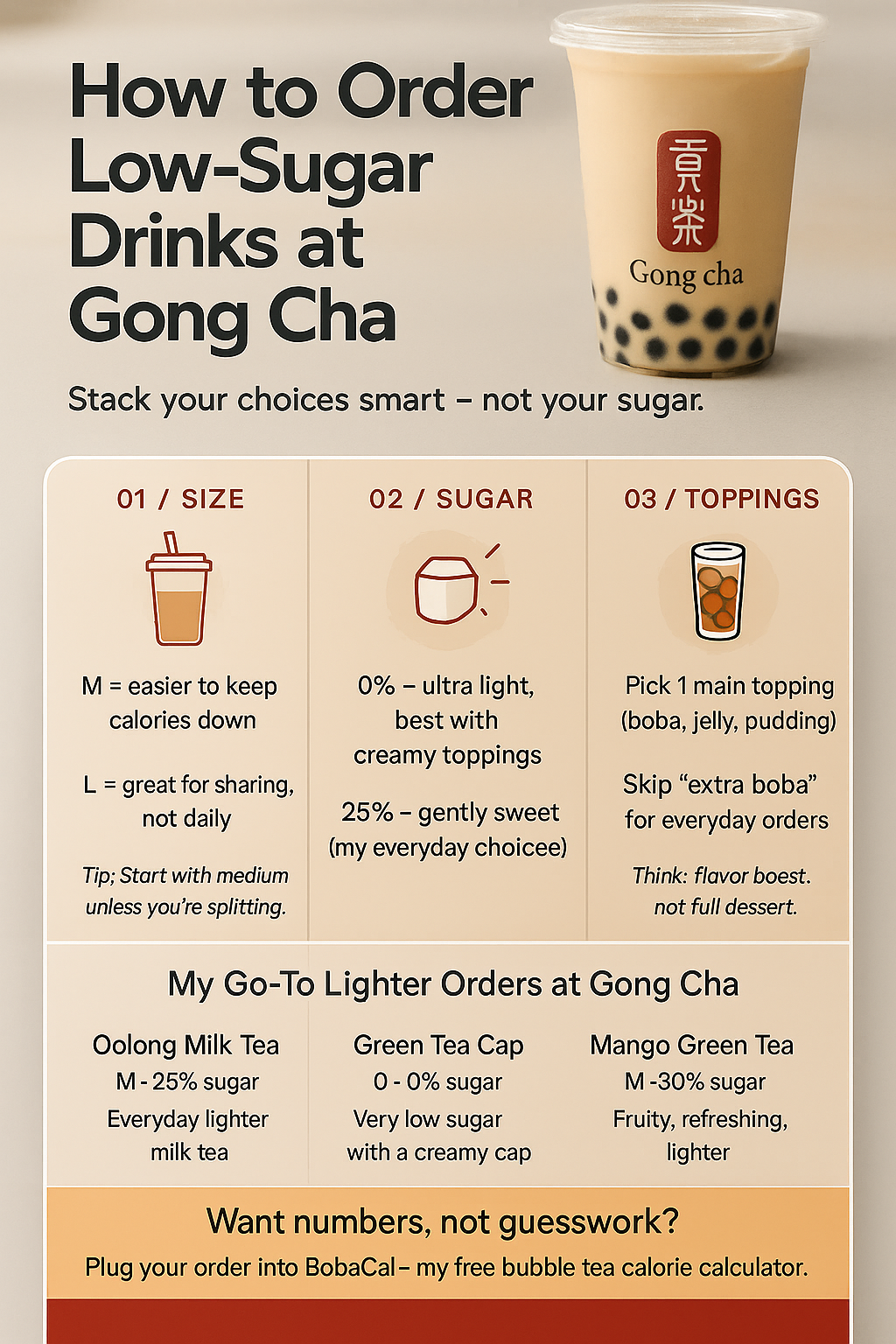
If you want to skip the math and order something delicious that manages Gong Cha calories without ruining your lunch, use this list. These are my go-to orders when I want the Gong Cha experience without the calorie density.
- The “Fake” Classic: Order a Black Milk Tea with 30% sugar and Grass Jelly instead of pearls. You get the creamy tea fix, but the jelly is significantly lighter than the starch-heavy boba.
- The Grown-Up Latte: Ask for an Alishan Tea Latte with fresh milk and no toppings. The Alishan roast is so flavorful that you don’t need extra sugar to make it taste good. It is a proper tea experience.
- The Fruit Fix: If you usually go for heavy fruit slushes, try the Passionfruit Green Tea with 30% sugar and Aloe. It is crisp, refreshing, and cuts the calories in half compared to a slush.
It is crisp, refreshing, and lighter than many Chatime fruit tea options that rely heavily on syrups.”
Gong Cha Copy-and-Sip List
Gong Cha Q&A (The Five Questions)
What is the lowest calorie drink at Gong Cha?
The absolute lowest option is a plain brewed tea (Green, Black, or Oolong) with 0% sugar and no toppings, which is essentially zero calories. If you want a “proper” drink, the Alishan Tea Latte with fresh milk (Medium, 30% sugar) is your best bet, landing around 150 calories.
Does 0% sugar mean zero calories?
No. “0% sugar” only refers to the added syrup. If you order a Milk Tea, the creamer or milk still has calories. If you add pearls, those have calories (and often their own sugar). The only true zero-calorie option is a plain tea with no toppings and no milk.
Is the Milk Foam (“mustache”) high in calories?
Yes. That delicious salty-sweet cap is made from heavy cream, milk, and powders. A standard serving adds about 110–160 calories to your drink. It is delicious, but treat it as a dessert topping, not a freebie.
Can I get fresh milk instead of creamer?
Yes! Look for the “Latte” series (e.g., Black Tea Latte, Oolong Latte). These are made with fresh milk rather than the non-dairy powdered creamer used in the standard “Milk Tea” series. It tastes cleaner and provides some protein.
What is lighter: Pearls or Jelly?
Jelly is almost always lighter. A scoop of Herbal Jelly or Aloe is roughly 30–50 calories, whereas a scoop of Tapioca Pearls is closer to 200+ calories because they are dense starch soaked in sugar syrup. Swapping pearls for jelly is the easiest calorie hack on the menu.
7. The Bottom Line
Next time you are in line, pull up this guide (or my BobaCal Nutrition Calculator) and order with confidence. You’ve got this.
In the end, Gong Cha is not the enemy. The issue is simply that we treat a “Milk Foam Green Tea with Pearls” like a beverage, when calorically, it is closer to a slice of cake.
You don’t have to stop going. I certainly haven’t. You just have to change your default setting. Instead of “Standard Sugar, Regular Ice,” try “30% Sugar, Fresh Milk.” You will be amazed at how much more you can actually taste the premium tea when it isn’t drowning in syrup.
Whether you are at Gong Cha, Tiger Sugar or grabbing a CoCo Fresh bubble tea, the rule is the same: you control the sweetness, not the menu.
Explore More Bubble Tea Chains
Tap a card to open the full Calories & Nutrition Guide.